Student Development
Explore Development Opportunities
Study Skills
No matter what your grades are, everyone needs some guidance to find success in the classroom. Here are some resources to help you develop the best study habits and skills you’ll need to get your degree:
What are Office Hours? – by Andrew Ishak
Time Management: TCU Video Project Series
Focus 2 Self-Assessment
Many people struggle with choosing an academic major during school, or job industry after graduation, but choosing a path is important when choosing your classes, internships and other career opportunities.
Focus 2 combines self-assessment, career and major exploration, decision-making and planning in one place. By matching your assessment results to career options and majors/programs for your consideration, FOCUS 2 guides you through a career and education decision-making model to help you make informed career decisions and take action in planning your future.
To use this free service, register to create an account with the access code collegefund. From there, you can take each test- personality, interests, values, and skills- to build your academic and career planning profile. Print your profile to share with an academic or career counselor or mentor to discuss your career plan or transition to a new profession.

Money Management
It is also important to understand budgeting, credit, and debt management – to help you to make responsible decisions in school, and prepare for your financial life after school. Learn about the following topics in related posts — your financial future depends on it.
- Money Management — Developing Common Cents (College Fund)
- Per Cap (First Nations Development Institute)
- Financial Skills for Families (First Nations Development Institute)
- Developing Your Vision: Managing Your Money
- Your First Bank Account
- Childcare Costs (and Ways to Reduce Them)
- When Your Child Has Special Needs
- Caring For Aging Parents
- Children and Family Considerations
Student Ambassador Program
The American Indian College Fund Ambassador Program was established in 2015 to strengthen students’ and alumni personal and professional skills and to represent the College Fund.
Our Blogs
College Fund Names Bill Black, Tom Brooks, and Jeffrey Fillerup to Board of Trustees
The American Indian College Fund named three new members to its Board of Trustees at its 2013 quarterly spring meeting in Green Bay, Wisconsin. New trustees include Mr. Bill Black, Vice President and Executive Director of the Comcast Foundation and Director of Community Investment for Comcast Corporation; Thomas S. Brooks, Vice President, AT&T External & Legislative Affairs; and Jeffrey Fillerup, Partner, McKenna Long & Aldridge LLP.
American Indian College Fund Hosts an Open House and Opening Night of “Open Identities” a Printmaking Art Exhibition
The American Indian College Fund (the Fund) is hosting an open house, Friday, May 17, 2013, at 8333 Greenwood Blvd., Denver, CO. The event begins at 5:00 p.m. and ends at 7:00 p.m. The open house was initially envisioned by Fund President Cheryl Crazy Bull as an opportunity to visit with the Fund’s local supporters, Native community members, family, and friends.
Comcast Cares Day at the Denver Indian Center
On Saturday morning in Denver, the city got a respite from a month of freezing temperatures and several feet of snow. The weather worked out perfectly for volunteers from the American Indian College Fund, who teamed up with about 100 volunteers to participate in the Comcast Cares Day at the Denver Indian Center, Inc.
Tribal Colleges Contribute Millions to State Economies
The five tribal colleges of North Dakota have contributed $182 million to the state’s economy after accounting for direct and secondary spending. A report commissioned by the North Dakota Association of Tribal Colleges measures the collective impact of the state’s five tribal colleges serving Native communities
Survey Suggests College Fund Scholarships Important to Student Success
The American Indian College Fund commissioned a survey of American Indian College Fund Full Circle scholarship recipients. The goal of the survey was to determine students’ financial need, program retention and completion rates, and respondents’ views regarding the relationship between their college experience and Native cultural perpetuation.
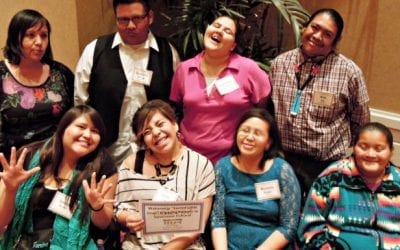
Updates from the Wakanyeja Early Childhood Education Initiative
The ECED Special Topics course attended the Native American Child and Family Conference on Wed. March 20th at the Hotel Albuquerque. Students attended conference sessions of their choice and also helped facilitate a workshop from 3:00-5pm.
