
Planting the Seeds of Cultural Sustainability
April 22, 2026 | Student Ambassador Aiyanna Tanyan’s (Seminole Nation of Oklahoma) work to reclaim food sovereignty
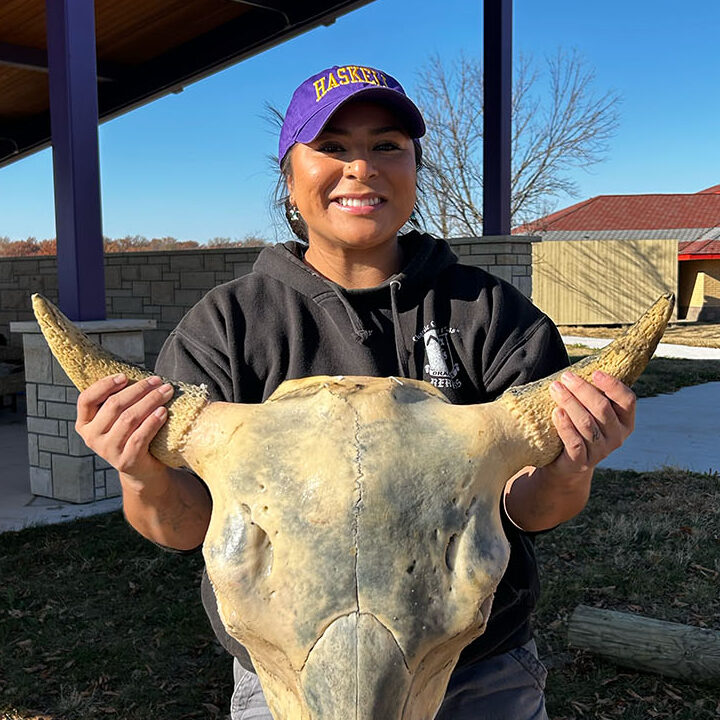
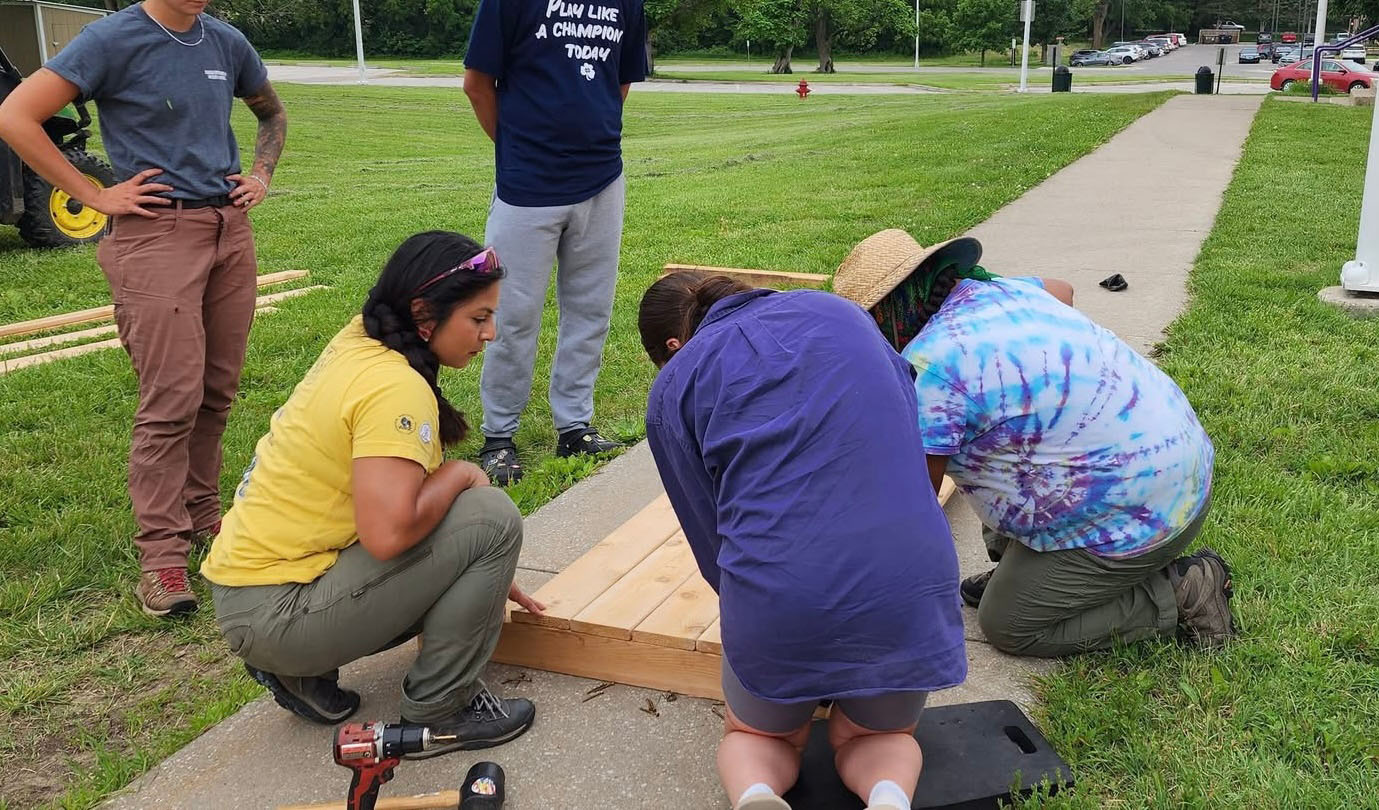
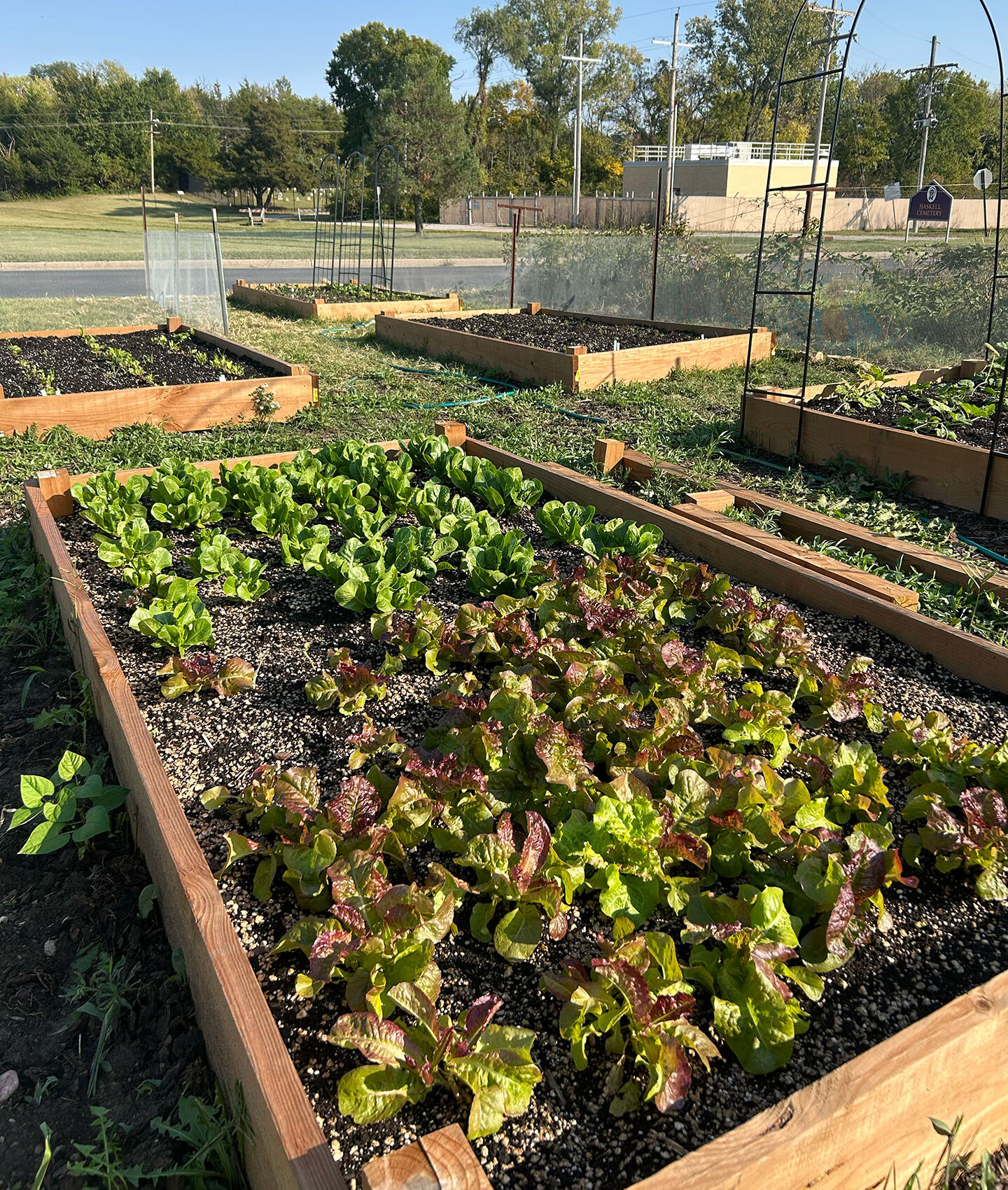
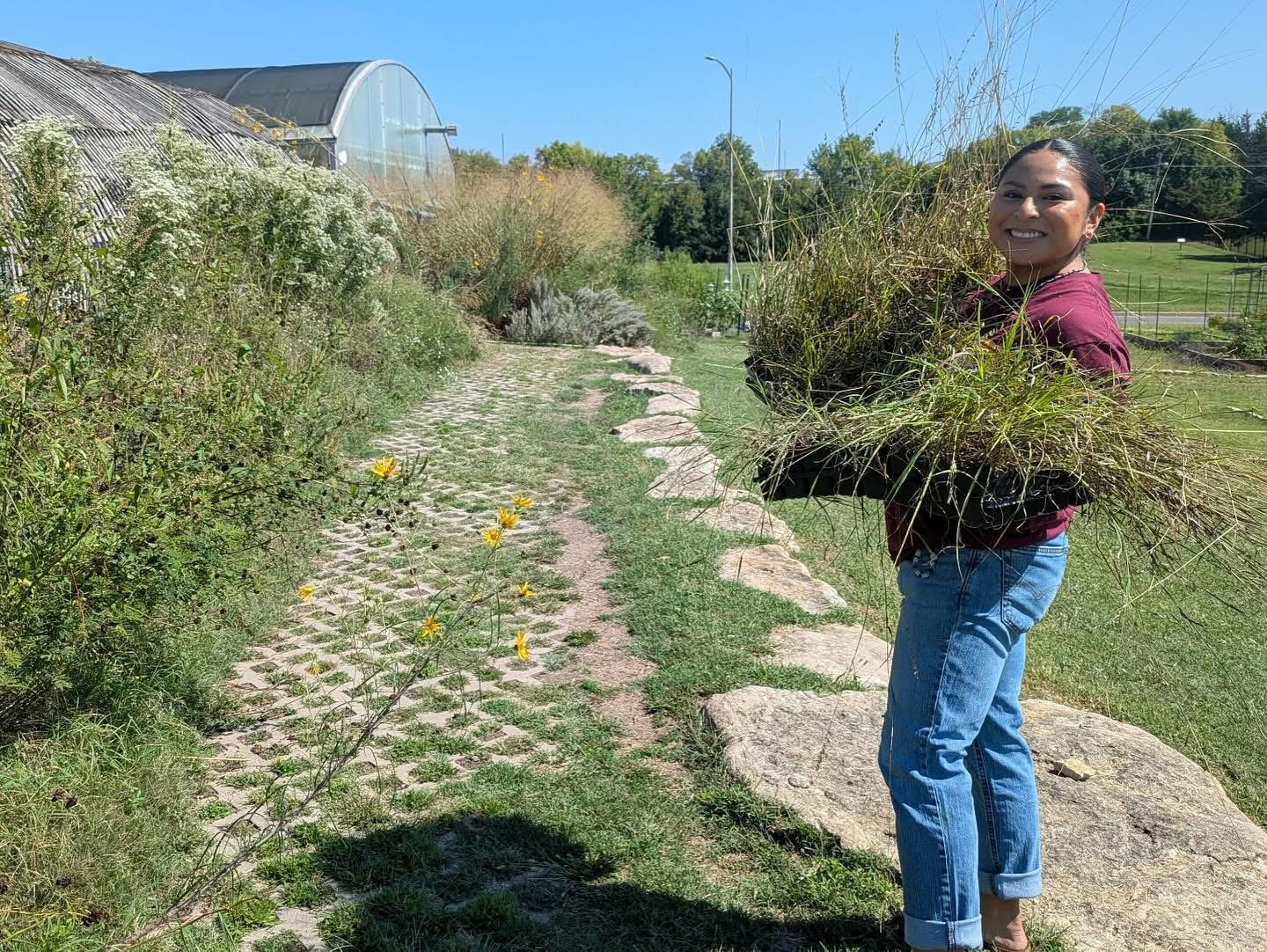
We came up with the idea of building raised garden beds near the dorms so students can easily access fresh foods and learn how to grow them themselves. Through support from the Haskell Greenhouse (funded through the USDA Equity Grant), we started building.
Last year was our first year doing this project and it was a learning experience as with many community-based projects, it comes with trial and error. However, that process taught us a lot about what works, what doesn’t, and how to build something more sustainable moving forward. This year, we’re continuing this work with stronger systems, more involvement, and a clearer vision.
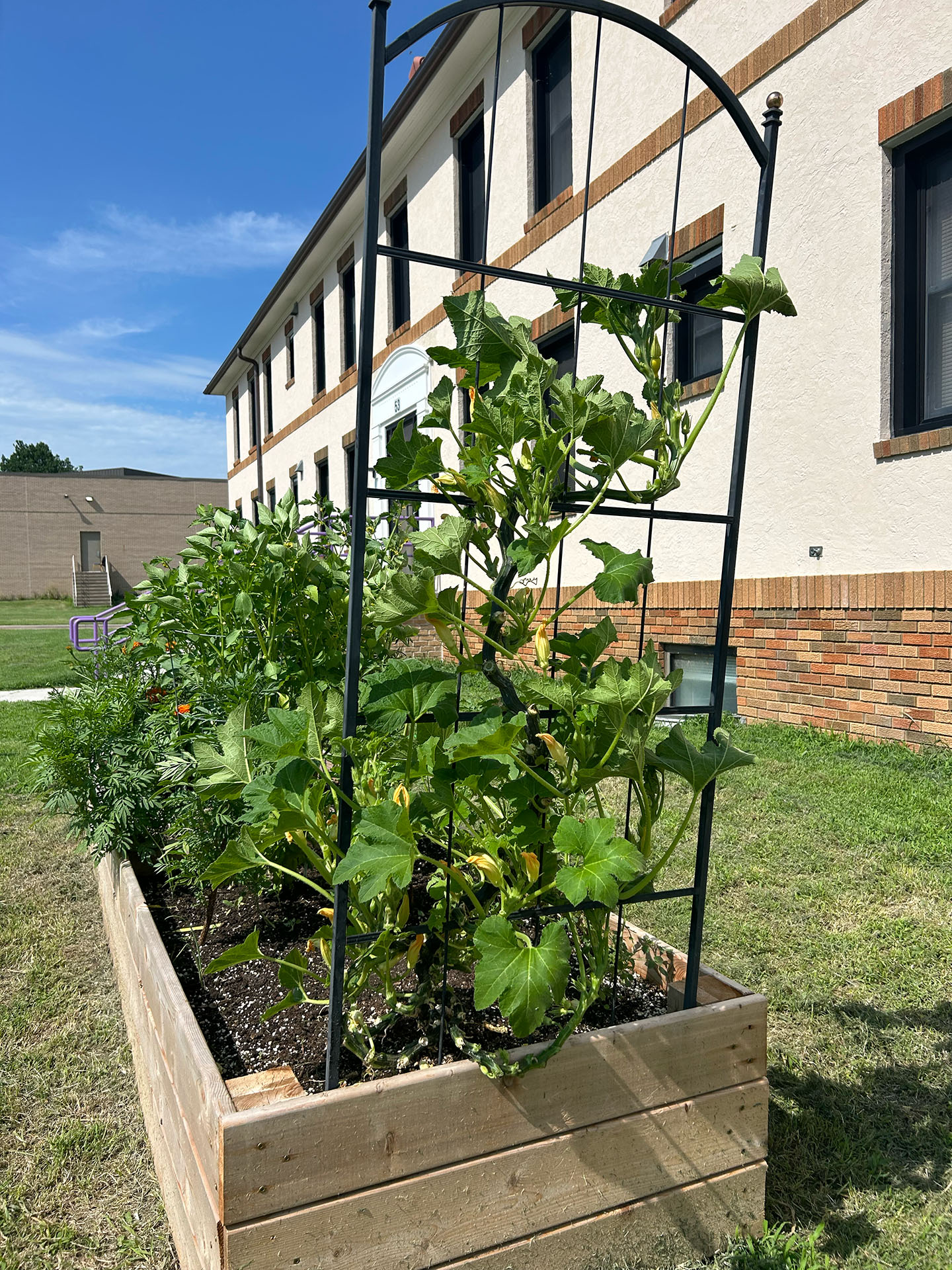
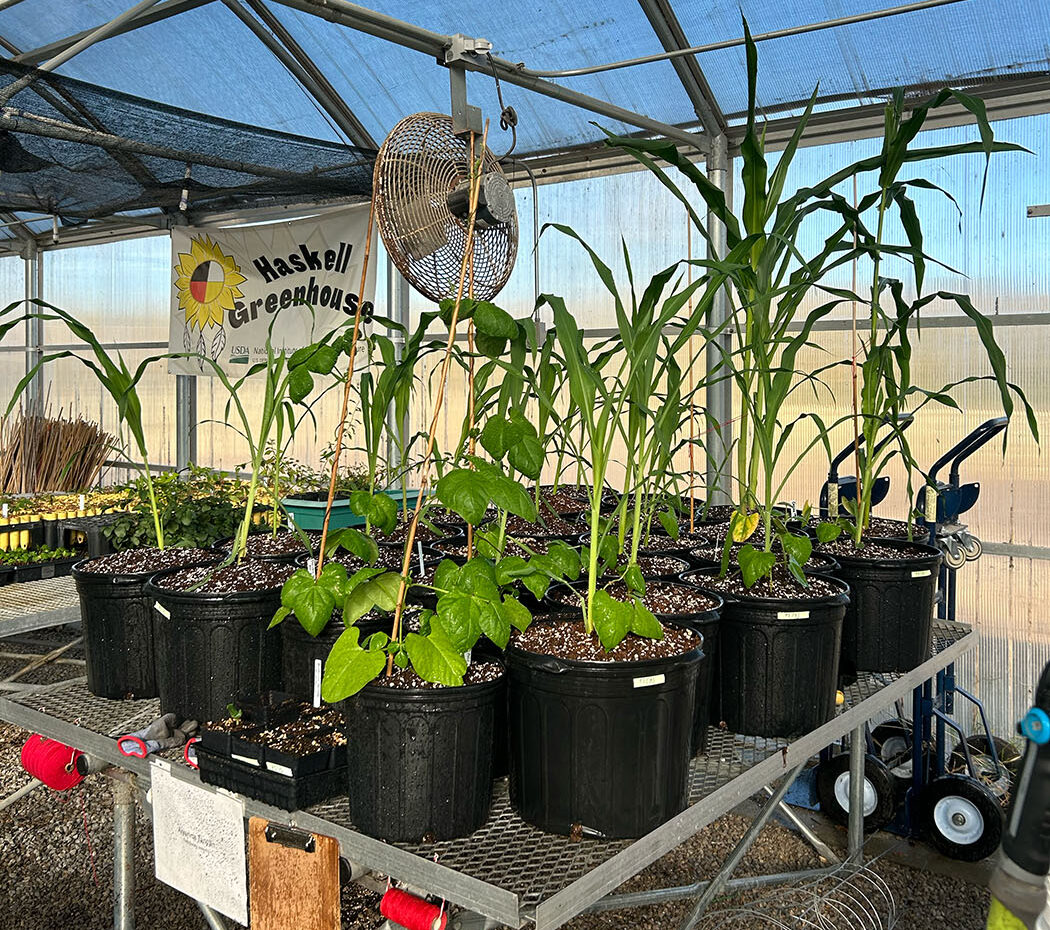
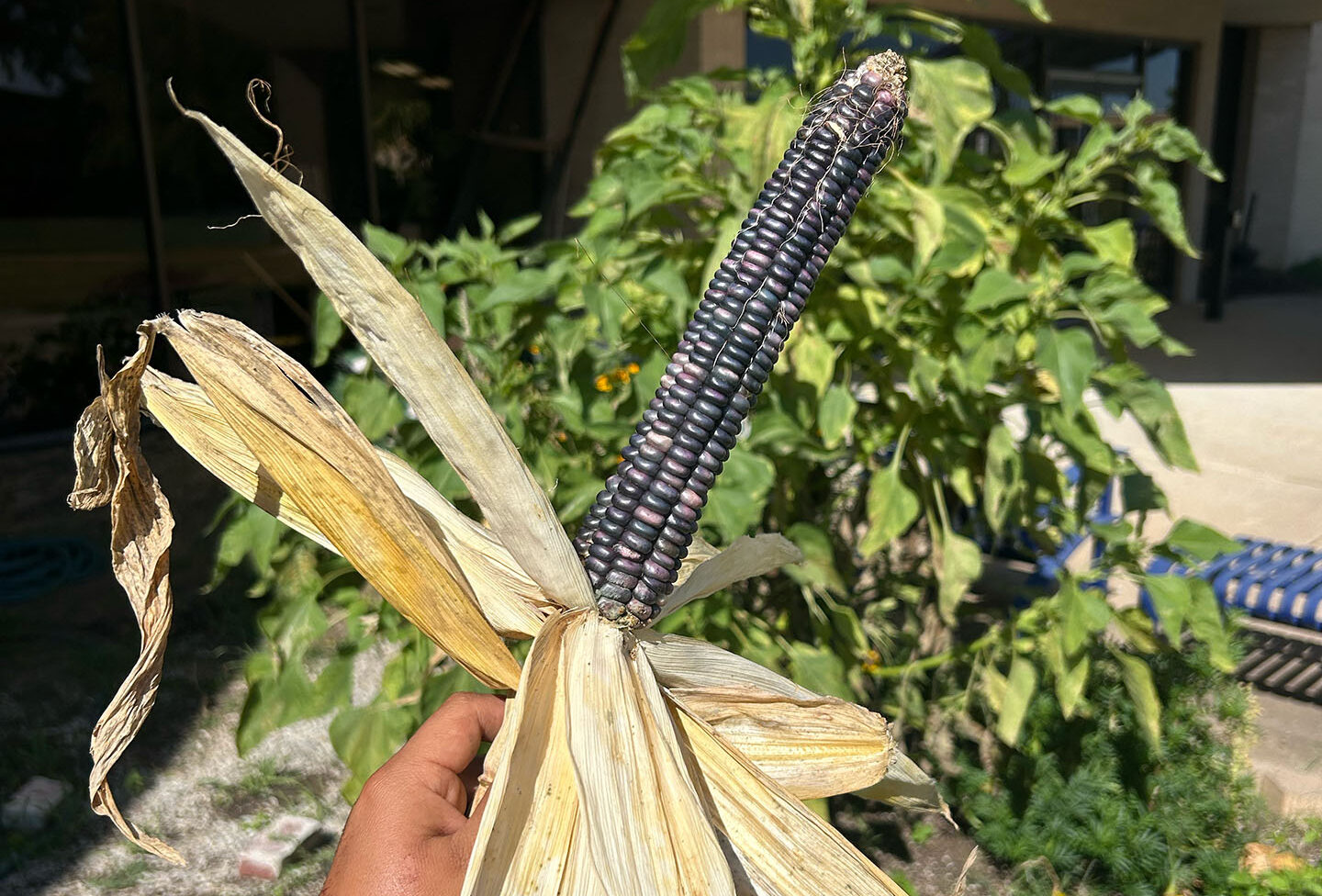
Everyone at the Haskell Greenhouse wants to help others learn, value, and view these spaces as places of teaching. I know they have taught me so much about responsibility and our relationship with the environment. Through these projects, we’re helping students reconnect with the land and understand the importance of food sovereignty for Indigenous communities. This work is ongoing, and we’re still learning. Every seed planted, and every workday shared brings us one step closer to a more sustainable and connected future.
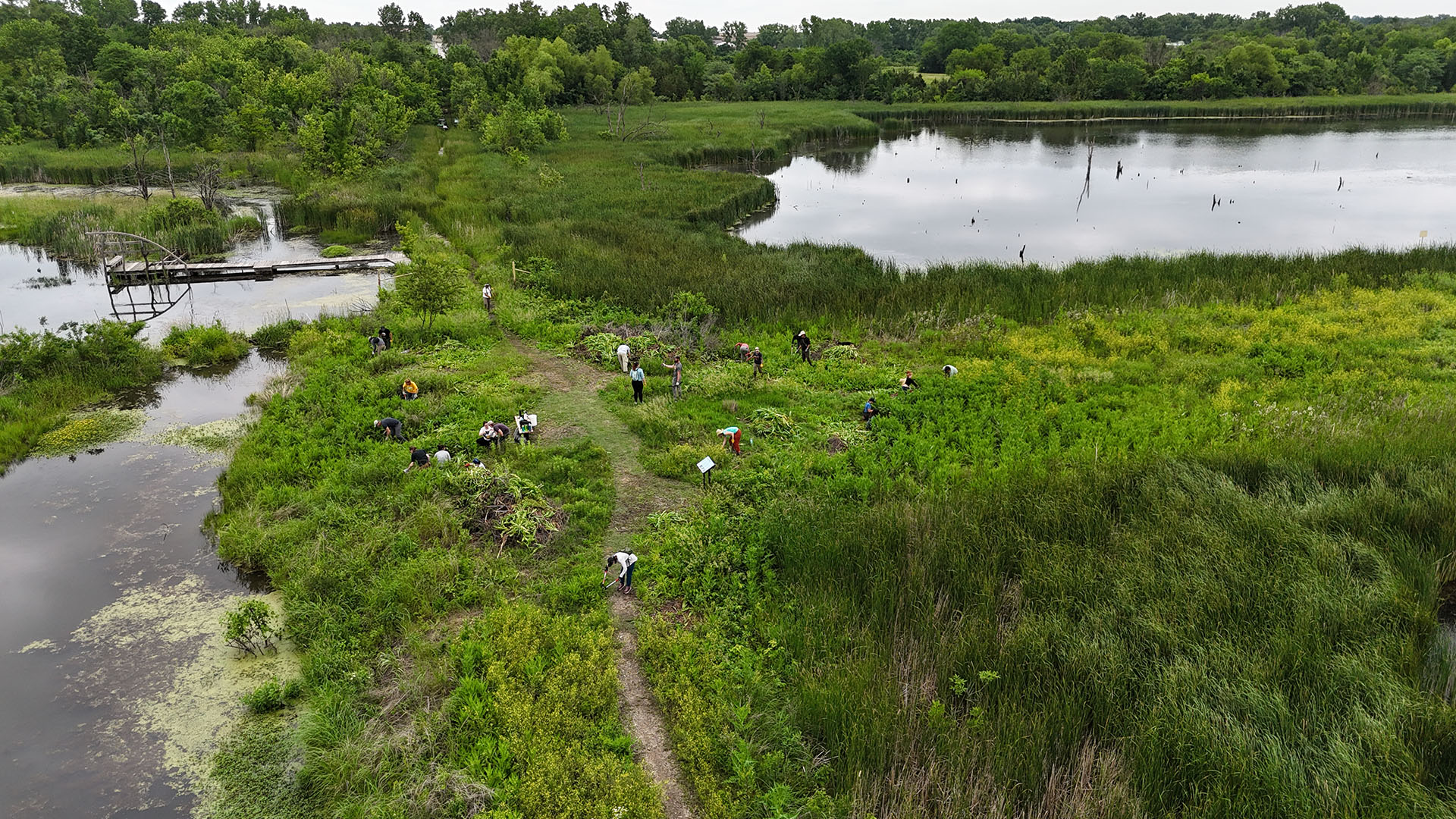
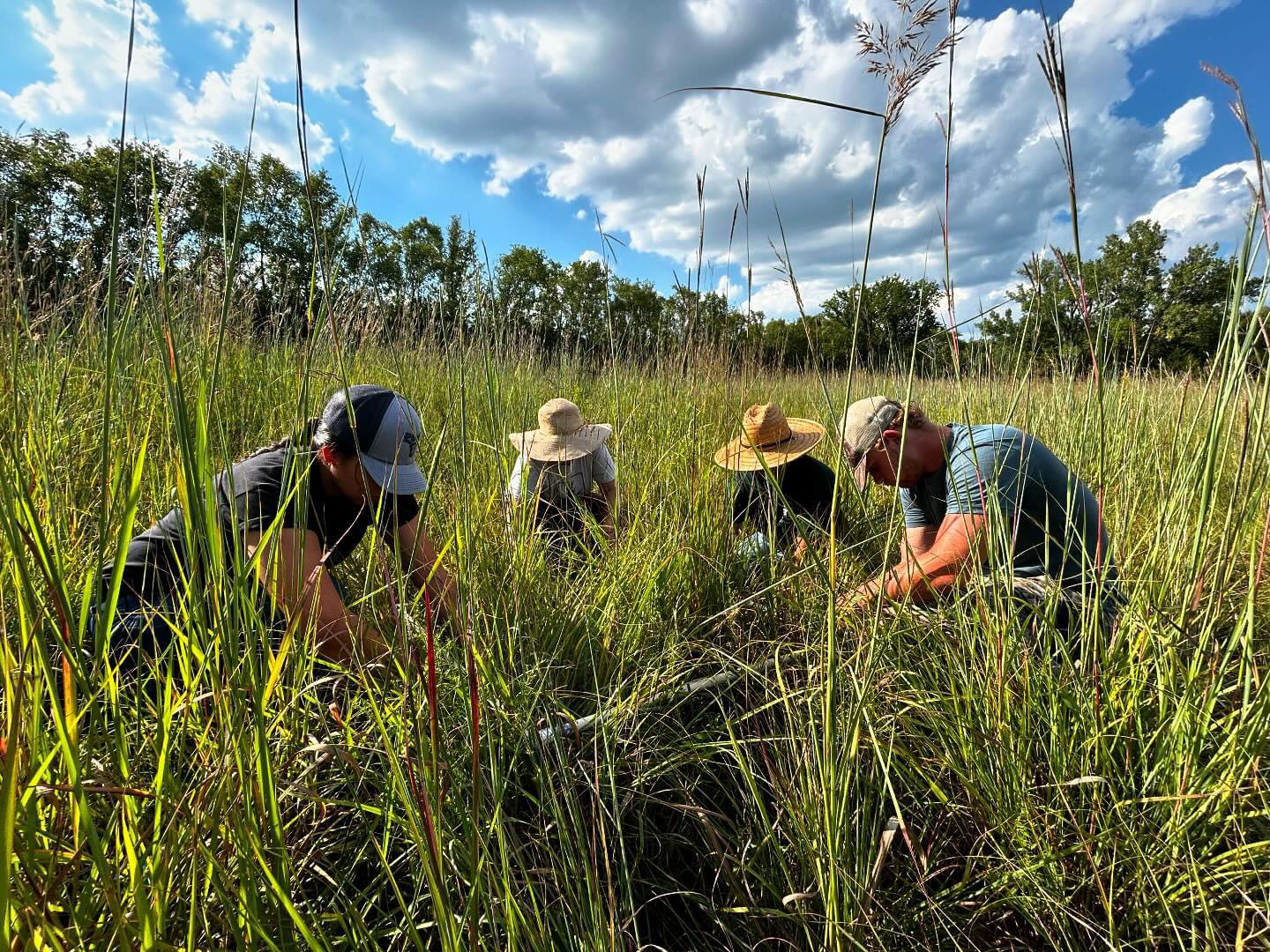
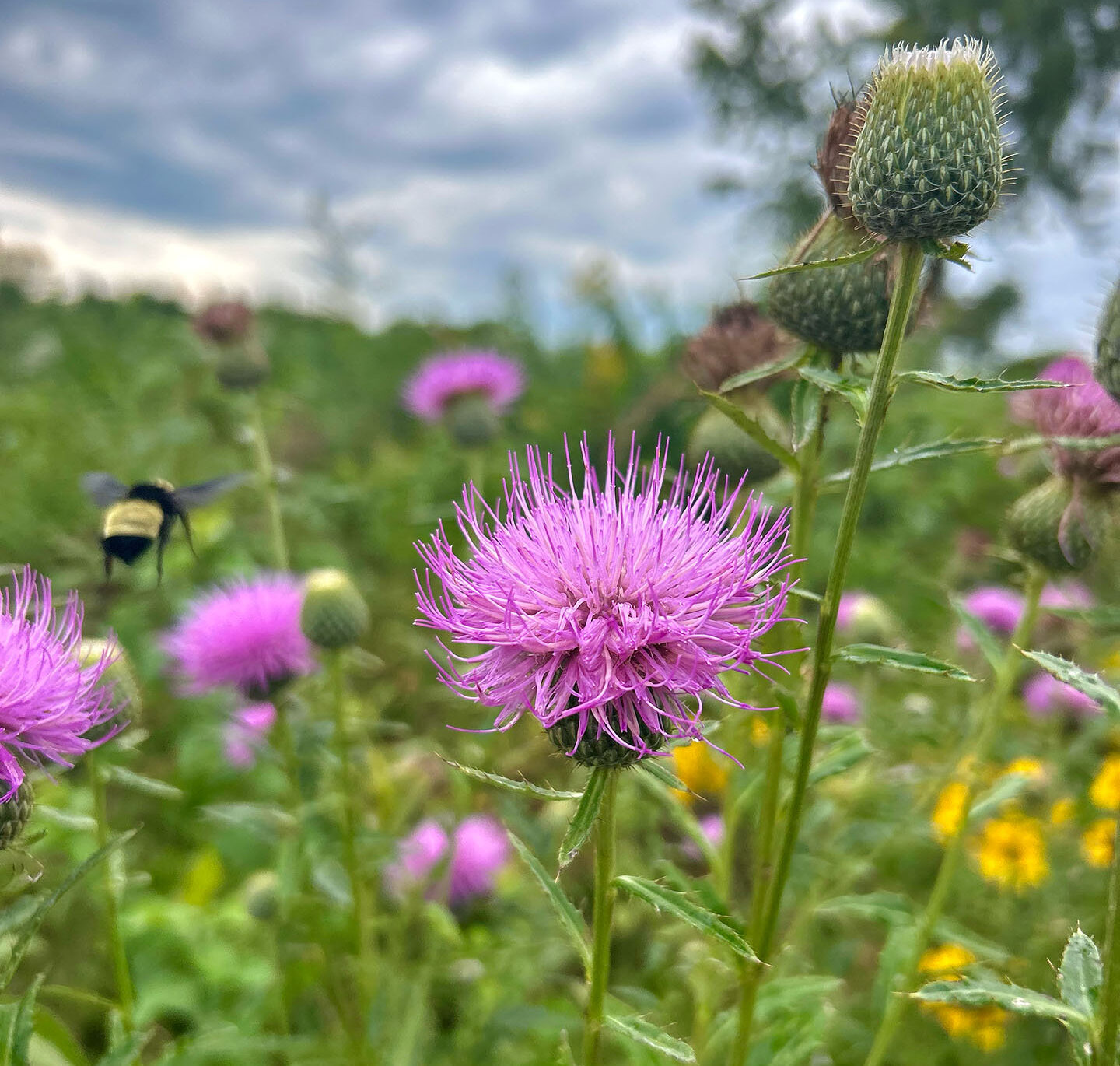
In Caring for Our Kin: Stories of Indigenous Environmental Stewardship, the College Fund shares the stories of Indigenous environmental leaders who are centering kinship and relational knowledge to build healthy ecological systems. These stories remind us that caring for the Earth means caring for one another—and that Indigenous knowledge systems continue to offer guidance, resilience, and hope for the future.
Learn more about our Environmental Stewardship Program.
Ekvnv Vcayecet. Mvto!
(Take care of the Earth/Land. Thank you)
More Blogs
Four Tribal Colleges to Receive an Initial $800,000 Under Early Childhood Education Project
In April 2011, the American Indian College Fund announced a $5 million grant award from the W.K. Kellogg Foundation to fund four early childhood education projects located at tribal colleges and universities and serving Native children. Under the program, initial grant awards of $800,000 per college over a period of four years will be awarded to four tribal colleges whose submitted proposals best supported the goals and objectives of the program to improve young Native students’ skill acquisition; prepare them for grades K-12 and post-secondary education; improve the quality of early childhood teachers in Native communities through partnership opportunities with post-secondary teacher training programs at the tribal colleges; bridge early childhood and K-3 education; integrate Native language and culture into early childhood curriculum; and empower Native families and communities as change agents in education for their children.
Sysco Corporation Donates $15,000 to American Indian College Fund for Scholarships
Sysco Corporation, a global leader in selling, marketing and distributing food products, donated $15,000 to the American Indian College Fund to support the Sysco Corporation Tribal College Scholarship Program. This program will provide 10 scholarships to American Indian students studying casino/gaming, hospitality, culinary arts, tribal administration, tribal management, tribal government, and/or business-related degree programs at the nation’s 33 accredited tribal colleges and universities.
Tarajean Yazzie-Mintz Joins the Fund to Manage $5 Million Early Childhood Education Initiative
Tarajean Yazzie-Mintz, Ed.D. (Navajo) has been named Program Officer for the Wakanyeja “Sacred Little Ones” early childhood education initiative at the Denver-based American Indian College Fund. In her new role, Dr. Yazzie-Mintz is responsible for administering the $5,000,000 program funded by The W.K. Kellogg Foundation to establish and strengthen early childhood development centers and teacher education programs at tribal colleges and universities
Guest Blog from Student Intern Wynette
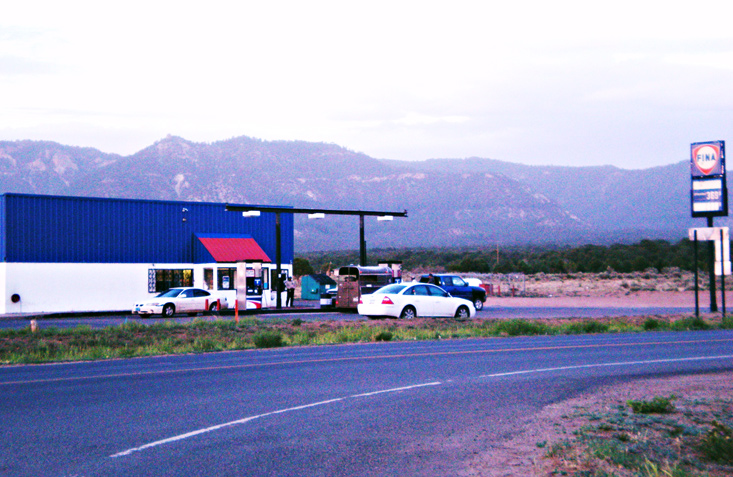
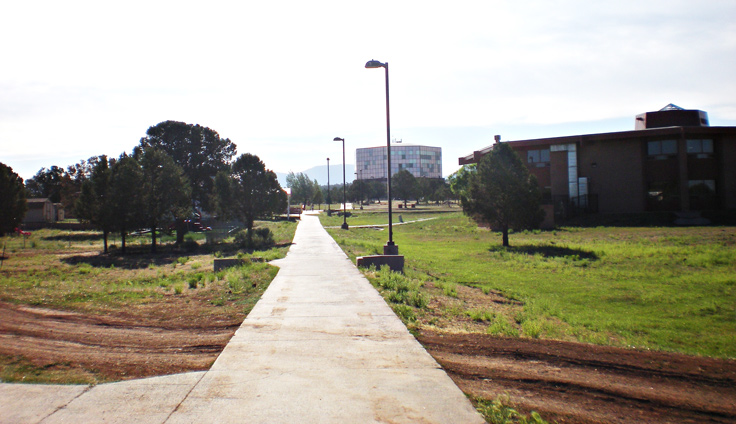
I am in Tsaile, Arizona, where I am living on the Diné College campus. Living on the reservation is drastically different from living in a city like Los Angeles. Normally there are animals wandering around and roaming where they please. This is what I wake up to, and I enjoy it because I definitely don’t get to see a horse cross my path in LA.

Casey Lozar Promoted to V.P. of Resource Development at the American Indian College Fund
Casey Lozar, an enrolled member of the Confederated Salish & Kootenai Tribes, was promoted to the position of Vice President of Resource Development for the Denver, Colorado-based American Indian College Fund (the Fund). In his new role, Lozar is responsible for resource development for all fundraising departments at the Fund.
Target Grants $20,000 to Continue Decade-Long Scholarship Program
For more than 10 years, the Target Corporation has been helping Native American students pursue a college education at tribal colleges and universities. This year, Target has renewed its commitment with a grant of $20,000 to the American Indian College Fund to continue the Target Tribal College Scholarship Program for the 2011-12 academic year.
The Siragusa Foundation Grants $15,000 to American Indian College Fund for Native Scholarships
The Siragusa Foundation of Chicago, Illinois has announced it is renewing a grant of $15,000 to the American Indian College Fund to benefit American Indian student scholarships. The grant will support qualified American Indian students by providing financial resources to encourage them to complete a college degree. With an education, students can build a better life for themselves, their families, and make valuable contributions to their communities and nation.
Guest Blog from Student Intern Wynette
Wynette interning at the Diné Policy Institute at Diné College, a tribal institute located in Tsaile, Arizona on the Navajo Nation. Ya’a’teeh! My name is Wynette. I am a psychology and sociology major at Occidental College in Los Angeles, California. I am interning at the Diné Policy Institute at Diné College, a tribal institute located in Tsaile, Arizona on the Navajo Nation.
Guest Blog From Student Intern Deanna
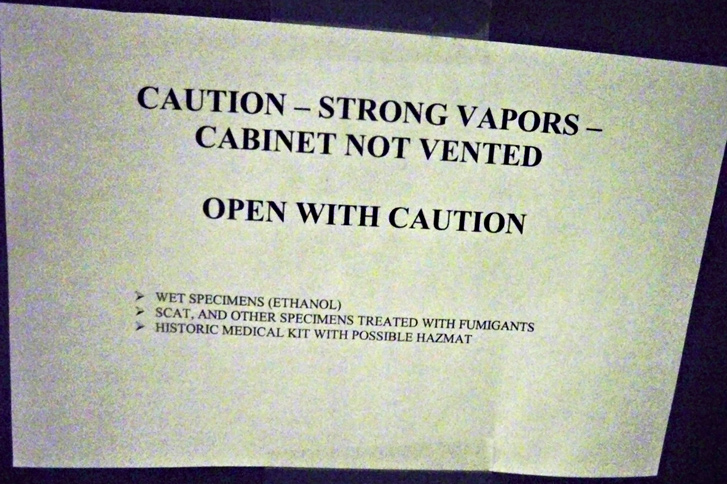
This is the fourth part in a series of blog entries by our scholar Deanna, who is writing about her internship experience at Mesa Verde National Park. Next week will will meet Wynette from Occidental College in L.A., who is working at the Diné Policy Institute this summer at Diné College.
New Font Proceeds to Benefit the Fund
It was only fitting. The font of creativity at the Fund’s Portland, Oregon-based ad agency Wieden+Kennedy was presented with his own font. David Kennedy’s unique penmanship is stylistic and notable around the office. It has been seen by everyone because he rarely uses a computer. It is so distinctive that one of the this year’s students in “12”, Wieden+Kennedy’s advertising training school, decided it would make a terrific font.