
Tribal College Blanket Design Competition
The contest is now closed. Winners have been selected and contacted directly. Thank you to everyone who participated, the next competition will open on November 15, 2026.
The American Indian College Fund and Pendleton Woolen Mills are challenging students at Tribal Colleges and Universities to express their culture and identity through original designs for our next tribal college student blanket. Blanket sales will support College Fund scholarships. Textile design experience is not necessary to enter, and student winners will receive the following prizes:
Grand Prize Winner:
- $2,000 Cash
- $5,000 Scholarship
- 6 x blankets
2nd Place Winner:
- $500 Cash
- $2,500 Scholarship
3rd Place Winner:
- $250 Cash
- $1,500 Scholarship
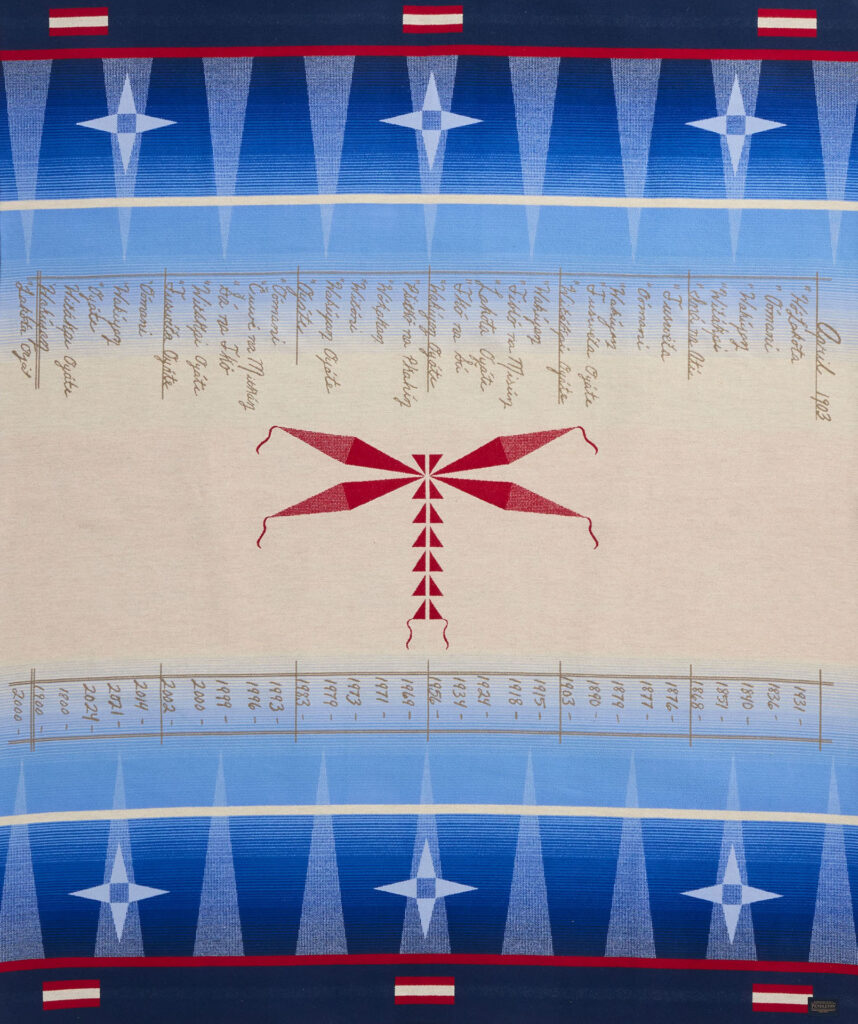
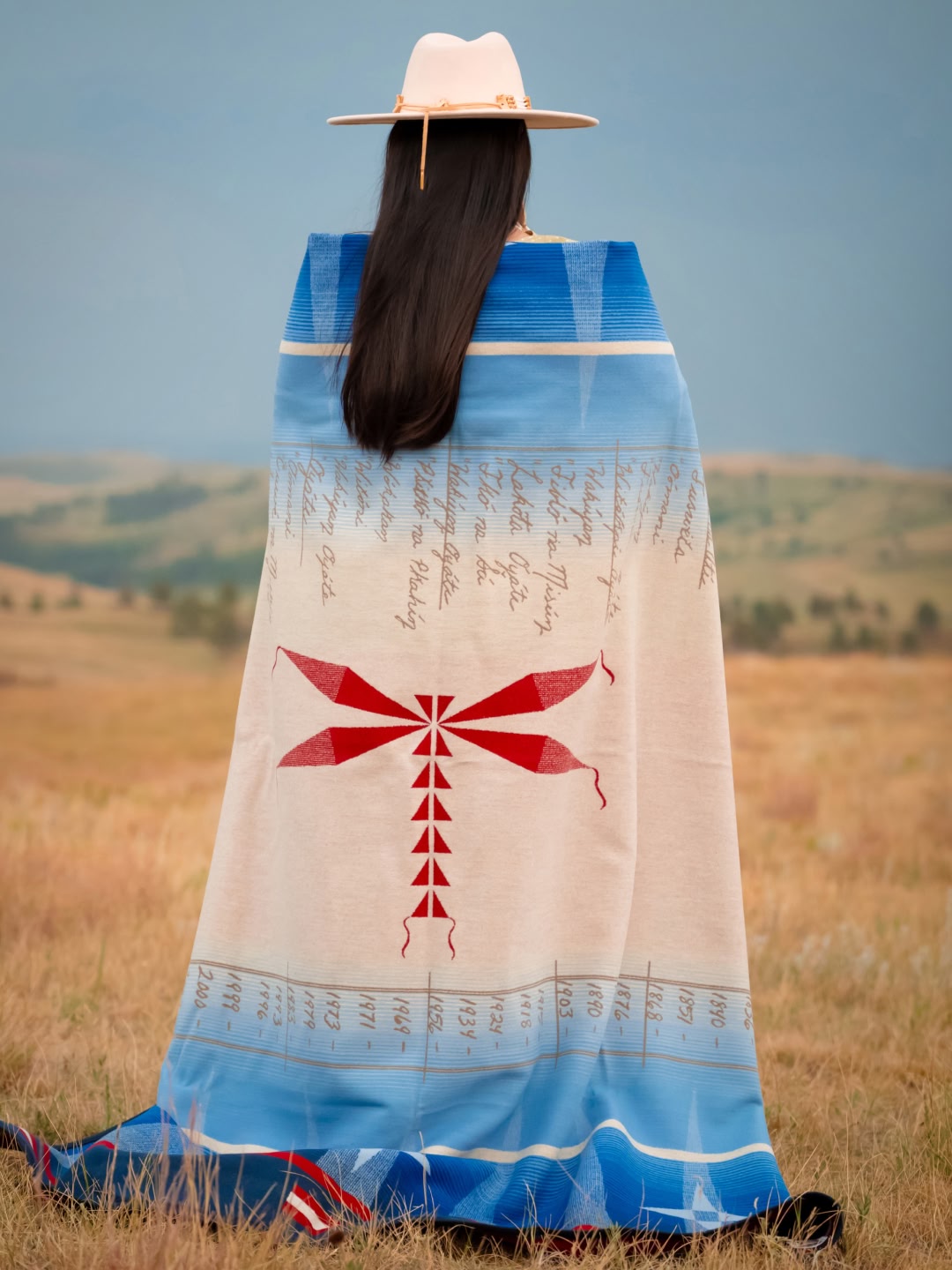
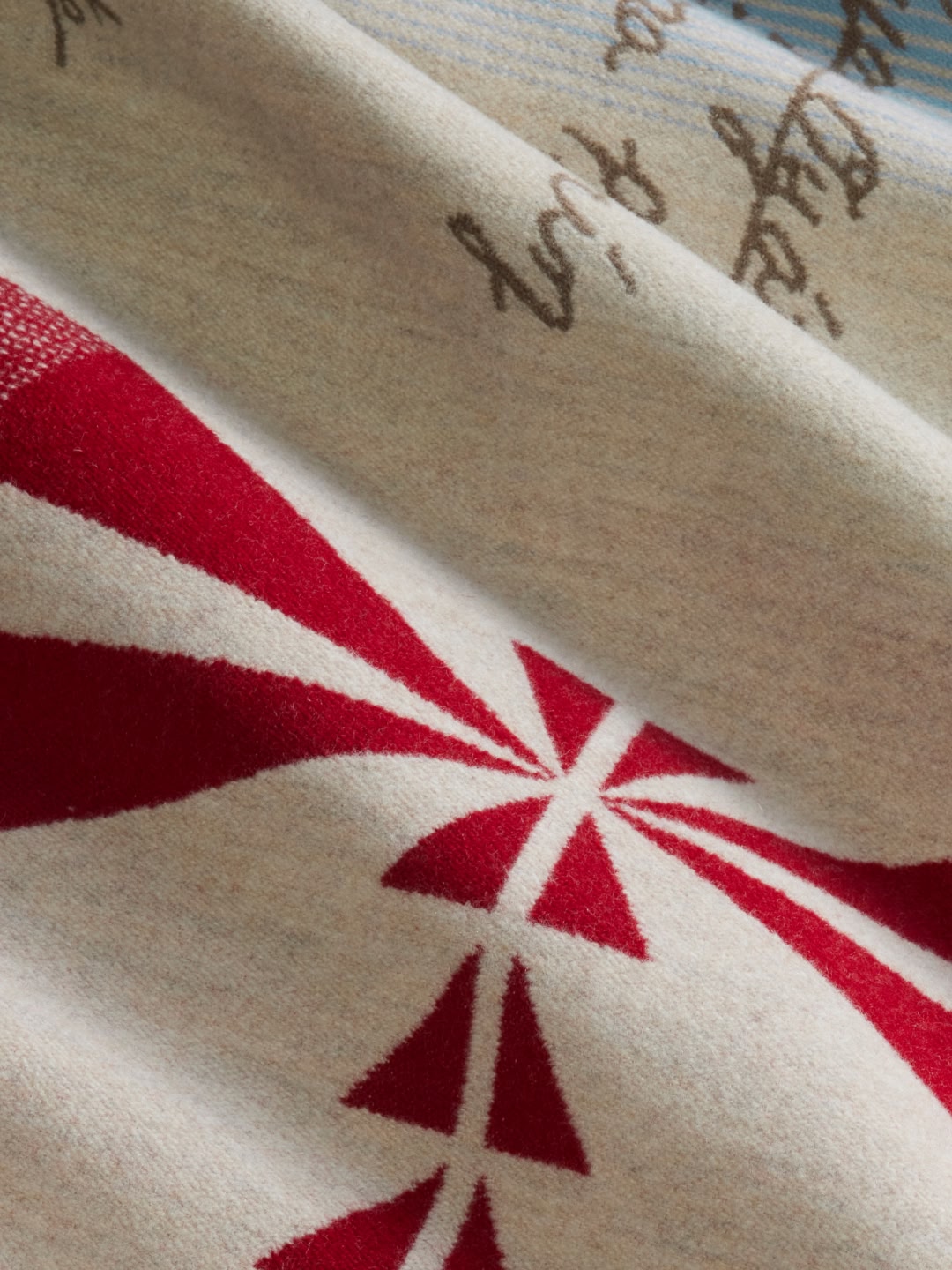
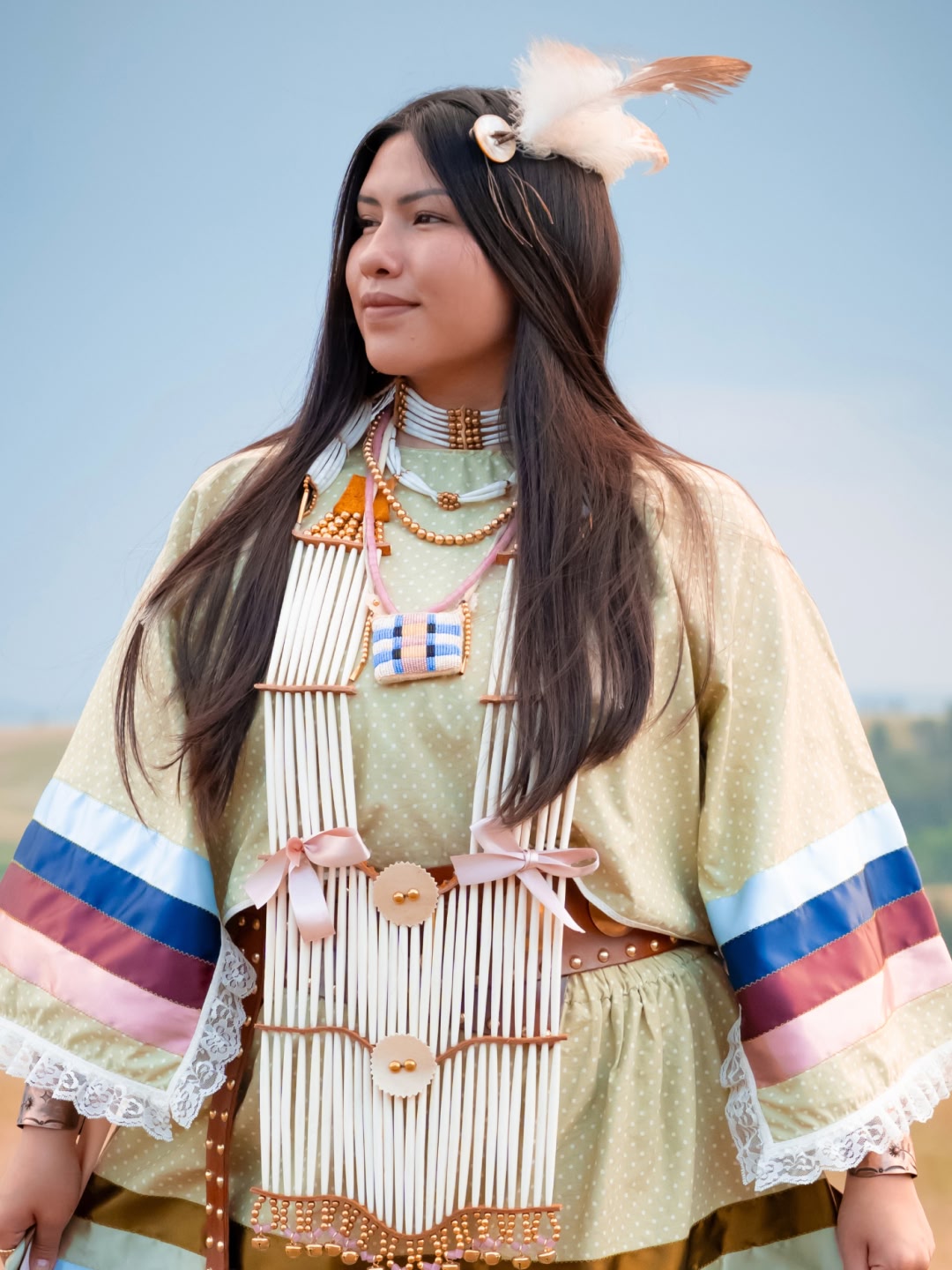
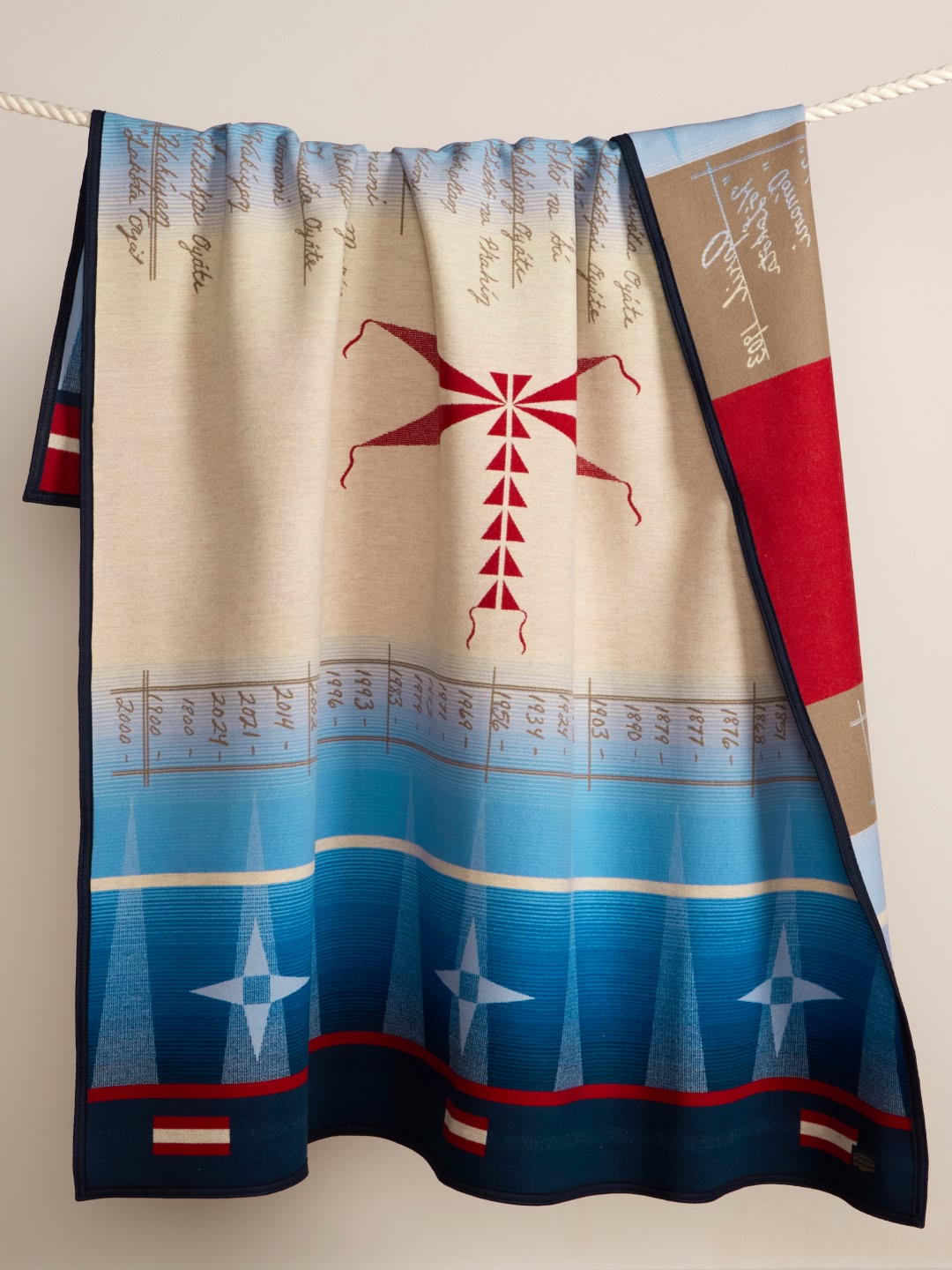
United Tribes Technical College graduate (2025) Belle Brings Plenty (Cheyenne River Sioux Tribe) is the 2025 winner of the Tribal College Blanket Design.
Her design, Journey, is now available for purchase as part of the Pendleton Woolen Mills’ American Indian College Fund collection.
Brings Plenty graduated this semester with a Bachelor of Science degree in Criminal Justice from United Tribes Technical College. Her design was selected from a pool of 33 submissions from talented Native artists attending tribal colleges.
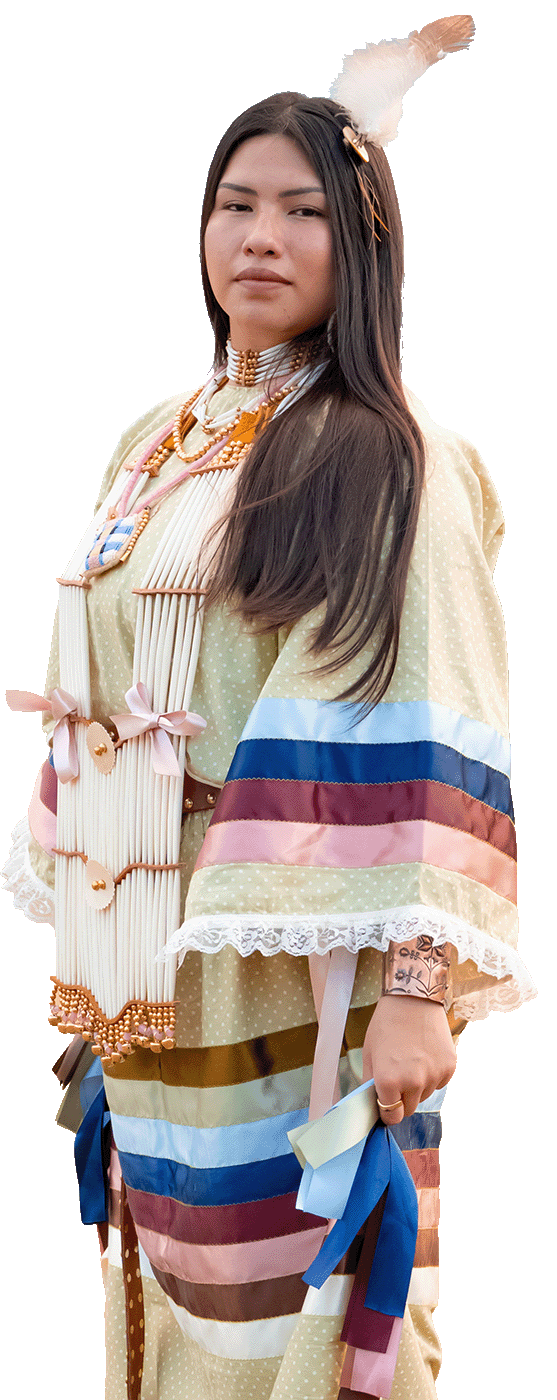
United Tribes Technical College graduate (2025) Belle Brings Plenty (Cheyenne River Sioux Tribe) is the 2025 winner of the Tribal College Blanket Design.
Her design, Journey, is now available for purchase as part of the Pendleton Woolen Mills’ American Indian College Fund collection.
Brings Plenty graduated this semester with a Bachelor of Science degree in Criminal Justice from United Tribes Technical College. Her design was selected from a pool of 33 submissions from talented Native artists attending tribal colleges.
Meet Past Winners
Jenabah Yazzie
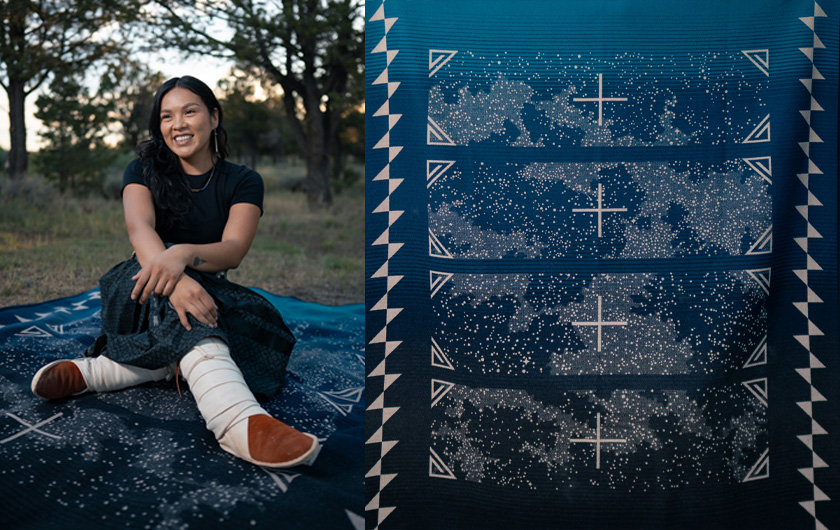
The 2024 contest winner is by Jenabah, a psychology major at Diné College focused on behavior and the functions of the mind. She decided to enter the design contest after seeing the blanket of a previous winner online. Her late father’s passion for making art served as her inspiration, and the love of her ancestors is referenced in the design itself. “By creating this I hope it instills the warmth and prayers that our grandparents put down for us,” Yazzie said. “Let this be a reminder that they are still here amongst us, their spirits can be felt while we pray.”
Through her design, Yazzie honors the morning time: the time of day when Navajo are taught to give offerings before the sunrise. The colors of the blanket represent hayoołkááł (dawn). The white border of the blanket represents the strength of prayer with the black and white design along the border depicting the love and protection of the Holy People. The four rectangles in the center of the blanket symbolize the thoughts and prayers of the people with the stars in the center of each rectangle representing the Star People, to remind us that we are never alone. Yazzie explained that prayer is always in motion which led to the name Infinite Prayer.
Trey-Blackhawk
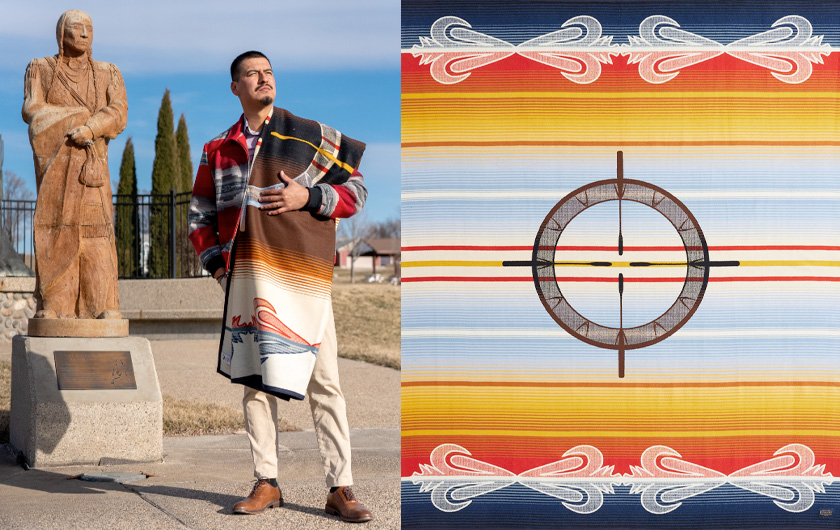
The 2023 contest winner is by Trey, a graduate of Little Priest Tribal College with a degree in liberal arts who is currently working on an applied sciences degree. His design, Drum Keepers, includes 12 tipis for the 12 clans of the Winnebago. The color of the design shows both day and night to signify those who hold knowledge keep the memory of them forever. The Ho-chunk applique on the outside of the tipis, which is a popular applique for dancers’ regalia, signifies the women of the tribe. Blackhawk said the women are important knowledge-keepers of certain songs, and the memory of singing Winnebago songs with his grandmother one last time before she stopped due to cancer was on his mind when working on this design.
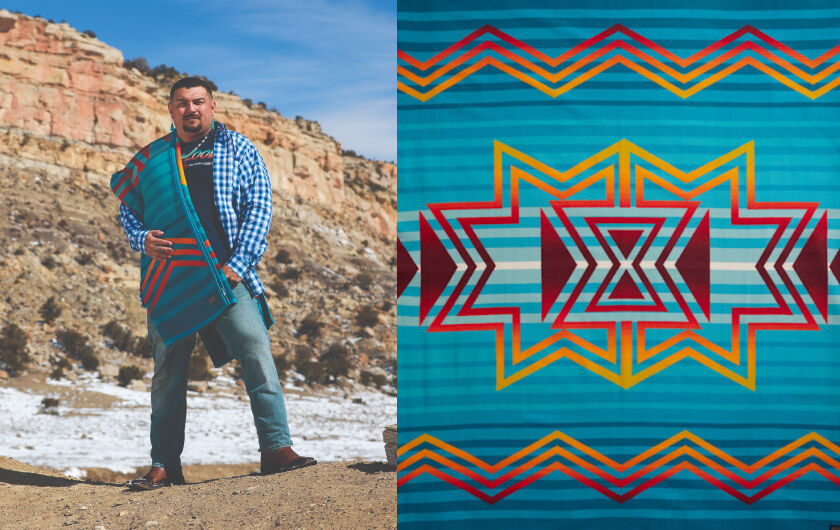
Dustin Lopez
Meet the 2022 contest winner and Diné College student, Dustin, and learn more about his design “Many Nations.” Dustin explained that the design of Many Nations is meant to represent the identity crisis felt by Indigenous people who are descendants of more than one tribe or have some non-Native ancestry. Indigenized DNA strands pay tribute to water as the element we cannot exist without. The hourglass shape is made up of the initial M and B for “mixed-blood,” but the hourglass also symbolizes the Tsiiyéeł, or matriarchal society, for many Navajo artists. Star shapes represent parents, both biological and figurative, that pass along traditional teachings and help those struggling with their identity to navigate the world on and off the reservation.
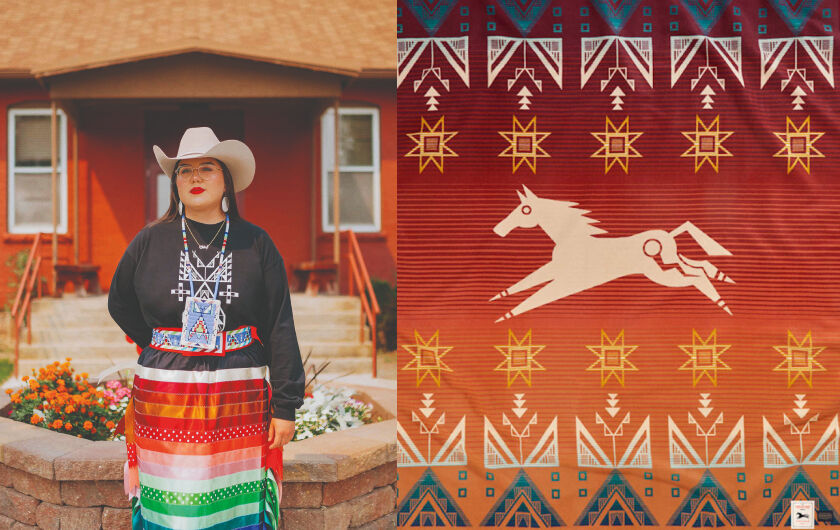
Chelysa Owens-Cyr
Meet the 2021 contest winner and Fort Peck Community College student, Chelysa, and learn more about her creation “Unity.” Chelysa’s piece, titled “Bloom,” is a self-portrait that represents her personal growth with blooming flowers, open arms, and butterflies representing a healed soul and new beginnings. “The overall visual I wanted the piece to show is that no matter where you’re at in life, no matter what hardships you are going through, you have the ability to heal, the ability to start over. When we go through our different stages in life, relationships, hardships, pain, love, etcetera… we bloom through it all.”
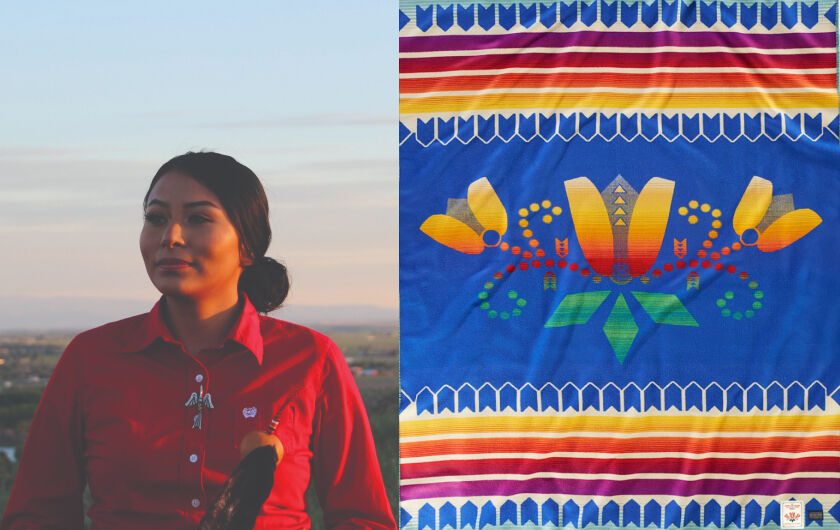
Deshawna Anderson
Meet the 2020 contest winner and Little Big Horn College student and College Fund scholar, Deshawna Anderson and how she draws inspiration from historic and contemporary Apache beadwork, quillwork, and burden baskets (conically shaped and fringed baskets that traditionally were used by women to carry everyday items like food and firewood).
