TCU Computer Science Capacity Building
2021-2025
About The Program
Through the generous funding of private donors, the four-year $2.7M TCU Computer Science Capacity Building program provides the opportunity for TCUs to build institutional capacity through increased computer science education that strengthens tribal sovereignty. This is accomplished by developing computer science degree programs and by fostering integration of computer science education within the general education curriculum and other disciplines.
To support that goal, the College Fund has identified the following outcomes for this program:
-
- TCU grantee develops computer science programming reflective of student engagement, faculty development, institutional capacity, and community outreach.
Students at TCUs develop baseline computer science knowledge informing career choices, community social and economic development, and research. - Faculty have the opportunity for professional development that increases their understanding of computer science concepts and the integration of concepts throughout curriculum.
- Tribal communities, agencies, and governments use computer science capabilities to improve social and economic outcomes.
- Institutional capacity to maintain computer science programming is developed through student engagement, faculty development, and community outreach.
- While the primary focus of the grant supports faculty hiring, professional development, and curriculum/program design, TCUs identified additional areas for building capacity. These areas seek to integrate community outreach, place-based projects, intergenerational transfer of knowledge, K-12 pathways, and student support through industry internships/mentorships. Some of the desired activities relate to improving education; developing apps for activating languages, stewarding land, and connecting culture and food sovereignty; bringing visibility to Missing and Murdered Indigenous Women; managing health care systems and tracking COVID and other health outcomes; creating virtual/augmented reality experiences; visualizing history and genealogy; building tribal businesses; and ensuring access to emergency services.
- While the opportunities are truly limitless, success is dependent on sustained funding from the private sector.
- TCU grantee develops computer science programming reflective of student engagement, faculty development, institutional capacity, and community outreach.
Computer Science Programming Spotlight
- Bay Mills Community College
- Institute of American Indian Arts
- Navajo Technical University
- Salish Kootenai College
- United Tribes Technical College

Program Snapshot
Bay Mills Community College (BMCC) developed a fouryear online Bachelor of Science program, giving students nationwide access to coursework and providing a seamless pathway for those with an associate degree in Computer Information Systems (CIS). BMCC launched the program in response to a shortage of CIS professionals in tribal communities. Every student in the program brings a story, purpose, and community with them. Some aim to modernize tribal infrastructure, others to maintain Native languages through digital tools, and many seek to protect data sovereignty. The program turns these ambitions into action. Graduate Audie Petrosky said, “I went from a deadend job to having a career within one month of graduating from BMCC’s CIS program”. Alan Thomas shared that the course selection “helped develop the skills I needed to become a great IT professional”.
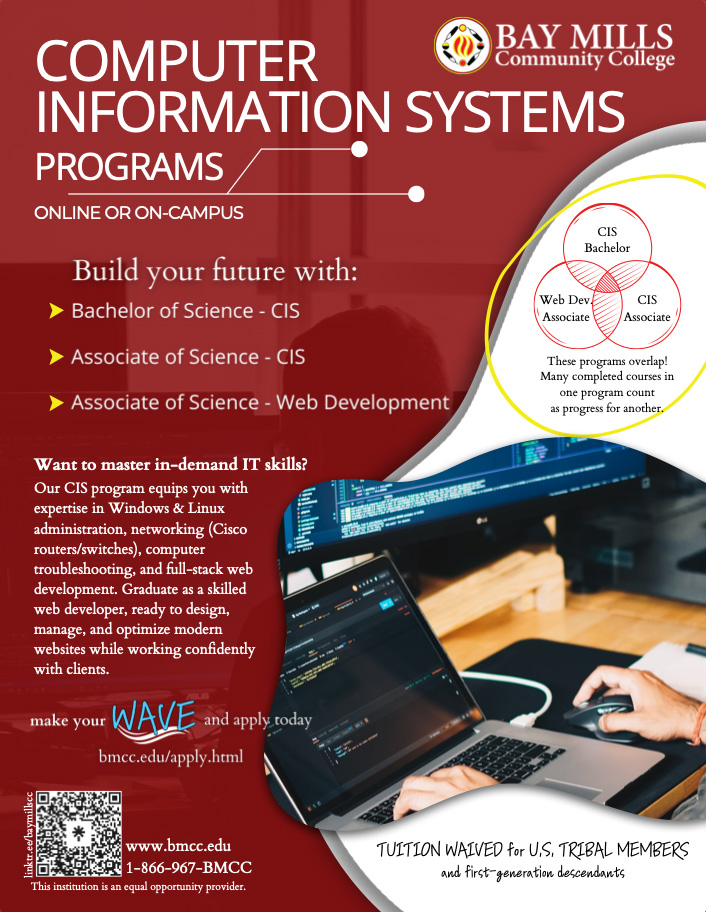
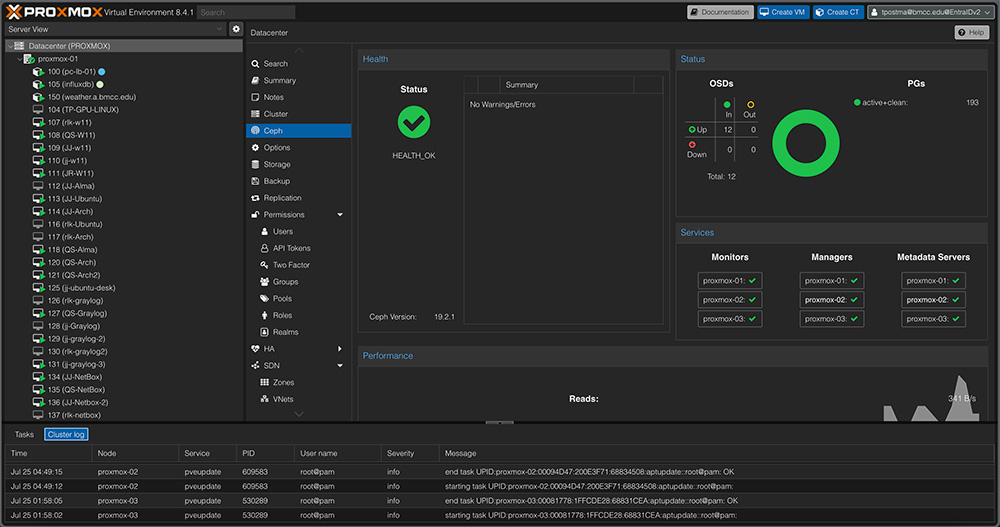
The screenshot demonstrates the lab environment that BMCC provides students with access to perform their lab work in relevant courses. We run several hypervisor servers on premises that students can use to complete their lab work. This setup provides equitable access for students; it does not matter what equipment they personally have. As long as they have a reasonably stable internet connection, they can perform their work from anywhere.

Student Testimonial
In this inspiring interview, Desmond Hayes, a student at the Institute of American Indian Arts (IAIA), shares his experience in the Computer Science + After Effects course. Desmond discusses how learning to program transformed the way he approaches video editing and motion graphics – unlocking creative possibilities that would be nearly impossible to achieve by hand. Watch as he walks us through his final project, where custom scripts and expressions power dynamic visual and audio effects. Whether you’re an aspiring digital artist or curious about how programming intersects with visual media, this interview offers a unique glimpse into the future of creative production. Learn more about IAIA’s Computer Science program: https://iaia.edu/explore-programs/computer-science/
Why Computer Science?
Drew Trujillo, IAIA Computer Science faculty, shares why computer science is a field of creativity, and a way to be artistically expressive in ways that have never before been possible. He emphasizes that Indigenous people have always been technologists and IAIA is a place where computer design and code come from a place of connection and identity. “At IAIA, we’re not just teaching computer science, but we’re reimagining how it can be taught, practiced, and lived. We’re deconstructing western approach to CS education and reweaving it through Indigenous frameworks. That means centering art, story, ethics, and relationships to land, not as add-ons, but as foundations.
Navajo Technical University (NTU) computer science in a snapshot:
– 1 Bachelor of Science program in Computer Science
– 2 Computer Science faculty members
— Dr. B. Patil (engineering background)
— Dr. F. Stomp (mathematics background)
– 1 Undergraduate student publication
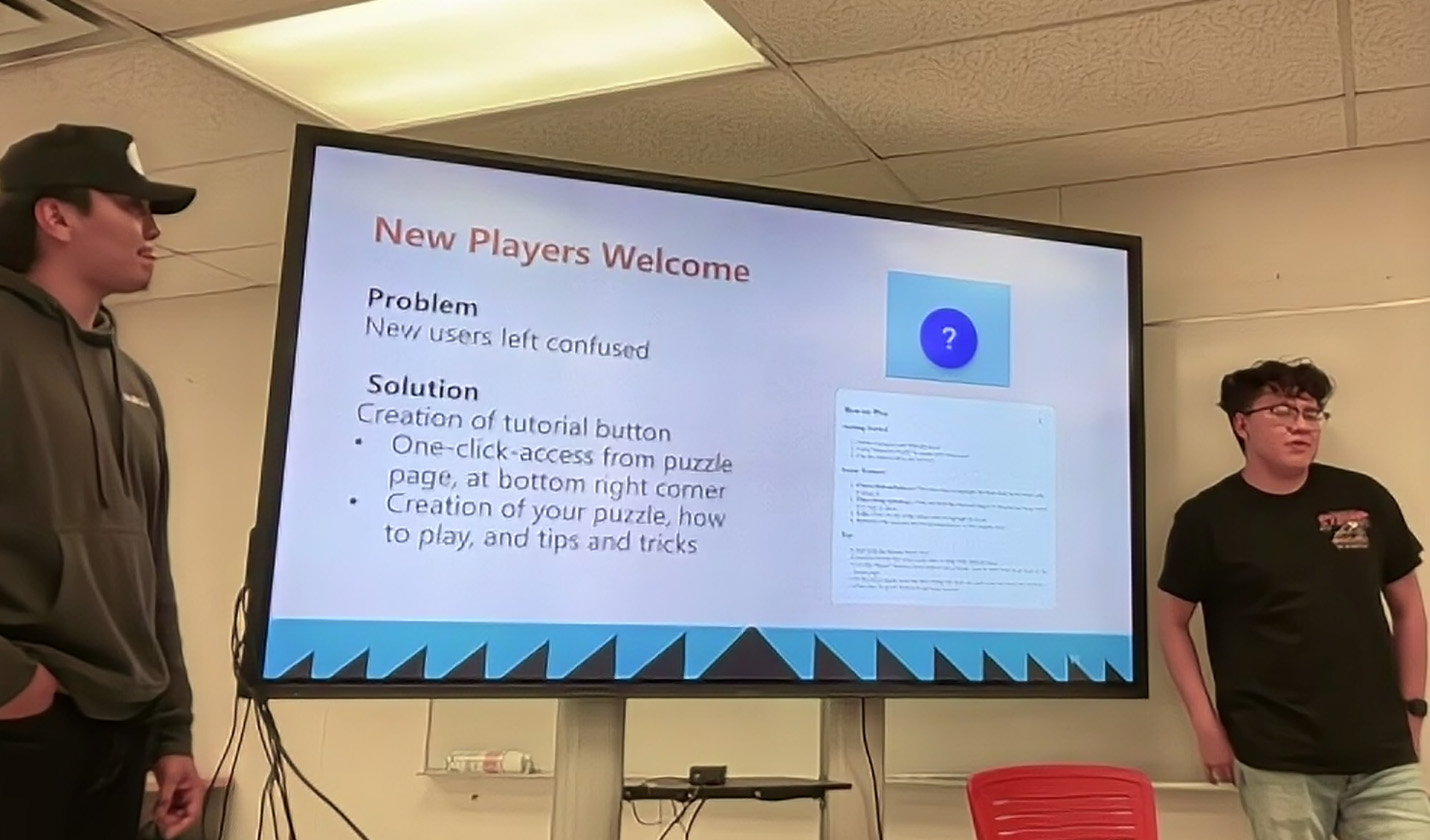
Emillo Mitchell and Taili Begaye present their work on enhancing Navajo vocabulary in their computer science project.
With support from the American Indian College Fund, Salish Kootenai College is engaging both students and educators in hands-on computer science learning. Middle and high school students participate in summer internships, tech camps, and Raspberry Pi projects, while local teachers attend workshops to bring culturally grounded CS activities into their classrooms.
Northern Cheyenne Translator
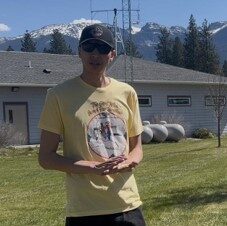 Teague Evans, a dedicated computer science student, developed a custom large language model designed to translate English into Northern Cheyenne, his native language. Motivated by the urgency of language preservation—his parents being among the last fluent speakers—Teague combined advanced AI techniques with cultural responsibility. His project not only supports revitalization efforts but also emphasizes ethical stewardship of tribal data. By prioritizing data sovereignty and community consent, Teague’s work represents a meaningful intersection of technology, heritage, and ethics. His achievement stands as a model for how innovation can honor and protect Indigenous knowledge in the digital age.
Tech Internship
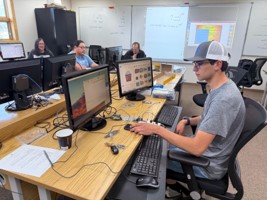 High school intern Colby successfully integrated hardware and software by developing a remote-controlled car using a Raspberry Pi and Python. His project allowed real-time control through a web browser, showcasing his ability to bridge physical computing and programming. Colby’s work reflects strong initiative and a passion for hands-on tech innovation.
Flathead Reservation Middle School Tech Camp
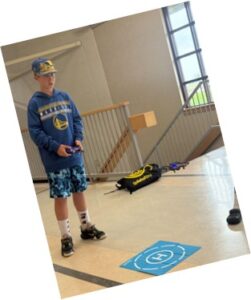
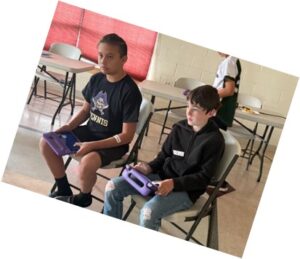
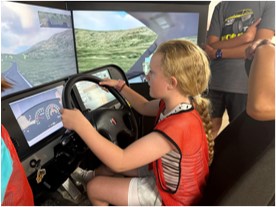
The SKC tech Camp offers an exciting, hands-on STEM experience for youth from the surrounding community. Participants engage in a range of activities that blend technology, engineering, and physical activity. Campers learn to fly drones, practice block coding, navigate a car simulator, and drive Sphero robots. They also build and ride their own bikes, gaining practical skills and confidence. The camp culminates in a fun and challenging bike rodeo obstacle course alongside a drone flight course, celebrating their learning and teamwork. The SKC Tech Camp fosters curiosity, creativity, and collaboration in a supportive environment, inspiring the next generation of innovators.
By investing in both youth and educators, SKC is helping build lasting pathways into technology for Native communities.

Snapshot of code from an English to Northern Cheyenne translation application. Created by Salish Kootenai College Computer Science student and graduate, Teague Evans.

TCU Project Highlight
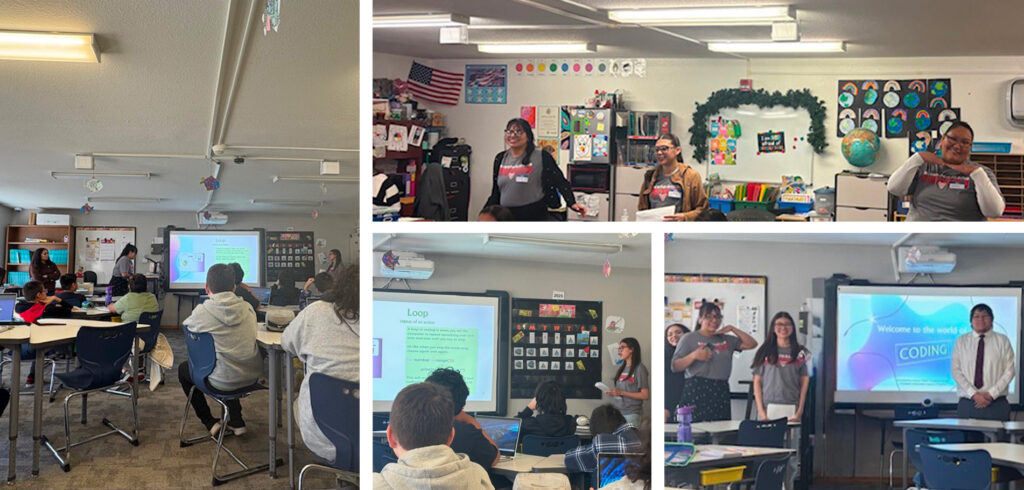
Computer Information Systems students at United Tribes Technical College (UTTC), all of whom had completed computer science electives, organized and led community coding workshops for 4th and 5th grade students in the surrounding community. The workshops introduced young learners to foundational coding skills through interactive games and activities, along with custom lesson plans and worksheets independently developed by the college students.
In addition to coding instruction, the workshops also covered essential computer literacy topics and terminology, giving elementary students a broader understanding of technology concepts. Through this initiative, UTTC students gained valuable real-world experience in teaching, public speaking, curriculum design, and hands-on facilitation. While the elementary students built practical coding and digital literacy skills, the college students strengthened their presentation abilities and developed confidence as community educators and role models.
Grantees
Bay Mills Community College
Institute of American Indian Arts
Navajo Technical University
Salish Kootenai College
Turtle Mountain College

United Tribes Technical College
Related Blogs
American Indian College Fund Awards Four Tribal Colleges with Four-Year Computer Science Initiative Grants
Computer science education provides today’s college students the necessary skills and opportunities to thrive in today’s world. Yet American Indian and Alaska Native peoples are still and have been historically underrepresented in the computer science fields. To remedy that, the American Indian College Fund launched its Tribal College and University Computer Science Initiative to create new and expand existing computer science programs at higher education institutions serving American Indian and Alaska Native students to meet the community and workforce needs of Indigenous communities and to provide career opportunities for Native students in computer science fields.