Student Development
Explore Development Opportunities
Study Skills
No matter what your grades are, everyone needs some guidance to find success in the classroom. Here are some resources to help you develop the best study habits and skills you’ll need to get your degree:
What are Office Hours? – by Andrew Ishak
Time Management: TCU Video Project Series
Focus 2 Self-Assessment
Many people struggle with choosing an academic major during school, or job industry after graduation, but choosing a path is important when choosing your classes, internships and other career opportunities.
Focus 2 combines self-assessment, career and major exploration, decision-making and planning in one place. By matching your assessment results to career options and majors/programs for your consideration, FOCUS 2 guides you through a career and education decision-making model to help you make informed career decisions and take action in planning your future.
To use this free service, register to create an account with the access code collegefund. From there, you can take each test- personality, interests, values, and skills- to build your academic and career planning profile. Print your profile to share with an academic or career counselor or mentor to discuss your career plan or transition to a new profession.

Money Management
It is also important to understand budgeting, credit, and debt management – to help you to make responsible decisions in school, and prepare for your financial life after school. Learn about the following topics in related posts — your financial future depends on it.
- Money Management — Developing Common Cents (College Fund)
- Per Cap (First Nations Development Institute)
- Financial Skills for Families (First Nations Development Institute)
- Developing Your Vision: Managing Your Money
- Your First Bank Account
- Childcare Costs (and Ways to Reduce Them)
- When Your Child Has Special Needs
- Caring For Aging Parents
- Children and Family Considerations
Student Ambassador Program
The American Indian College Fund Ambassador Program was established in 2015 to strengthen students’ and alumni personal and professional skills and to represent the College Fund.
Our Blogs
The College Fund Launches New Community-Based Two-Year ECE Program at Five Tribal Colleges
The American Indian College Fund, in collaboration with five tribal colleges and universities and the W.K. Kellogg Foundation, has launched a new early childhood education initiative that includes the child development knowledge from within Native American communities and the best practices of the early childhood education field.
The College Fund and Adolph Coors Foundation Honor Tribal College President and Native Students
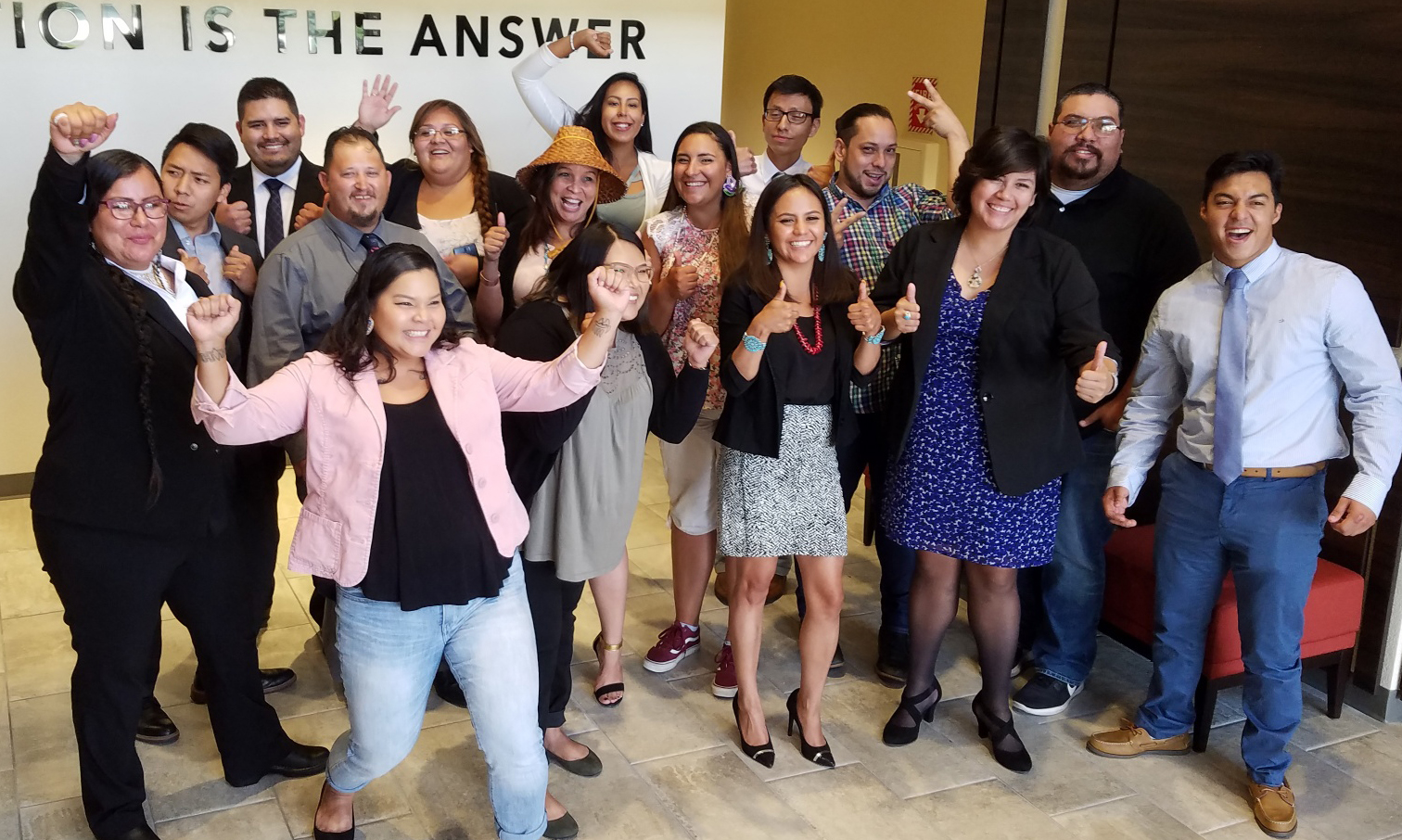
The American Indian College Fund honored American Indian scholarship recipients at its 2015-16 Student of the Year reception at the American Indian Higher Education Consortium Student Conference in Minneapolis, Minnesota. The program, sponsored by the Adolph Coors Foundation, awarded each honoree a $1,000 scholarship.
The Coca-Cola Foundation and College Fund Honor First-Generation Native Scholars
The Coca Cola Foundation and the American Indian College Fund honored 36 American Indian scholarship recipients at its 2015-16 Coca-Cola First Generation Scholarship banquet at the American Indian Higher Education Consortium Student Conference in Minneapolis, Minnesota.
Stand With Native Students, Transform Lives
Friends and Relatives, my Lakota name is Wacinyanpi Win, which means “they depend on her.” I am a Sicangu Lakota from the Rosebud Reservation in South Dakota. I greet you with a handshake and a good heart.
College Fund Launches “Stand With Us” Campaign to Increase Natives in College
Native students are motivated, resilient and eager to activate their academic potential. And most of them need help – 90% demonstrate financial need. Help us reach our goal of raising $500,000 so 100 more American Indians can start the path to earning their college degrees. Stand with us. Stand with Students. Together we’ll empower more American Indians to make positive change in our world.
Grotto Foundation Grants $25,000 to Revitalize Lakota Language in Early Childhood
By the next century, nearly half of the roughly 6,000 languages spoken on Earth will disappear, according to estimates by the United Nations Educational, Scientific, and Cultural Organization (UNESCO). Of those languages, in North America 54 Native American languages are already extinct and another 137 are in various degree of being endangered. Yet the positive benefits of speaking one’s native language include better academic performance, self-identity, mental and physical health, and more.
