Education was a tool used by the U.S. government to try to assimilate American Indians. This Week in Indian Country’s piece, “Schools for Scandal,” illustrates the history behind U.S. policy to assimilate American Indians in boarding schools.
Richard Henry Pratt, a former U.S. Army officer, summed up the government policy in the late 1800s that was carried forward into the early 1900s by saying, “A great general has said that the only good Indian is a dead one. I agree with the sentiment, but only in this: that all the Indian there is in the race should be dead. Kill the Indian in him and save the Man.” As part of this philosophy that was entrenched in federal policy, the government took Indian children away from their families and tried to make them speak, dress, and act like whites. Native language was forbidden.
By 1900 there were approximately 25 federally funded boarding schools off reservations in the United States.
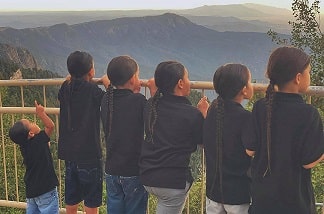
Today tribes have taken more responsibility for educating their youth and incorporating language and culture into school curricula to combat the damage that was done during the boarding school era. In 1968, the first tribal college was founded by the Navajo nation (Diné College). Yet there is still a lot of work to be done. Many Native languages have disappeared or are disappearing, and the legacy of assimilation policies have left an indelible scar on Indian people and their attitudes towards education.
Tell us: What are some of the ways you feel that tribal colleges are helping to reverse the legacy of boarding school? Share your tribal college success stories here!