The American Indian College Fund (College Fund) plays a critical role in advancing higher education opportunities for Native communities by supporting faculty members at tribal colleges and universities (TCUs) in pursuing advanced degrees. Through financial aid and professional development, the College Fund empowers educators to conduct groundbreaking research and enrich academic programs at TCUs. Recently, three doctoral fellows shared insights into their dissertation research and its broader implications for Indigenous communities.

Exploring Child Maltreatment Fatalities
Dr. Tiffany Pinckney, who served as Chair of the Human and Social Services Department at United Tribes Technical College at the time of her fellowship, focused her dissertation on a deeply pressing issue: child maltreatment fatalities (CMFs). CMFs refer to deaths caused by abuse or neglect, a tragic and preventable reality. Despite progress in reducing overall rates of abuse, the prevalence of CMFs remains stagnant or has increased in recent years.
“Even one child dying from maltreatment is one too many,” Dr. Pinckney stated, emphasizing her motivation to bring greater awareness to the issue. Her research identified four critical findings:
- CMFs are not “unicorn events,” but preventable occurrences.
- Child welfare workers require enhanced training to assess risk and protective factors effectively.
- Current training materials inadequately address CMFs, limiting the preparedness of social workers.
- Child welfare workers often lack support systems to process the trauma associated with CMFs.
Dr. Pinckney’s work not only illuminates systemic gaps but also paves the way for actionable reforms in child welfare education and training. She has presented her findings at the MSSA Conference and aims to publish in a peer-reviewed journal to reach a wider audience.
Bridging Indigenous Paradigms and Mathematics
 Dr. Daniel (Danny) Luecke, a member of the Choctaw Nation of Oklahoma and math instructor at Turtle Mountain Community College, centered his research on integrating an Indigenous research paradigm into mathematics education. Inspired by his graduate studies at North Dakota State University, Dr. Luecke sought to connect math instruction with the cultural values and language of the Dakota/Lakota people.
Working with Sitting Bull College’s Wahóȟpi (the Language Nest), Dr. Luecke collaborated with fluent speakers, language instructors, and math educators to develop a framework intertwining Dakota/Lakota linguistic and cultural elements with Western mathematical concepts. “We demonstrated that math fluency and language fluency can grow together,” he explained, noting the discovery of higher-order mathematical thinking embedded within Dakota/Lakota traditions.
Dr. Luecke’s findings have been widely disseminated, including publications in journals such as Philosophy of Mathematics Education and Frontiers in Education. He has also presented at AISES conferences, highlighting the transformative potential of culturally responsive STEM education.
Rewriting Apache History
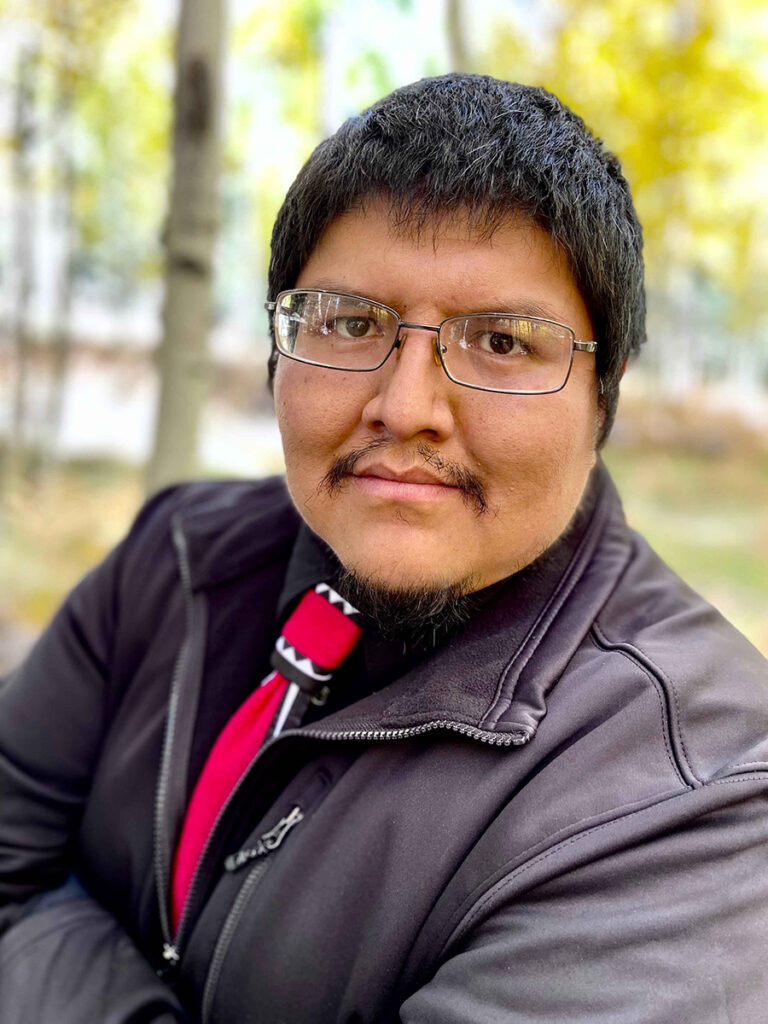 Dr. Marcus Macktima, a member of the San Carlos Apache Tribe, dedicated his dissertation to documenting the history of his people from the establishment of the reservation to the modern era. Frustrated by the overemphasis on the violence of the Apache Wars and the lack of historical narratives beyond the 19th century, Dr. Macktima sought to uplift his community’s story in a positive and comprehensive manner.
“Our tribe has never produced a written history from our perspective,” he noted, explaining the dearth of academic resources on San Carlos Apache history. Through extensive analysis of government documents and oral histories, Dr. Macktima unearthed key moments in the 20th century, including land disputes, resource management, and constitutional debates. His research underscores the long-term impacts of 19th-century federal policies on contemporary issues, such as the Oak Flat land exchange.
Dr. Macktima’s work has already made a tangible impact. While developing his dissertation, he also taught Apache history at San Carlos Apache College (SCAC), using his research to shape the curriculum. “Teaching this course helped me craft a dissertation that would be helpful for both my doctoral program and my community,” he explained. Though his dissertation is currently embargoed, it serves as a foundation for future collaborative projects aimed at preserving Apache history.
Empowering Future Generations
The achievements of Drs. Pinckney, Luecke, and Macktima exemplify the transformative power of advanced education at TCUs. By addressing critical issues such as child welfare, culturally relevant STEM education, and Indigenous history, their research contributes to the intellectual and cultural resilience of Native communities.
Through the support of the College Fund, these scholars have not only advanced their academic careers but also created meaningful pathways for future generations to engage with their heritage and education. Their work underscores the importance of sustained investment in Indigenous scholarship and the invaluable role of TCUs in shaping the leaders of tomorrow.