By Robert DeCoteau, Director of Workforce Education, NWIC
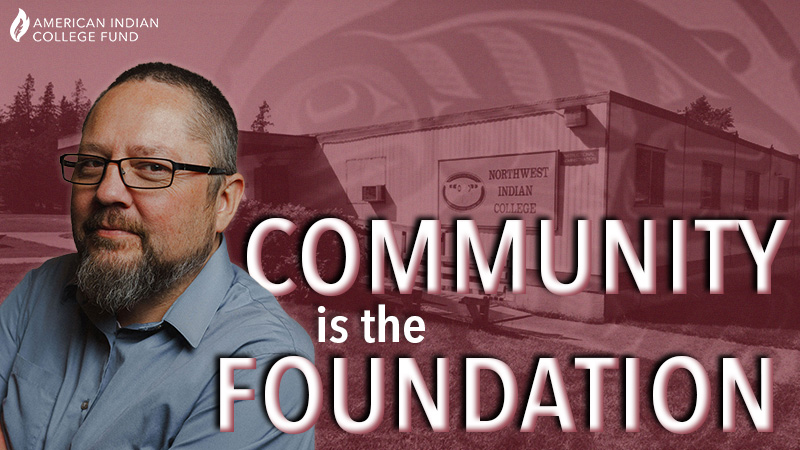
My own academic journey started right here on the Lummi Reservation, where I grew up. I’m not someone who followed a traditional path – I dropped out of school, worked various jobs, and later returned to complete my GED through the very program I now lead at Northwest Indian College (NWIC). Ten years ago, I stepped into the role of Director of Workforce Education, bringing with me firsthand experience as a student who once faced the same challenges I now help others overcome. That perspective has shaped everything I do – it’s not about credentials on paper, but about truly understanding what our students need because I’ve walked in their shoes.
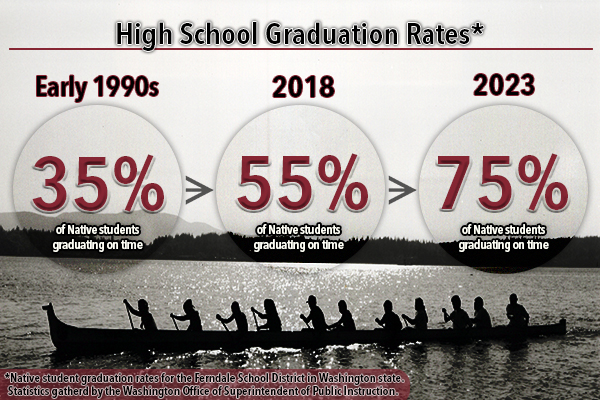 What does this mean? Historically speaking, our youth are not motivated to graduate by family or community expectations. They are not motivated by individual achievement or the content of the curricula. And they are not motivated by the prospect of career or wealth. But there is data from the Washington Office of the Superintendent of Public Instruction (OSPI) that shows graduation rates for our community are trending upward. From my own experience, in the early 1990s, approximately 50% of my peers were dropped out of high school including me, with about 35% graduating on time. OSPI data for recent years for our local public high school has shifted from 55% of our Native youth graduating on time in 2018 to 75% completing on time in 2023.
So, what are the contributing factors to this upswing in high school completion? There is a correlation between technological advancements and educational success in our community. The students graduating now were raised with access to smart phones, social media, and Google; their parents were raised with increasing access to the internet. I believe this access to information and connection has led to our youth accepting high school graduation as a minimum social norm. This combined with a growing community value on education is leading to positive outcomes.
The 75% isn’t a finish line – it’s a starting gate. Technology gave our youth visibility, showed them graduation isn’t optional anymore, but community gives them purpose. What we’re seeing is the first generation raised on dual connection – digital and cultural – who expect to finish what they start. The real victory won’t be hitting 90% or 95%; it will be when that diploma translates into something meaningful: careers that sustain, degrees that advance, economic parity for our communities. We’re not just producing graduates – we’re building a foundation. And that foundation is strong enough to hold whatever we choose to build next. Each new graduate is a potential parent who will express the value of education to their children.
In the meantime, the Adult Basic Education program at NWIC will endeavor to find and support those that the public school system left behind.