Planting the Seeds of Cultural Sustainability

April 22, 2026 | Student Ambassador Aiyanna Tanyan’s (Seminole Nation of Oklahoma) work to reclaim food sovereignty
At Haskell Indian Nations University, those of us at the Haskell Greenhouse are committed to various initiatives that help students and the greater community connect with the land.
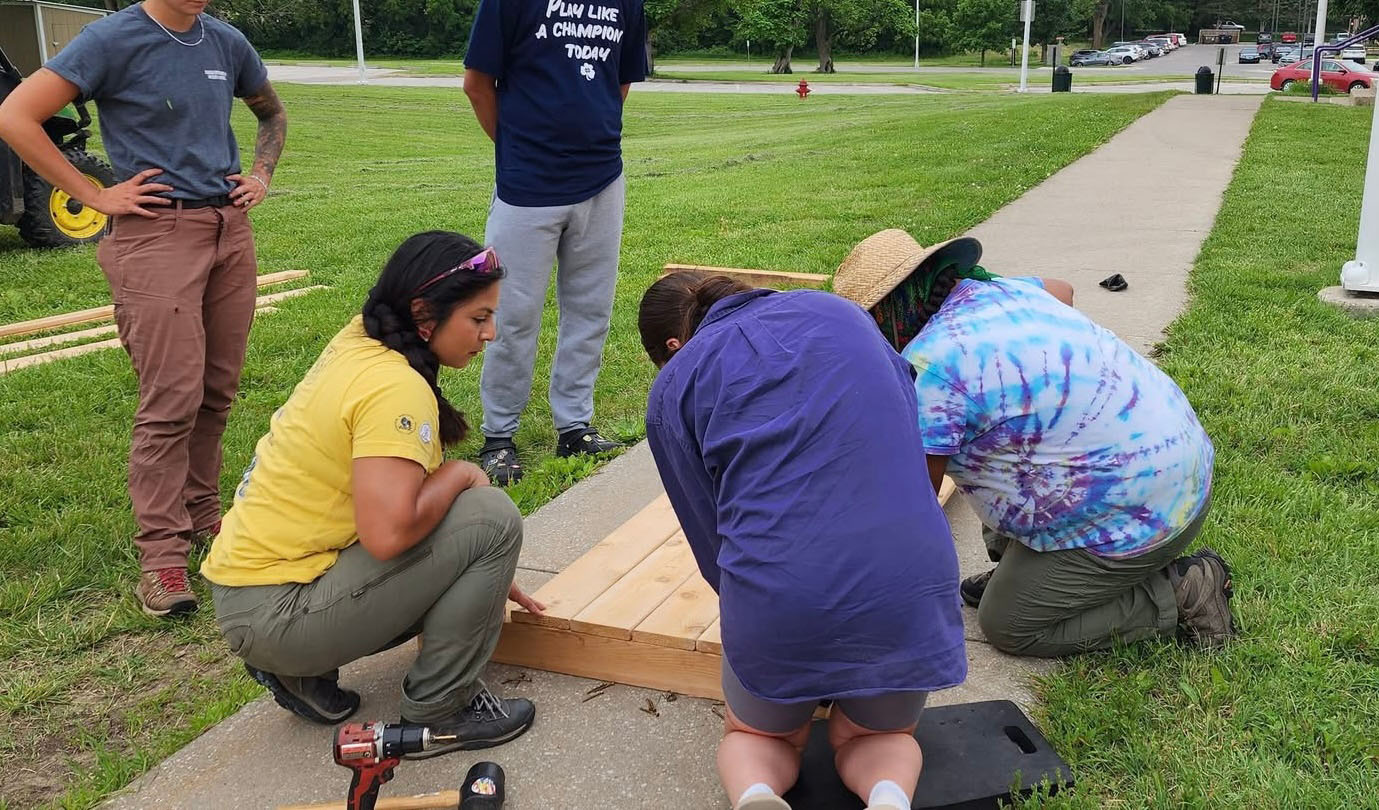
Haskell Greenhouse student researcher Aiyanna T helping teach students how to build raised garden beds in front of Winona Hall student housing on campus. (June 12th, 2025)
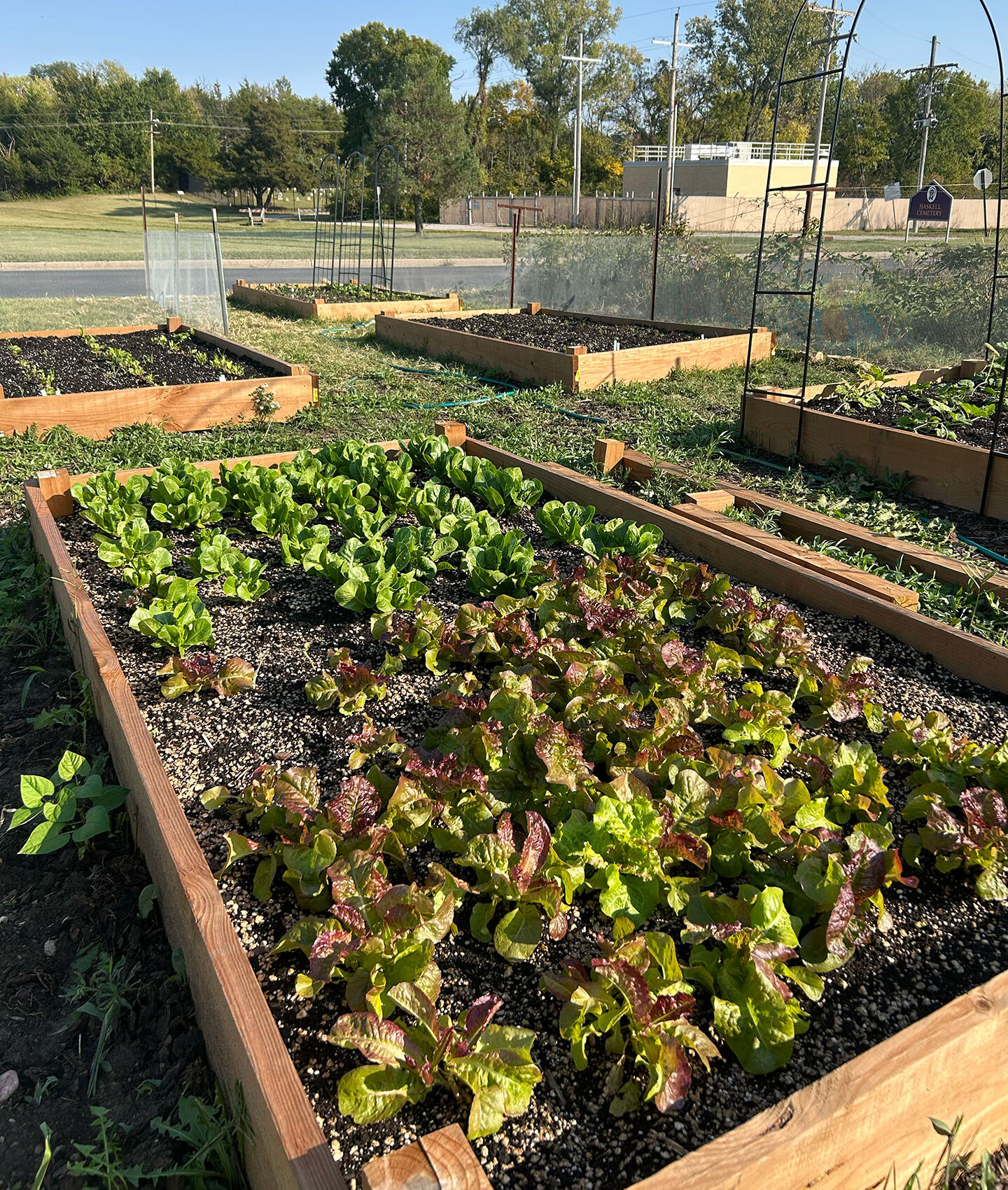
Lettuce varieties, watermelon, and different crops growing in the raised beds near the Haskell Greenhouse (October 8th, 2024)
One of our projects deals with the topic of tribal food sovereignty. This project began with students asking a simple question: “How can we get more involved in growing our own food and have better access to healthier options on campus?” Hearing that, my friend Pe-Qwas Hernandez and I knew there was a need and saw this as an opportunity to create something meaningful for our campus community.

We came up with the idea of building raised garden beds near the dorms so students can easily access fresh foods and learn how to grow them themselves. Through support from the Haskell Greenhouse (funded through the USDA Equity Grant), we started building.

We didn’t just want to help provide food. We wanted to create ongoing and continuous learning spaces. Our hope is that students can learn how to build raised beds, transplant plants, and take part in maintaining the gardens here on campus so they can take that knowledge back to their tribal communities and do the same thing.

Last year was our first year doing this project and it was a learning experience as with many community-based projects, it comes with trial and error. However, that process taught us a lot about what works, what doesn’t, and how to build something more sustainable moving forward. This year, we’re continuing this work with stronger systems, more involvement, and a clearer vision.
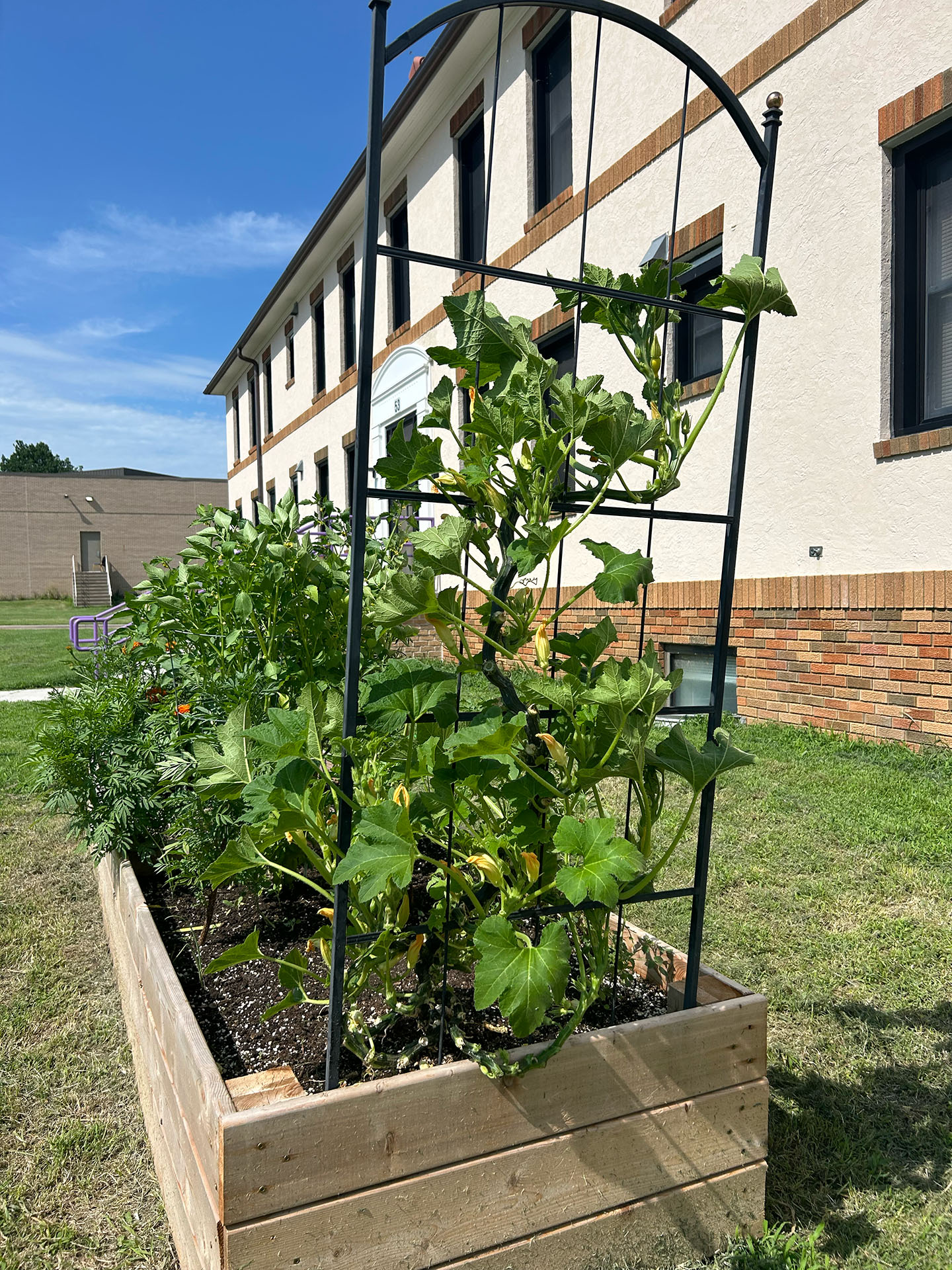
Vegetables such as squash, tomatillos, cherry tomatoes, and peppers growing in a raised bed built by the Haskell Greenhouse student researchers Aiyanna T and Pe-Qwas Hernandez. (July 23rd, 2025)
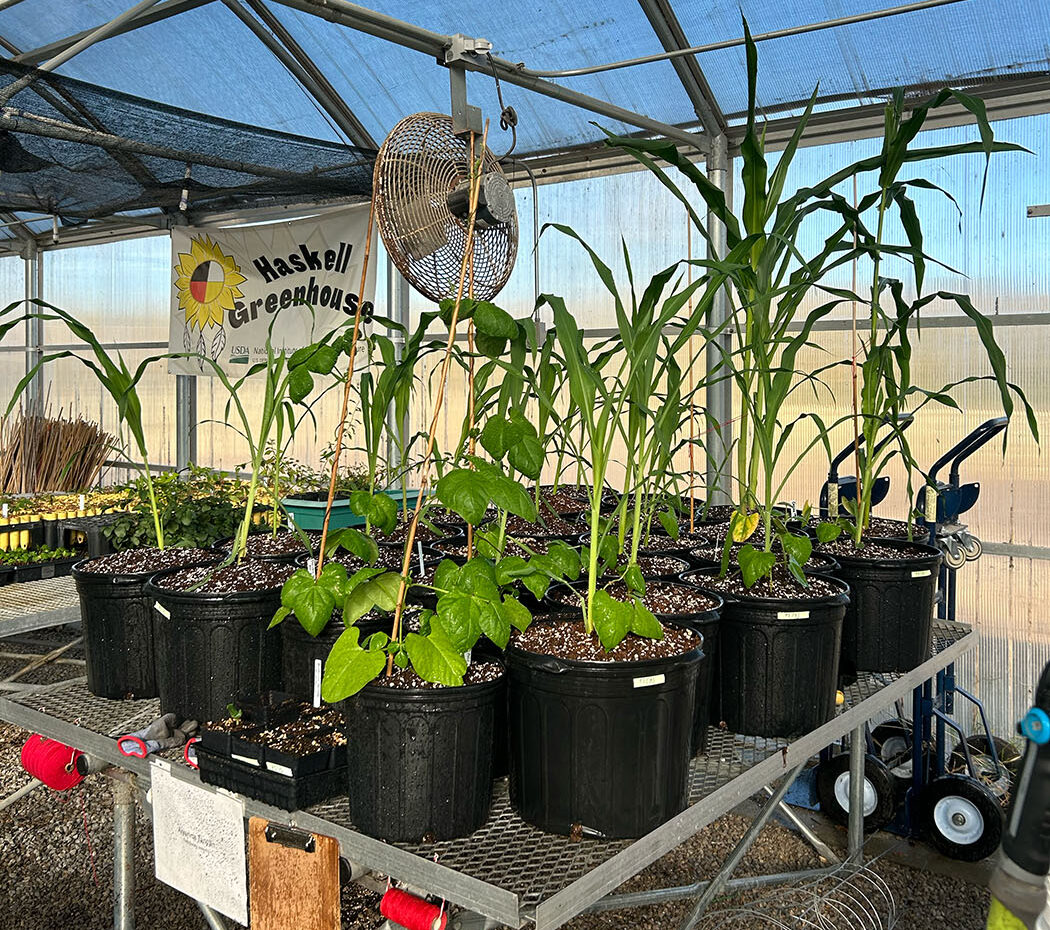
Three sisters grown by Haskell Greenhouse student researcher Aiyanna T. inside the Haskell Greenhouse.
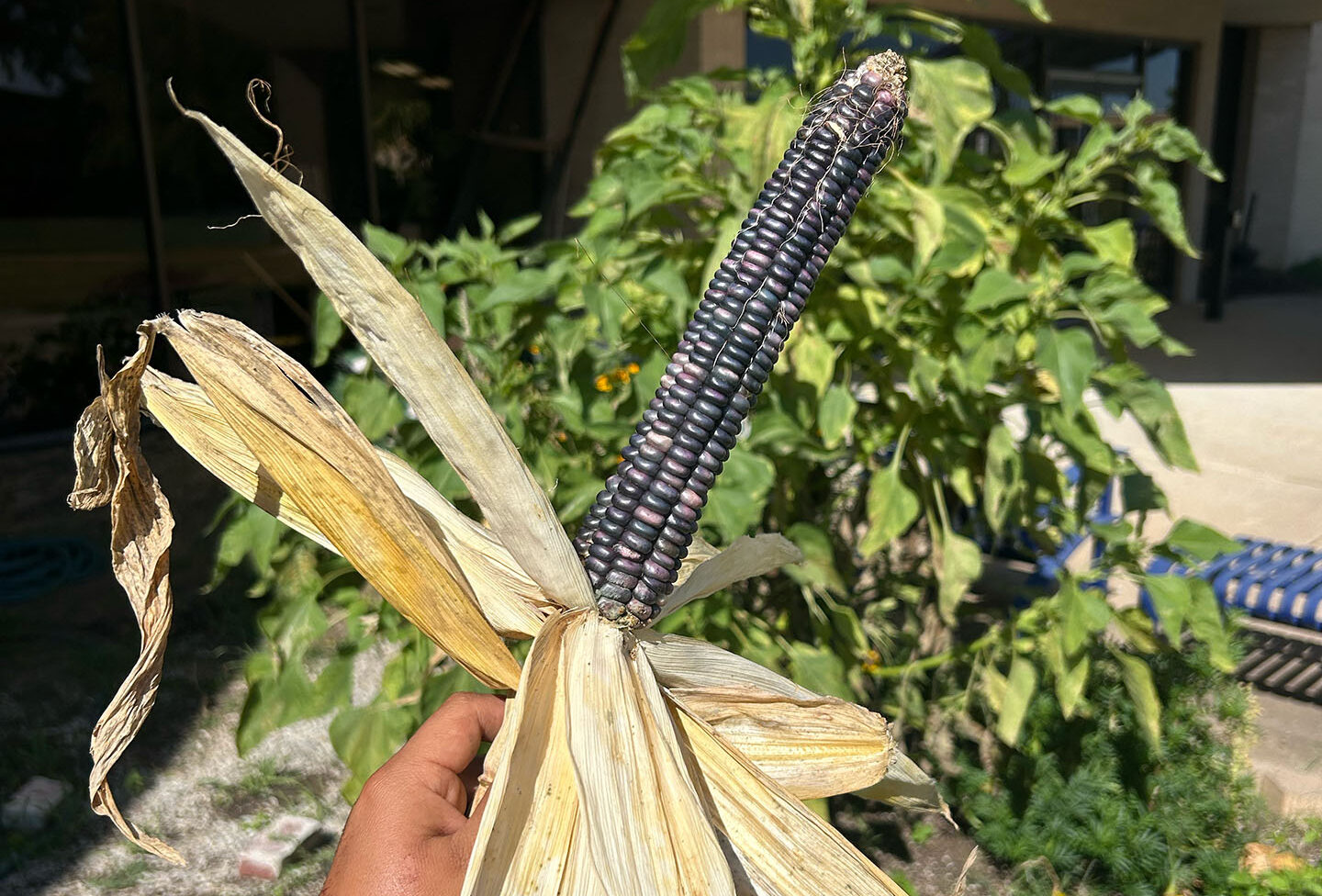
Blue Seneca corn
I also work on cultural garden plots and grow traditional crops like the non-human relatives we call the Three Sisters (corn, beans, and squash). In previous years, I’ve used different tribal varieties such as Blue Seneca corn, Blue Hopi Corn, Cherokee Pole Beans, and even Mvskoke tobacco in these plots. These gardens are deeply personal to me and have taught me so much about various cultural values. They represent not just food, but identity, teachings, and connection to the land. Growing these plants reminds me that food sovereignty is about reclaiming knowledge and honoring the practices of our ancestors.
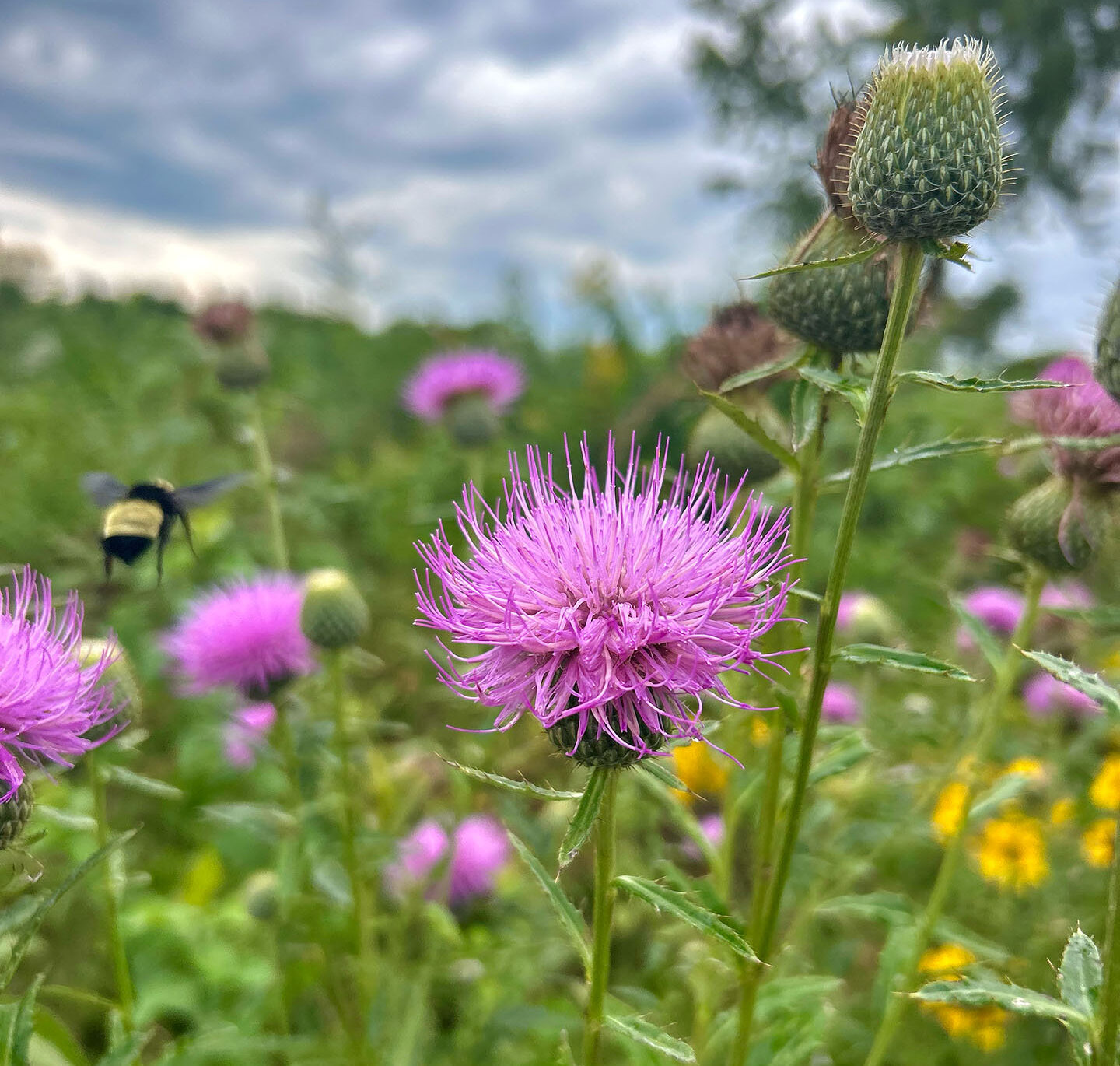
I couldn’t do this alone, and this work around food sovereignty extends far beyond these gardens. Our team is involved in multiple land stewardship efforts across campus, including the woodlands, prairies, and wetlands. We host community workdays where students and community members come together to restore the land such as removing invasive species and reintroducing native plants like prairie grasses.

Everyone at the Haskell Greenhouse wants to help others learn, value, and view these spaces as places of teaching. I know they have taught me so much about responsibility and our relationship with the environment. Through these projects, we’re helping students reconnect with the land and understand the importance of food sovereignty for Indigenous communities. This work is ongoing, and we’re still learning. Every seed planted, and every workday shared brings us one step closer to a more sustainable and connected future.
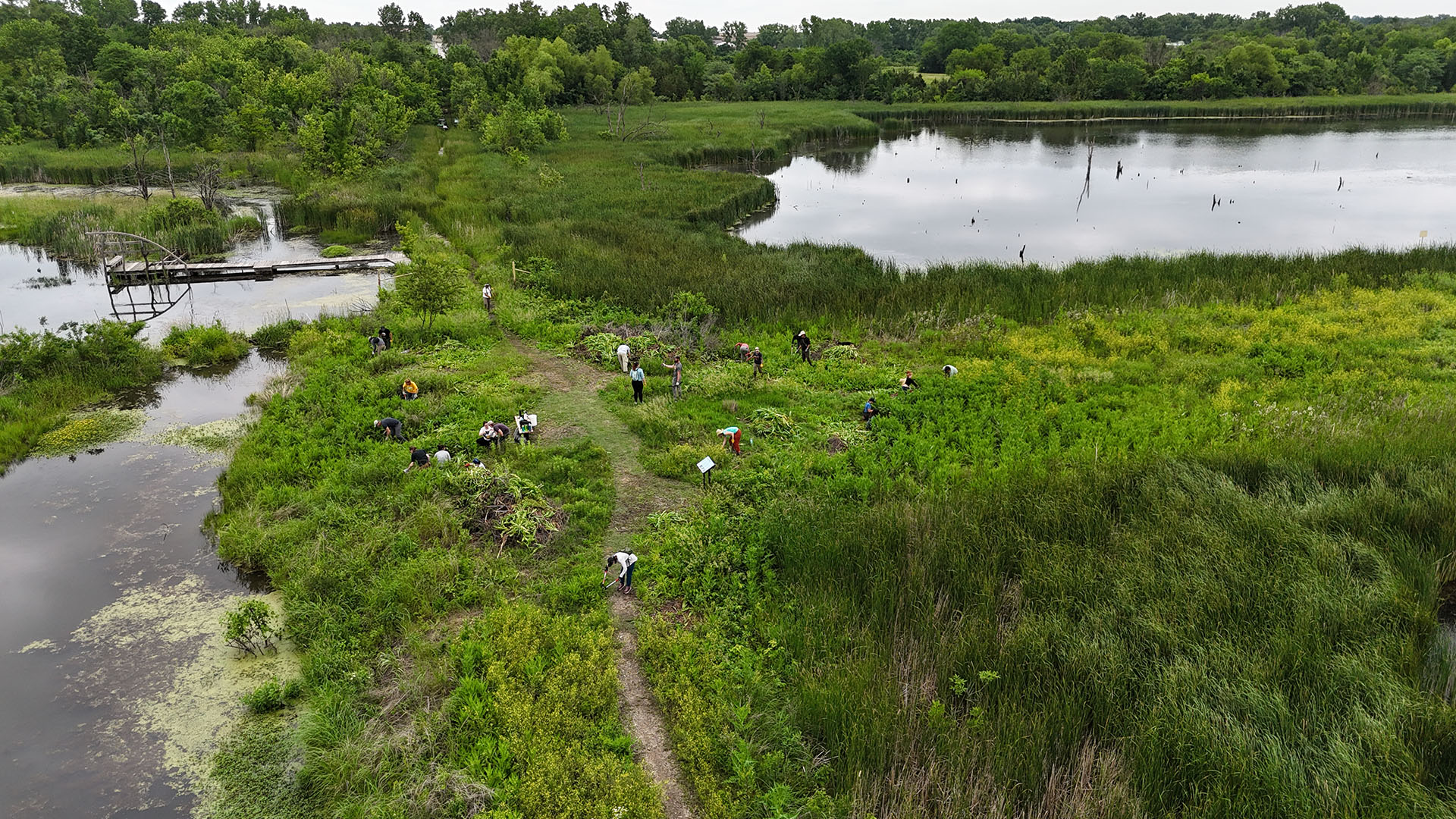
Volunteers in the Haskell Wetlands for a Wetlands Restoration Workday hosted by the Haskell Greenhouse. Volunteers helped cut down invasive teasels.  (June 5th, 2025)
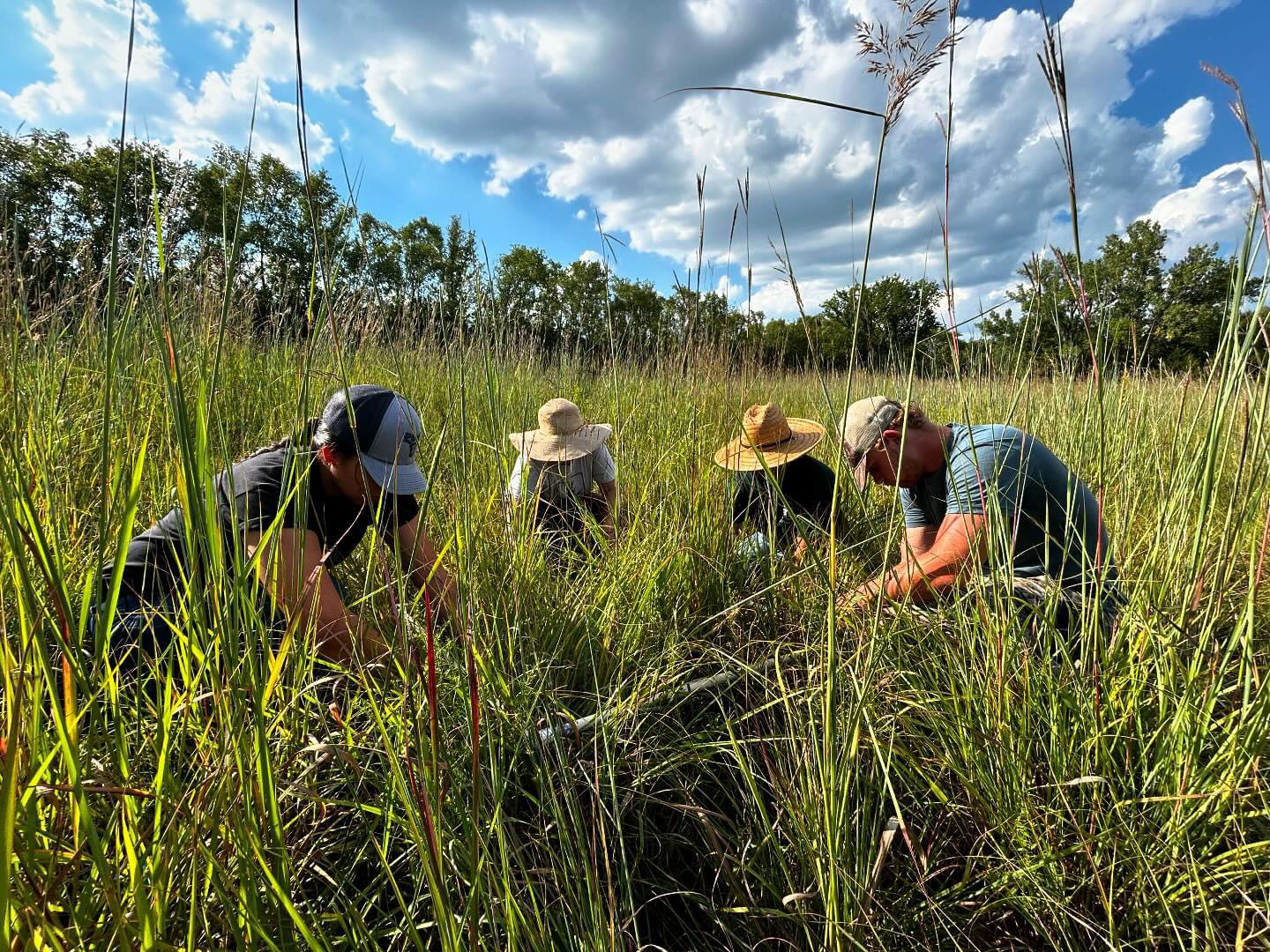
Greenhouse student researchers helping with a land survey in the West Prairie of Haskell lands. The survey solidified the need for restoration in the west prairie. (Aug 29th, 2024)
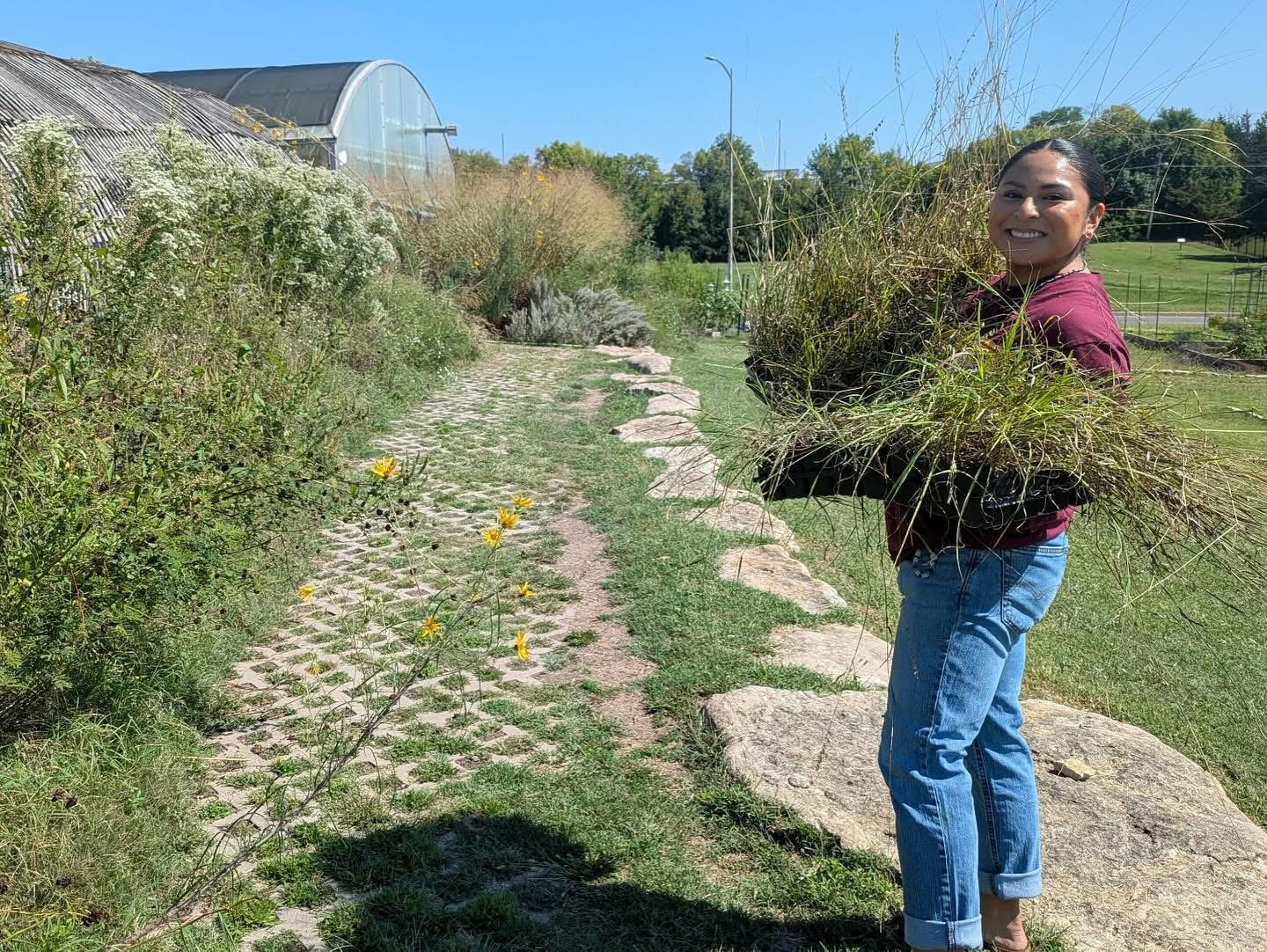
Haskell Greenhouse student researcher Aiyanna T. holding prairie grass species donated by Native Lands Collaborative in front of the greenhouse.
What makes this work powerful is the community behind it. We have a strong group of student researchers and volunteers who show up consistently, not just for Earth Day, but year-round. I am happy that people can be reminded of this day to celebrate our beautiful Mother Earth. She deserves the everyday work of caring for the land, growing food, and supporting each other to do so.

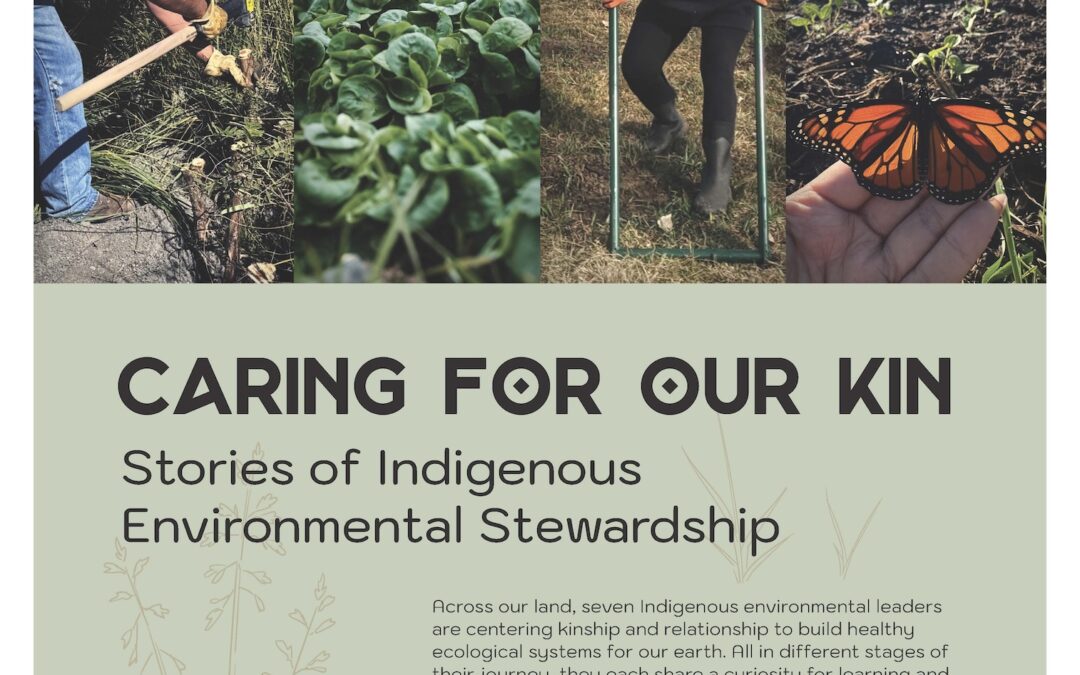
In Caring for Our Kin: Stories of Indigenous Environmental Stewardship, the College Fund shares the stories of Indigenous environmental leaders who are centering kinship and relational knowledge to build healthy ecological systems. These stories remind us that caring for the Earth means caring for one another—and that Indigenous knowledge systems continue to offer guidance, resilience, and hope for the future.

Learn more about our Environmental Stewardship Program.

Ekvnv Vcayecet. Mvto!

(Take care of the Earth/Land. Thank you)

More Blogs
American Indian College Fund Extends Partnership with Dollar General Literacy Foundation 

The American Indian College Fund (College Fund) recently received a $434,000 adult literacy grant from the Dollar General Literacy Foundation (DGLF) for its Native Students Stepping Forward (NSSF): Dollar General Adult Education Program. Celebrating its eleven-year partnership with the DGLF, the program works to increase the number of adults working toward high school equivalency (HSE) in Indian Country. With this year’s DGLF funding, the program can serve 10 tribal colleges and universities (TCUs) who support HSE attainment while also strengthening the whole adult education pathway. College Fund currently plans to select its tenth participating college in 2026.

Uplifting Native Nations and Voices on Indigenous Peoples’ Day: Say Our Names

Uplifting Native Nations and Voices on Indigenous Peoples’ Day: Say Our Names

Words and names have power as do the places and peoples that use them. We hope you will join us in celebrating Indigenous Peoples Day, reflecting on the experiences of our nation’s Indigenous Tribes, while working to strengthen ties between us all as relatives. We will continue to use the words of this blog to uplift Native voices, because we’re Indigenous every day. 

In Memoriam-Ernie Stevens, Jr. Chairman of the Indian Gaming Association

In Memoriam-Ernie Stevens, Jr.
Chairman of the Indian Gaming Association

The American Indian College Fund mourns the passing of Ernie Stevens, Jr. (Oneida Nation), longtime Chairman of the Indian Gaming Association. A lifelong champion of tribal colleges and Indigenous sovereignty, his leadership strengthened Indian Country and created opportunities for future generations. We extend our condolences to his family, loved ones, and the Oneida Nation.

Observing Orange Shirt Day – Why Awareness Matters 

Observing Orange Shirt Day – Why Awareness Matters 

In Canada, Orange Shirt Day is observed on September 30 as a federal holiday called the National Day for Truth and Reconciliation. The American Indian College Fund (College Fund) and other National Native Scholarship Providers are working to raise awareness of this important day of observation in solidarity with the survivors of boarding schools across North America.

American Indian College Fund Partners with National Native Scholarship Providers to Raise Awareness of Boarding School Students 

American Indian College Fund Partners with National Native Scholarship Providers to Raise Awareness of Boarding School Students 

The American Indian College Fund (College Fund) and other National Native Scholarship Providers (NNSPs), including AISES, Cobell Scholarship Fund, and Native Forward Scholars Fund, are raising awareness of Orange Shirt Day in solidarity with Native people in Canada, where it is observed on September 30 as a federal holiday called the National Day for Truth and Reconciliation.  

American Indian College Fund Appoints Five New Trustees to Board for Three-Year Terms

American Indian College Fund Appoints Five New Trustees to Board for Three-Year Terms

The American Indian College Fund welcomes five members to its governing board of trustees for three-year terms. The three tribal college presidents named to the board include Dr. Sean Chandler of Aaniiih Nakoda College, Eva Flying of Chief Dull Knife College, and Dr. Dawn Tobacco-Two Crow-Frank of Oglala Lakota College. The two private sector trustees include Nicole Bellefuille, J.D., a vice president in the financial services industry, and Nalneesh Gaur, a partner with PwC in their Cybersecurity practice.

American Indian College Fund Publishes Free College-Going Guidebook for Native Students 

American Indian College Fund Publishes Free College-Going Guidebook for Native Students 

A free guide to help Native students seeking a higher education is available from the American Indian College Fund. “Native Pathways: A College-Going Guidebook,” available for download on the College Fund website, offers everything from considerations for choosing a college, an in-depth breakdown of financial aid, how to identify and create a support system, a glossary of terms, and encouragement from elders, faculty, and American Indian College Fund President and CEO, Cheryl Crazy Bull.