My hometown, Unalakleet, is an Inupiaq village located in the Norton Sound region of Alaska. We get a great deal of wind in our area because Unalakleet is located right on the coast: the Bering Sea. The town consists of about 750 people year-round. Most residents are of Inupiat Eskimo descent. The non-Natives that reside in Unalakleet are mostly teachers. In the summer, we get quite a few tourists visiting for the sports fishing opportunities that our river provides.
Fishing is one of my favorite pastimes in the summer. I’m not talking about sports fishing. I’m talking subsistence! Because the village of Unalakleet is surrounded by water; the Bering Sea to the west and the Unalakleet River to the east, we partake in subsistence activities year-round.
I love our Alaskan salmon! We do a whole lot of fishing in the summer so that we can harvest for the long winter months to come.
If you are lucky on your fishing trip up the river, you will not only come home with dinner, you will also come with pictures of wildlife and awesome sunsets. Some of the animals that live in our area are caribou, moose, brown bears, foxes, lynx, musk ox, snowshoe hares, and ermine
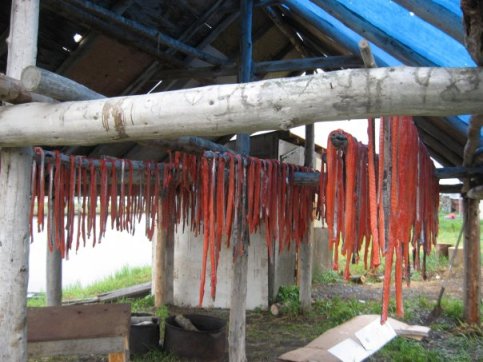
Strips of salmon hang to dry in Amber’s home town.
Most of the salmon that my family catches in the summer is filleted and hung on a fish rack to dry. On rainy days, a small fire is made so the fish can dry well. The fish take about a week to dry on a fish rack when the weather is good (no rain). Many Alaskan Native people like to smoke their fish in smokehouses as well. When they do that, they take the fillets of salmon and slice them into thin strips and hang them for a few days in the smokehouse to get a nice smoky flavor to them. I believe the type of wood used in the smokehouse makes a difference in the taste of the strips.
Many people who are not Alaska Native grimace at the idea of eating dried fish. It actually tastes a bit like jerky. We usually soak the fish in salt water for a few minutes prior to hanging and smoking them. You may also sprinkle a bit of garlic pepper or other spices on the fish for extra flavoring.
If you like canned fish, you take the strips out of the smokehouse after just one day of smoking and flavor the half-dried fish with whatever you like, then pressure cook them for a couple hours. When it comes to putting food away for the winter, you will not regret making a few dozen cans of fish. You can eat canned fish straight out of the jar or spread a few pieces on Sailor Boy crackers.
Of course, we love baked and fried salmon as well. That’s a given. In storing salmon for later use, we vacuum pack several fillets of salmon and freeze them. I really enjoy baking silver salmon topped with barbeque sauce and onion slices. Some people prefer to top the fillets with seasoning salt, pepper, onions, and mayonnaise. Either way, you get a delicious meal and plenty of omega-3 fatty acids, protein, and other vitamins and minerals.
We value subsistence in rural Alaska because the cost of living here is extremely high. We have two stores in our town: Alaska Commercial Company, and the gas station, which carries very little groceries. At either store you can expect to pay more than $10 just for a gallon of milk. If you want steak, you will be paying an arm and a leg to feed your family one meal. This is why subsistence is so valued. We can go out on our own land and hunt a caribou or moose and have meat that will last for months without paying a high price. People are really good about sharing their catch with one another as well. This is how we were taught from our ancestors. Our values and traditional ways of life continue to live on within us.