
Planting the Seeds of Cultural Sustainability
April 22, 2026 | Student Ambassador Aiyanna Tanyan’s (Seminole Nation of Oklahoma) work to reclaim food sovereignty
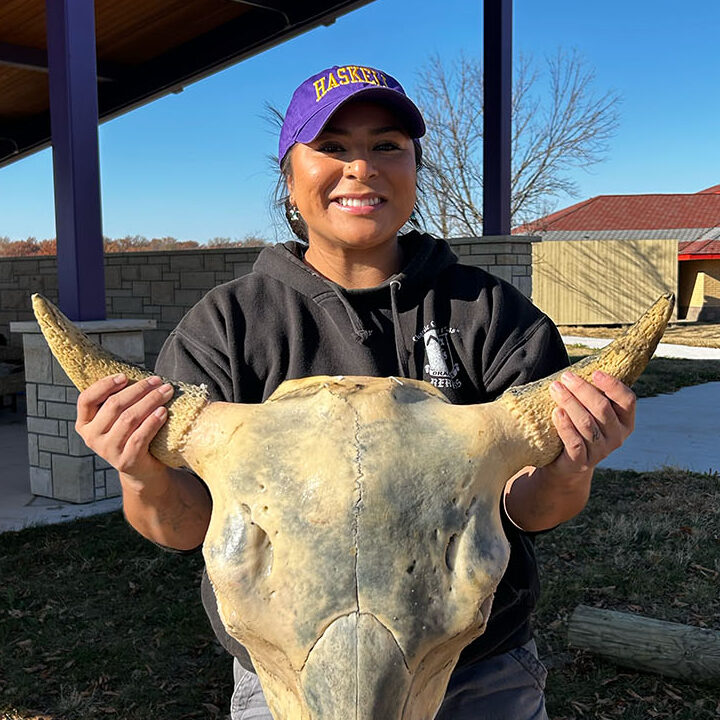
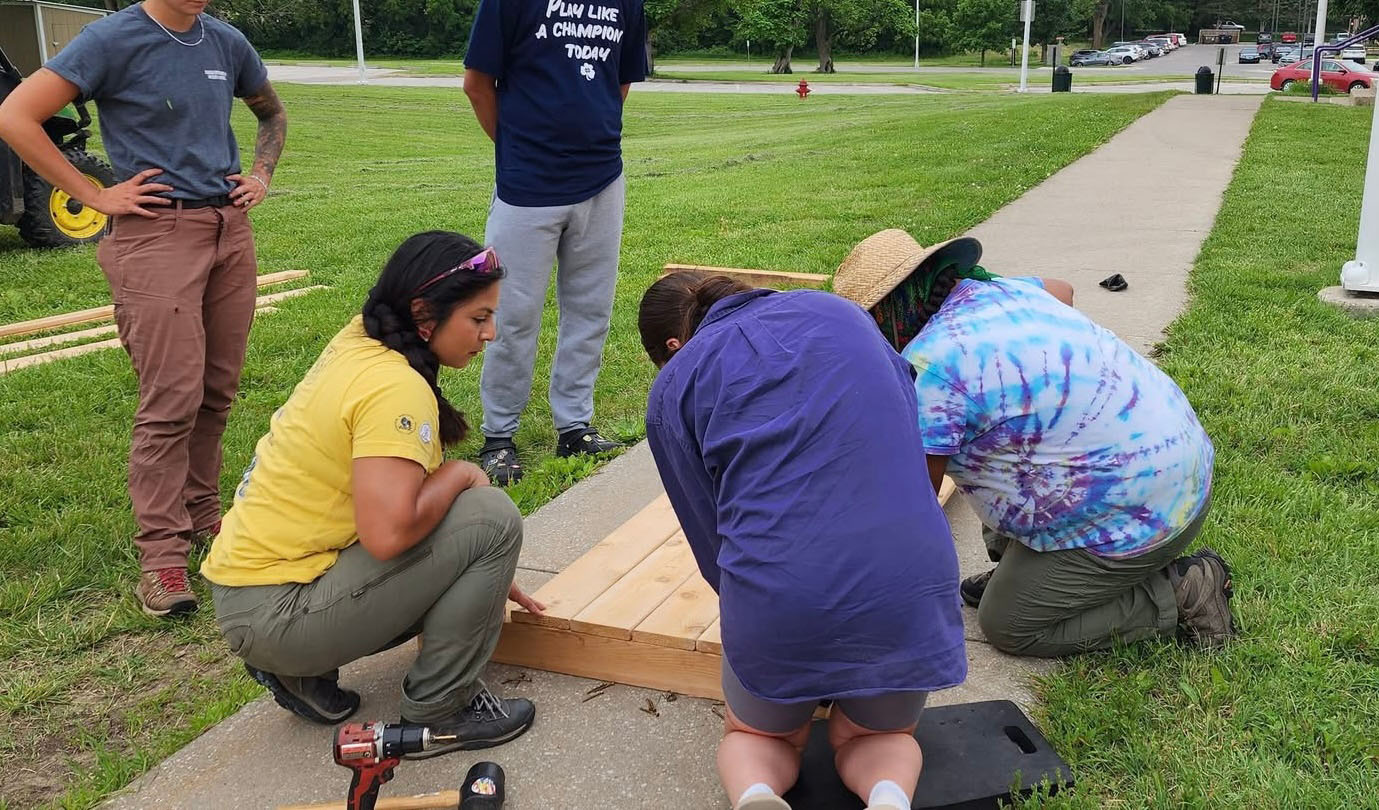
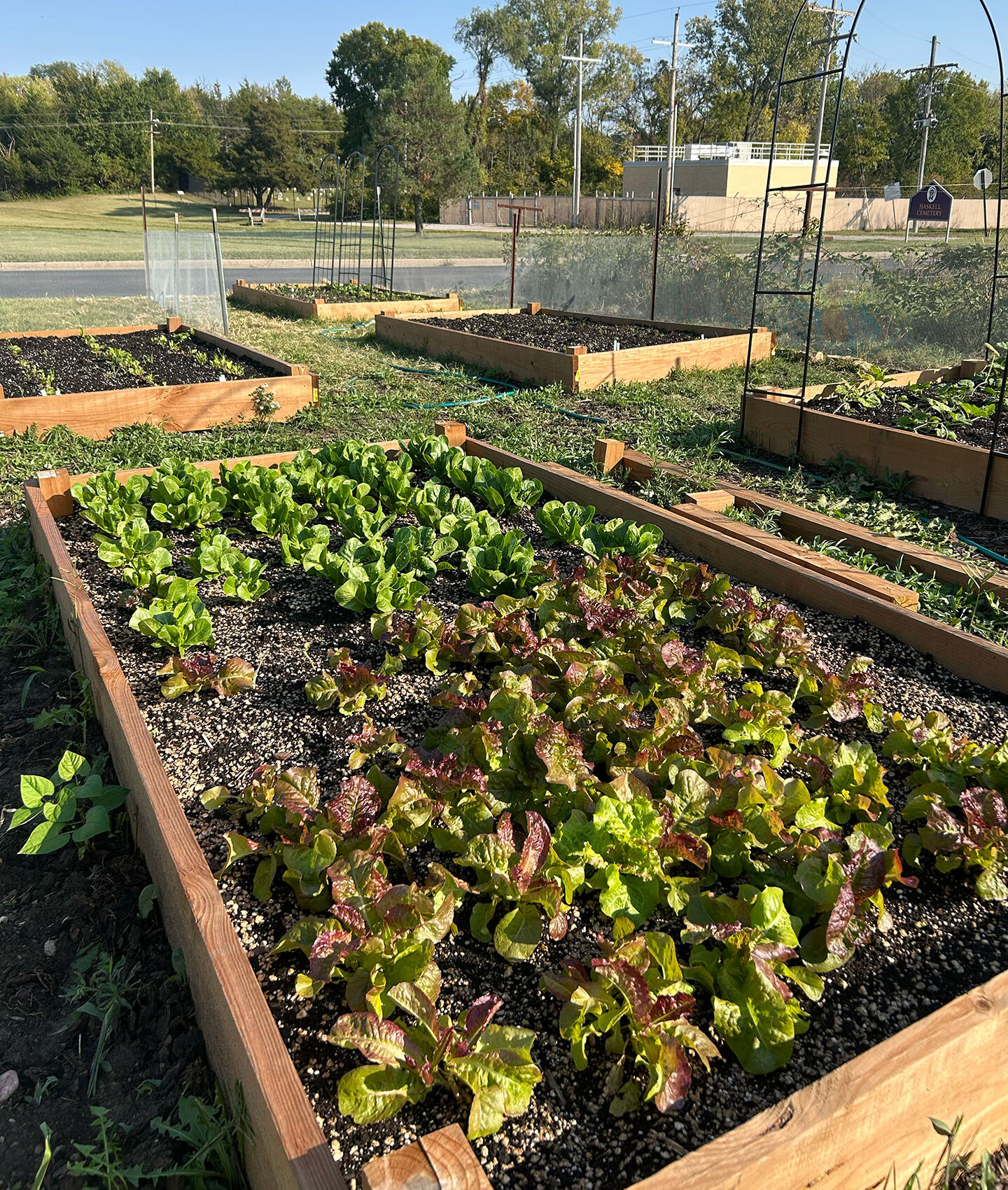
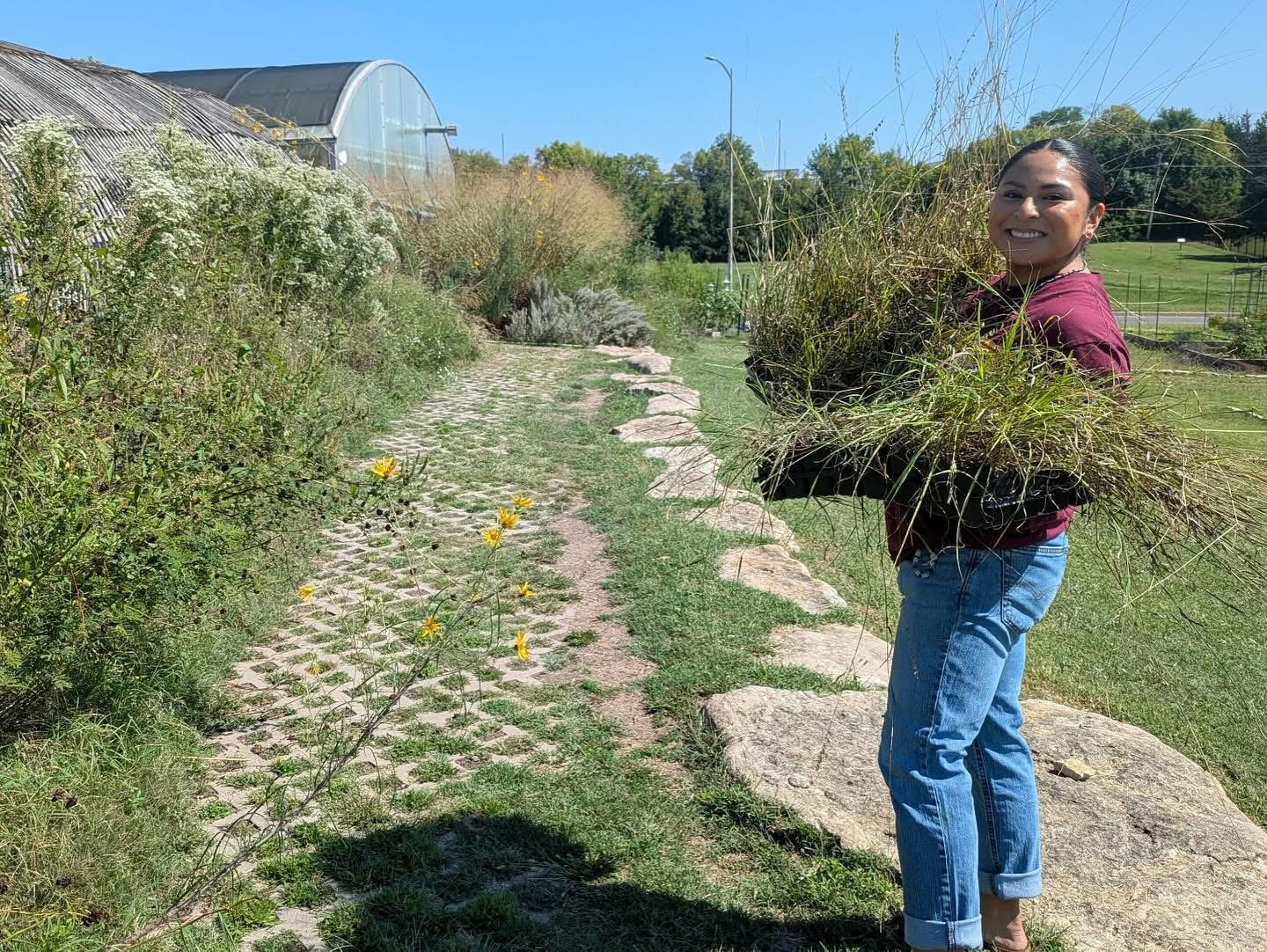
We came up with the idea of building raised garden beds near the dorms so students can easily access fresh foods and learn how to grow them themselves. Through support from the Haskell Greenhouse (funded through the USDA Equity Grant), we started building.
Last year was our first year doing this project and it was a learning experience as with many community-based projects, it comes with trial and error. However, that process taught us a lot about what works, what doesn’t, and how to build something more sustainable moving forward. This year, we’re continuing this work with stronger systems, more involvement, and a clearer vision.
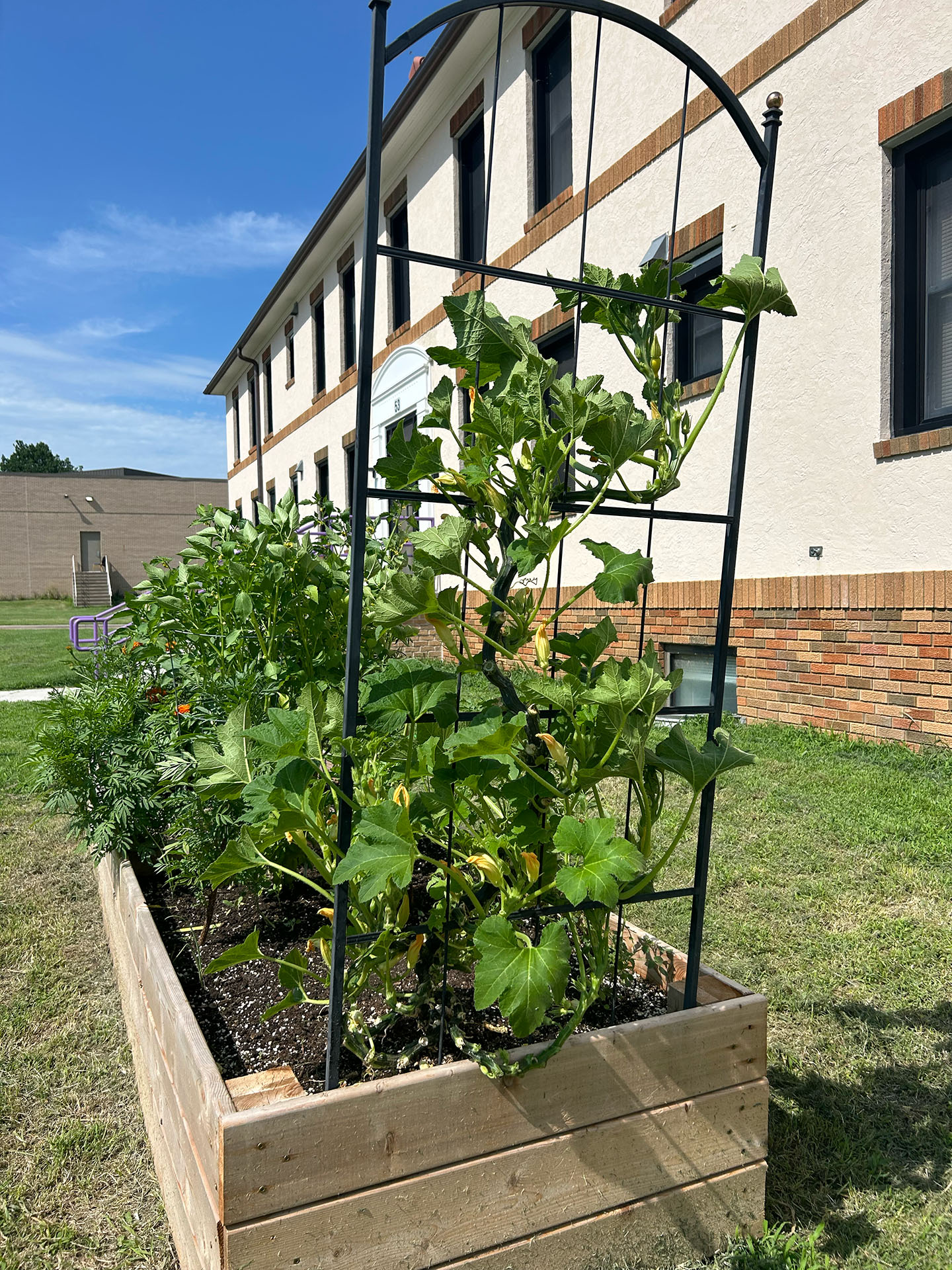
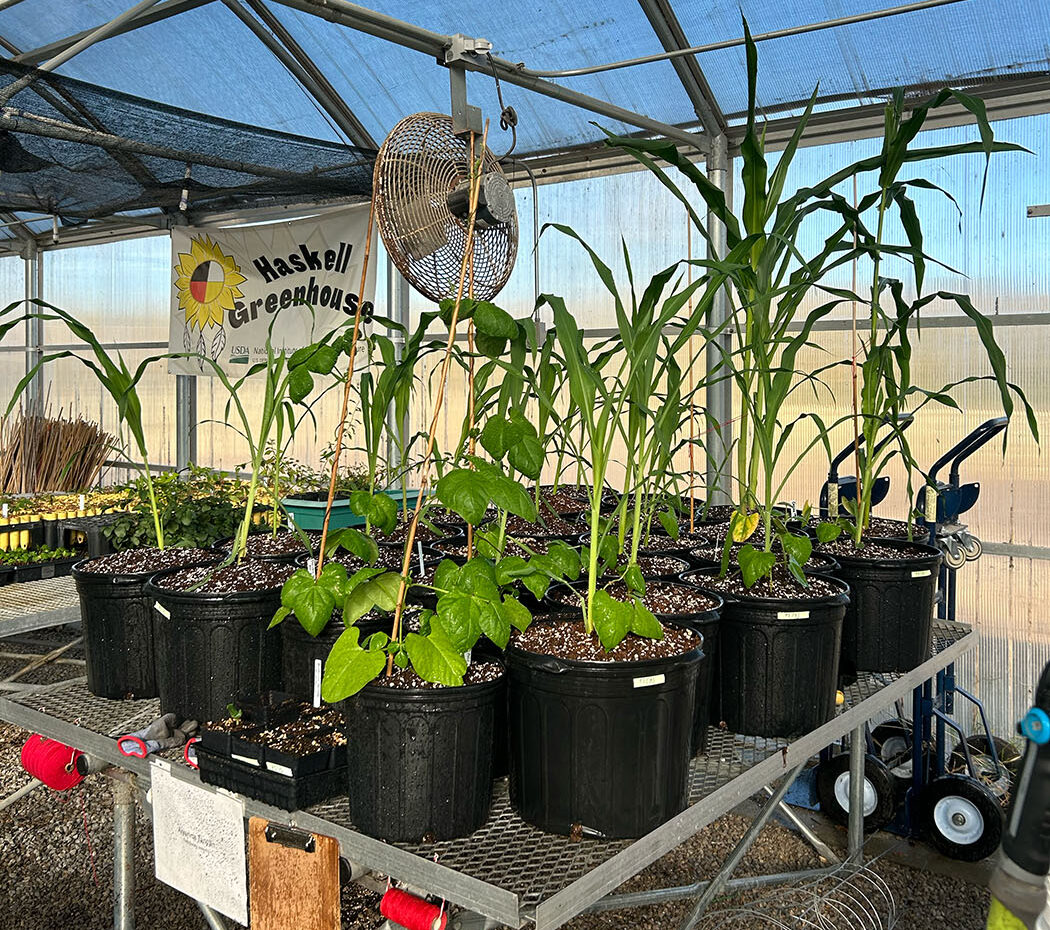
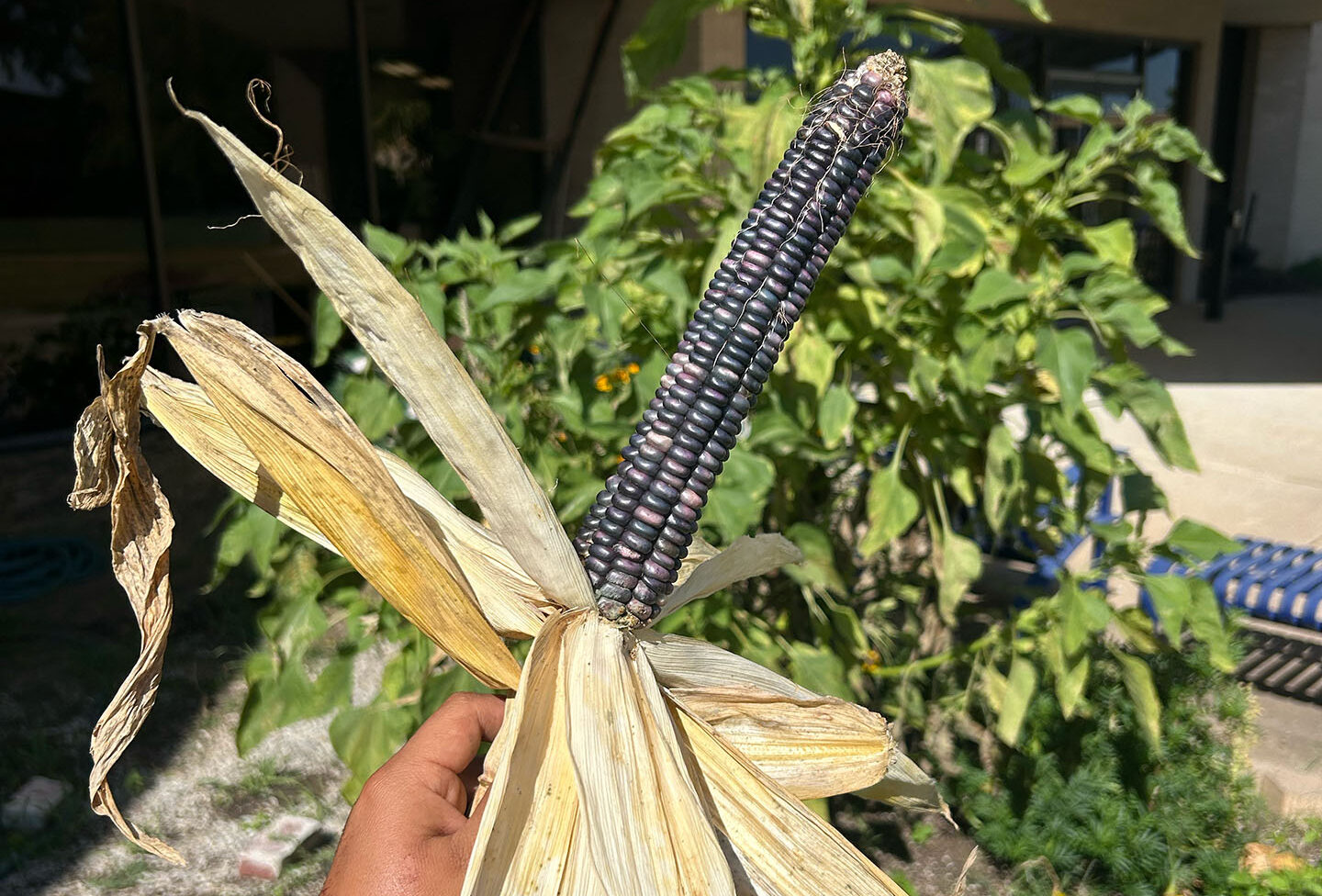
Everyone at the Haskell Greenhouse wants to help others learn, value, and view these spaces as places of teaching. I know they have taught me so much about responsibility and our relationship with the environment. Through these projects, we’re helping students reconnect with the land and understand the importance of food sovereignty for Indigenous communities. This work is ongoing, and we’re still learning. Every seed planted, and every workday shared brings us one step closer to a more sustainable and connected future.
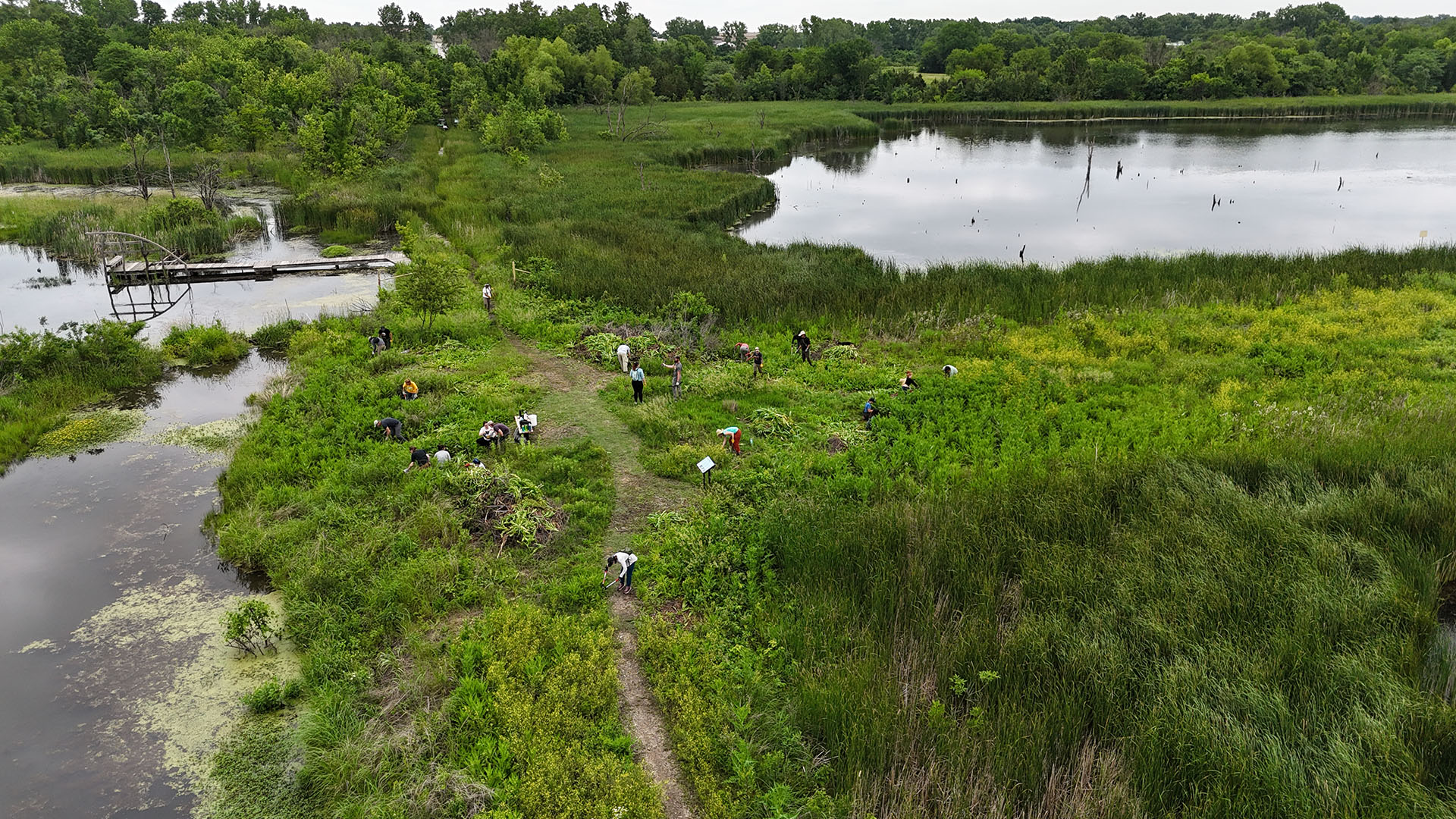
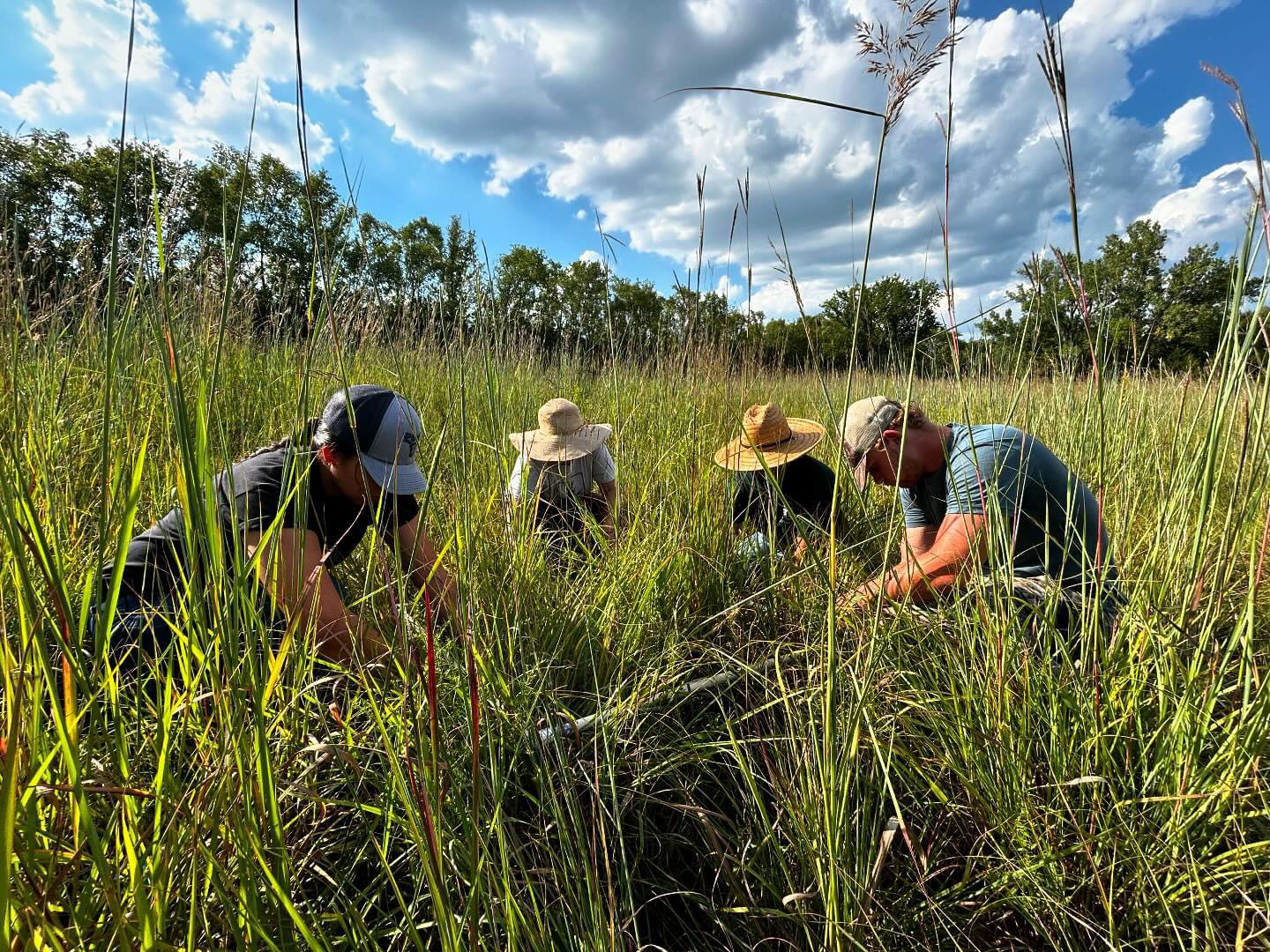
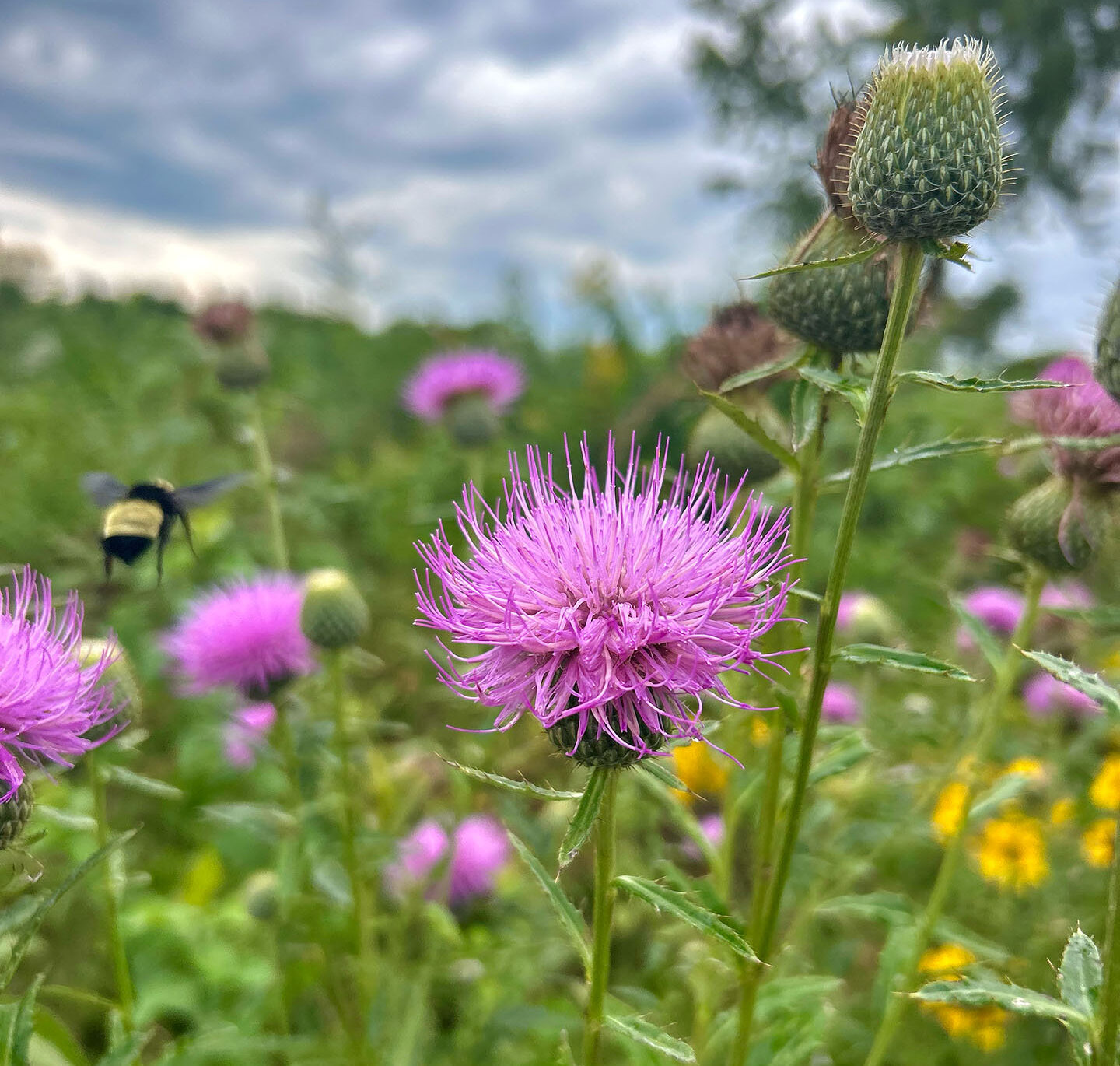
In Caring for Our Kin: Stories of Indigenous Environmental Stewardship, the College Fund shares the stories of Indigenous environmental leaders who are centering kinship and relational knowledge to build healthy ecological systems. These stories remind us that caring for the Earth means caring for one another—and that Indigenous knowledge systems continue to offer guidance, resilience, and hope for the future.
Learn more about our Environmental Stewardship Program.
Ekvnv Vcayecet. Mvto!
(Take care of the Earth/Land. Thank you)
More Blogs
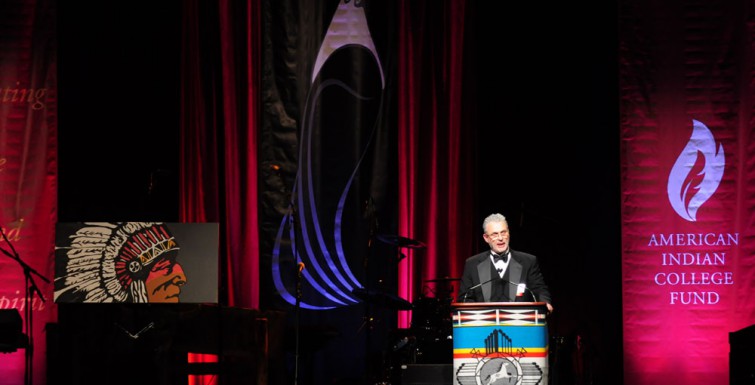
American Indian College Fund Annual Flame of Hope Fundraising Gala Raises More than $400,000 to Benefit Native Education
The American Indian College Fund is projected to raise $550,000 support Native student scholarships at its 18th annual Flame of Hope Gala, held on October 10 in Minneapolis, Minnesota. Proceeds will benefit Native education. Native artist Steven Paul Judd...
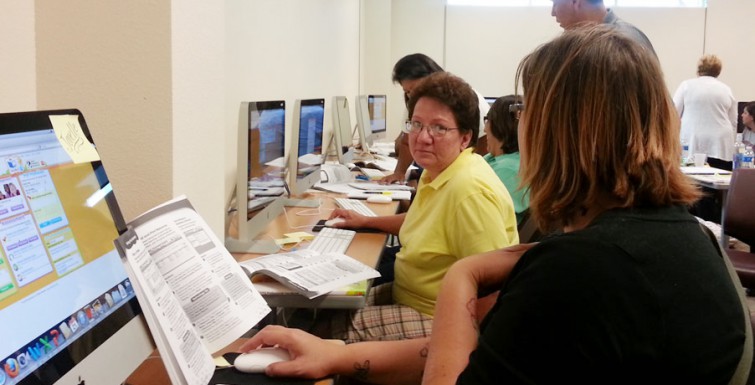
College of Menominee Nation Big Day in Pre-K
College of Menominee Nation’s (CMN) Sacred Little One’s project hosts an early childhood teacher institute on their campus in the Community Technology Center. Twenty-two lead teachers from the Menominee...
Sequestration to Impact Tribal Colleges
As the summer comes to an end, some tribal college officials are still waiting to find out how much funding they will receive for the upcoming year. They are holding their breath as their colleges struggle to stay afloat. At United Tribes Technical College, executive vice president Russell Swagger said the college is preparing for the “worst-case scenario.” The college already eliminated one of its two summer sessions this year, due to lack of funding. And it is becoming more difficult to retain quality staff and students, Swagger said, as college officials cannot tell them with certainty that the doors of Untied Tribes will be able to remain open in the years ahead.
Red Nation Film Festival Proceeds to Help College Fund
Film enthusiasts will be cheering for all the native ?lms and actors that are up for this year’s awards. Tickets to the premiere Red Nation Film Awards in Los Angeles are now available for purchase. Revenue collected from ticket sales is being donated to the American Indian College Fund, which provides scholarships to 34 different tribal colleges.
Indian Education Loses Fearless Tribal Leader
Alyce Spotted Bear was a fearless leader and heart of the Mandan, Hidatsa and Arikara Nations. We are saddened by her loss and are grateful for the impact she made on the tribal college movement and American Indian Education.
Sacred Little Ones program event brings tribal educators to Lummi
By Shelley Macy, NWIC Early Childhood Education Director On June 7, Lummi elders and community leaders, along with the Northwest Indian College Early Childhood Wakanyeja Sacred Little Ones (WSLO) program, welcomed WSLO teams from the College of the Menominee Nation...
Tribal Colleges Demonstrate Winning Strategies for Prosperity in Indian Country
Tribal Colleges Demonstrate Winning Strategies for Prosperity in Indian Country Supported by $1 million grant from Northwest Area Foundation The American Indian College Fund has selected five tribal colleges as the winners of the Tribal College Leaders in Community Innovation Award, a program that recognizes innovative approaches for fighting poverty and building thriving Native economies.
United Health Foundation’s Diverse Scholars Initiative has awarded $100,000 for scholarships
The American Indian College Fund announced that the United Health Foundation’s Diverse Scholars Initiative has awarded $100,000 for scholarships to 18 academically deserving Native students pursuing health or health-related degrees.
Ford Motor Company Fund Awards $60,000 to American Indian College Fund
Ford Motor Company Fund has awarded a $50,000 grant to the American Indian College Fund for Native student scholarships through the Ford Motor Company Blue Oval Scholars Program and an additional $10,000 to support the American Indian College Fund’s Flame of Hope Gala on October 10, 2013, which raises money for student scholarships. The Blue Oval Scholars Program awards eight tribal college scholarships and four mainstream university scholarships of $3,000 each for Native students studying science, technology, engineering, math, or business in a two or four-year degree program with a 3.0 grade point average. Preference will be given to students who demonstrate a commitment to American Indian communities or volunteer service.
Free Online Courses from the World’s Best Universities
Are you interesting in furthering your education in conjunction with your TCU classes? With the rising cost and competitive nature of higher education across the United States, you can take free open courses here: http://www.onlinecourses.com/.