Planting the Seeds of Cultural Sustainability

April 22, 2026 | Student Ambassador Aiyanna Tanyan’s (Seminole Nation of Oklahoma) work to reclaim food sovereignty
At Haskell Indian Nations University, those of us at the Haskell Greenhouse are committed to various initiatives that help students and the greater community connect with the land.
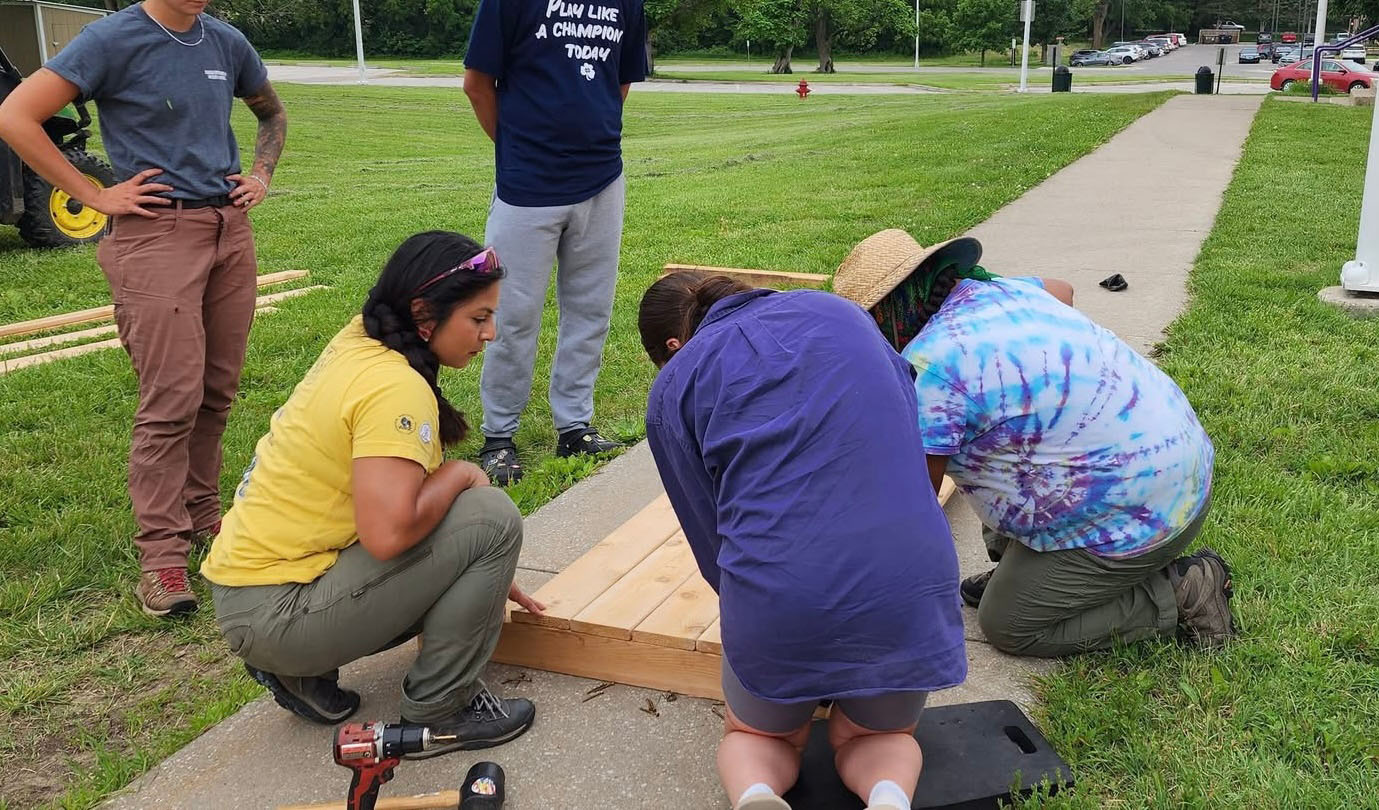
Haskell Greenhouse student researcher Aiyanna T helping teach students how to build raised garden beds in front of Winona Hall student housing on campus. (June 12th, 2025)
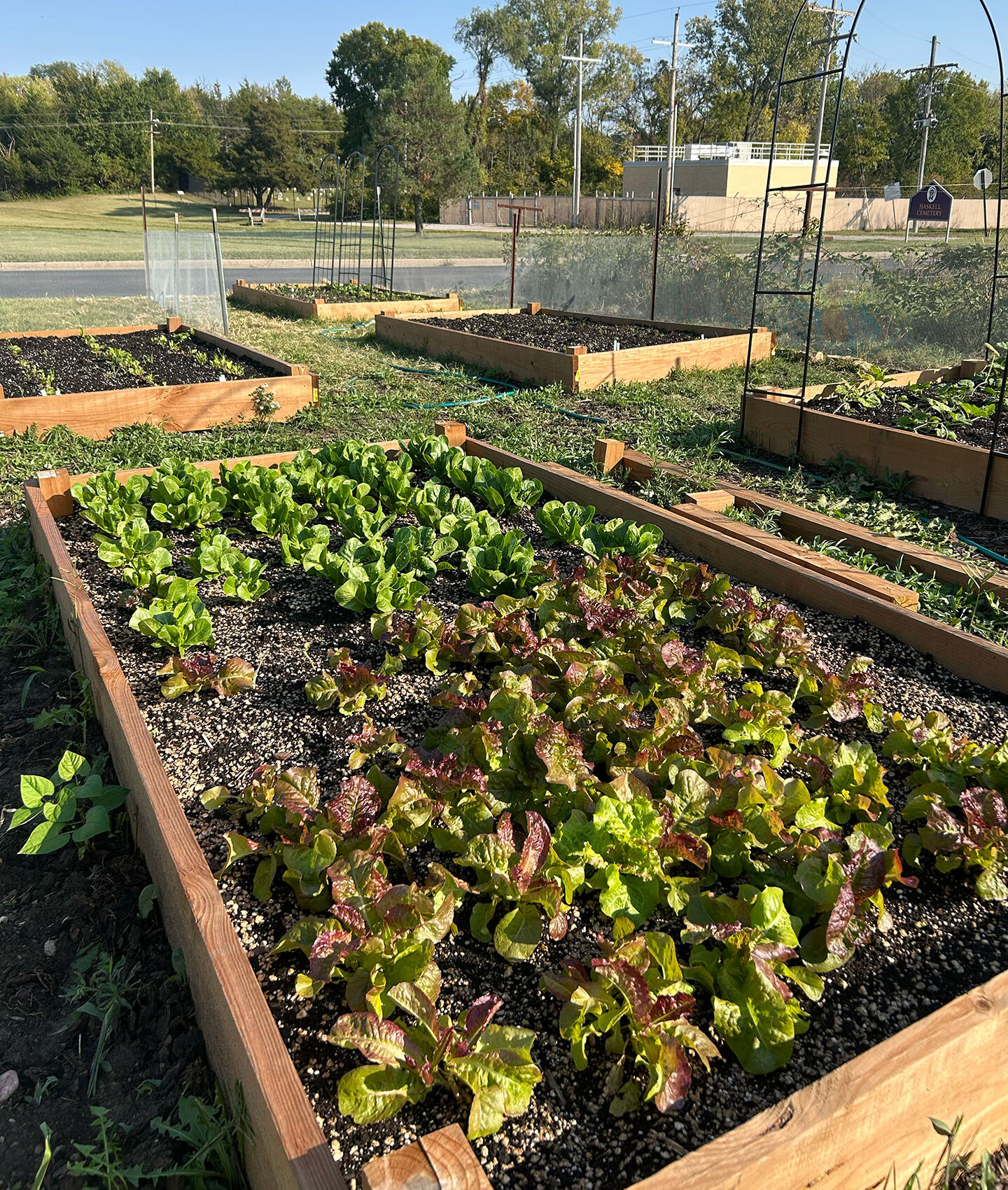
Lettuce varieties, watermelon, and different crops growing in the raised beds near the Haskell Greenhouse (October 8th, 2024)
One of our projects deals with the topic of tribal food sovereignty. This project began with students asking a simple question: “How can we get more involved in growing our own food and have better access to healthier options on campus?” Hearing that, my friend Pe-Qwas Hernandez and I knew there was a need and saw this as an opportunity to create something meaningful for our campus community.

We came up with the idea of building raised garden beds near the dorms so students can easily access fresh foods and learn how to grow them themselves. Through support from the Haskell Greenhouse (funded through the USDA Equity Grant), we started building.

We didn’t just want to help provide food. We wanted to create ongoing and continuous learning spaces. Our hope is that students can learn how to build raised beds, transplant plants, and take part in maintaining the gardens here on campus so they can take that knowledge back to their tribal communities and do the same thing.

Last year was our first year doing this project and it was a learning experience as with many community-based projects, it comes with trial and error. However, that process taught us a lot about what works, what doesn’t, and how to build something more sustainable moving forward. This year, we’re continuing this work with stronger systems, more involvement, and a clearer vision.
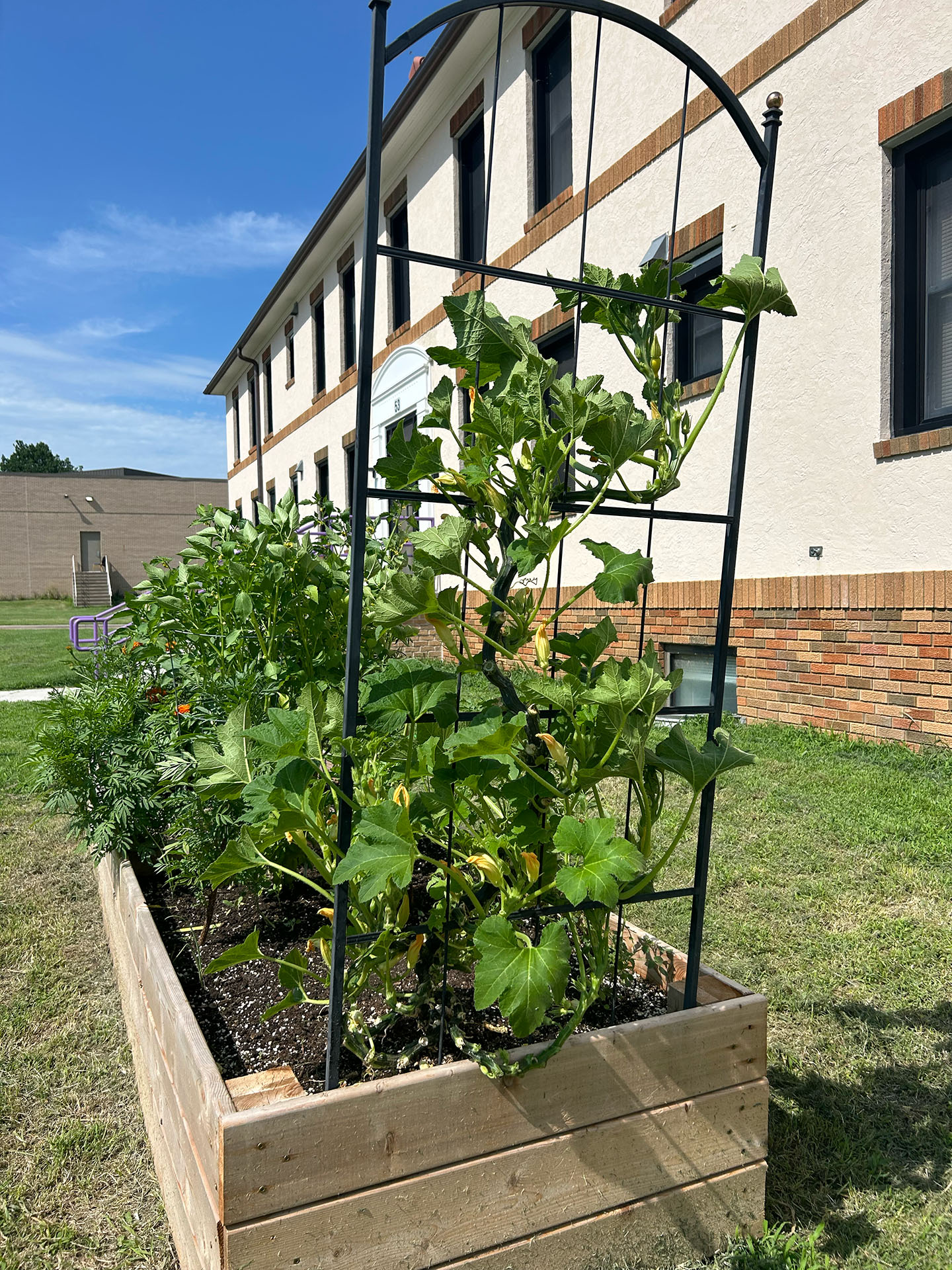
Vegetables such as squash, tomatillos, cherry tomatoes, and peppers growing in a raised bed built by the Haskell Greenhouse student researchers Aiyanna T and Pe-Qwas Hernandez. (July 23rd, 2025)
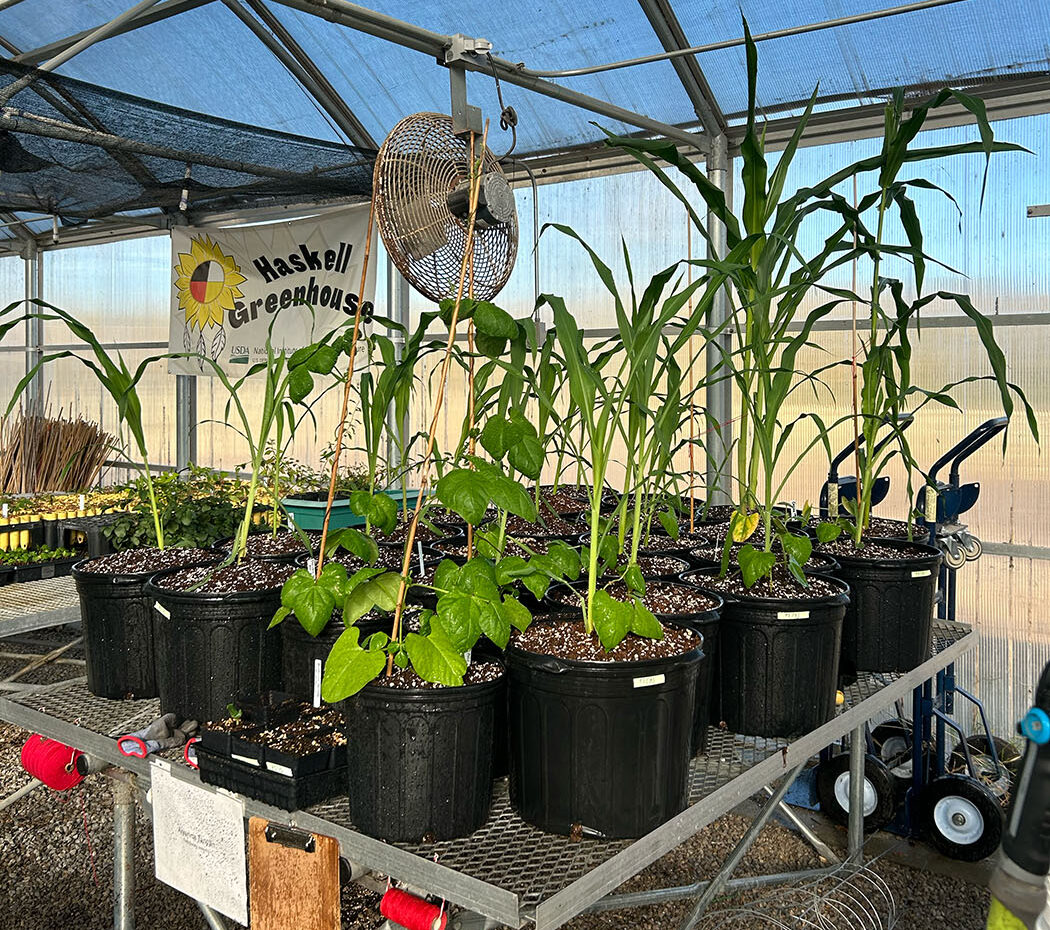
Three sisters grown by Haskell Greenhouse student researcher Aiyanna T. inside the Haskell Greenhouse.
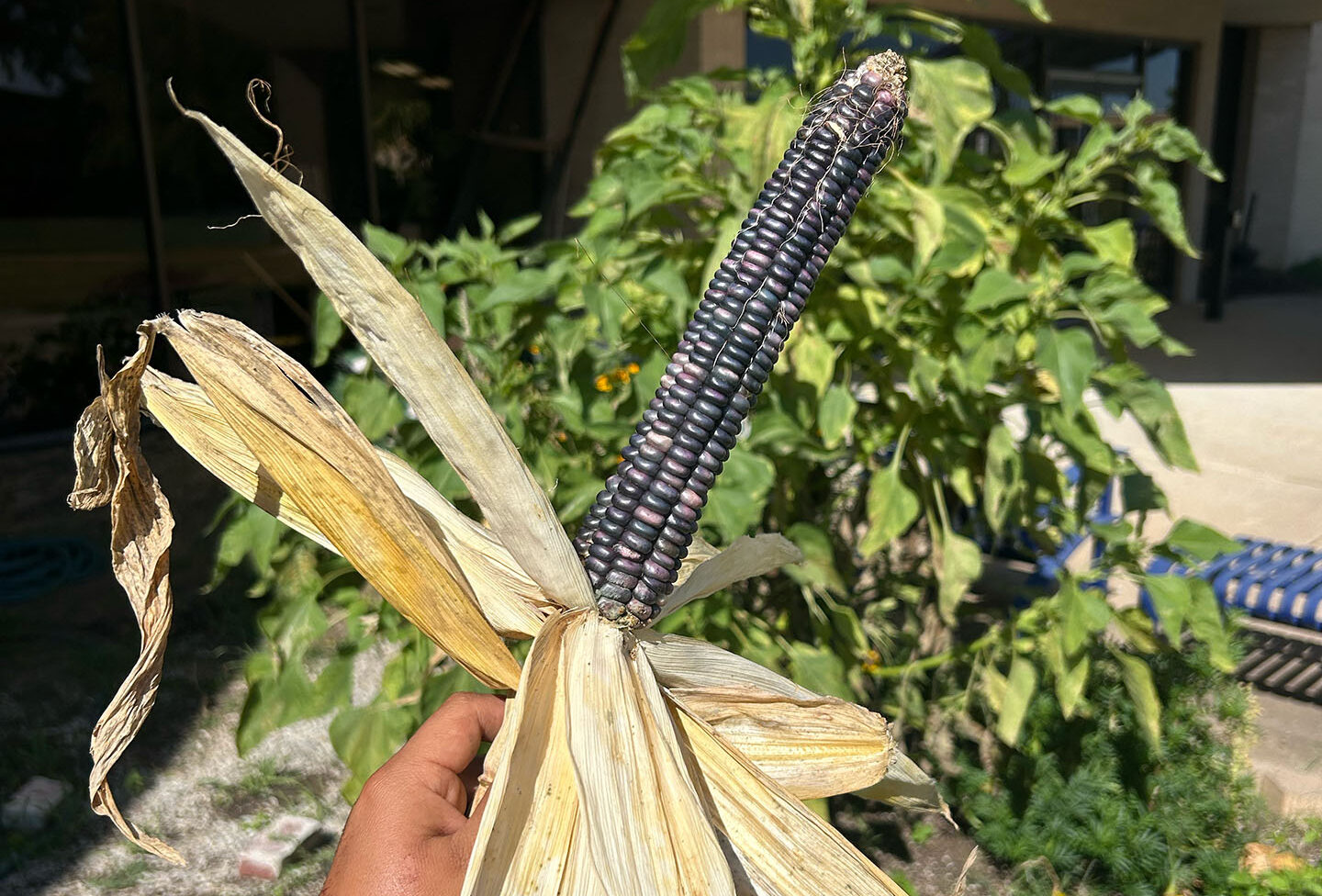
Blue Seneca corn
I also work on cultural garden plots and grow traditional crops like the non-human relatives we call the Three Sisters (corn, beans, and squash). In previous years, I’ve used different tribal varieties such as Blue Seneca corn, Blue Hopi Corn, Cherokee Pole Beans, and even Mvskoke tobacco in these plots. These gardens are deeply personal to me and have taught me so much about various cultural values. They represent not just food, but identity, teachings, and connection to the land. Growing these plants reminds me that food sovereignty is about reclaiming knowledge and honoring the practices of our ancestors.
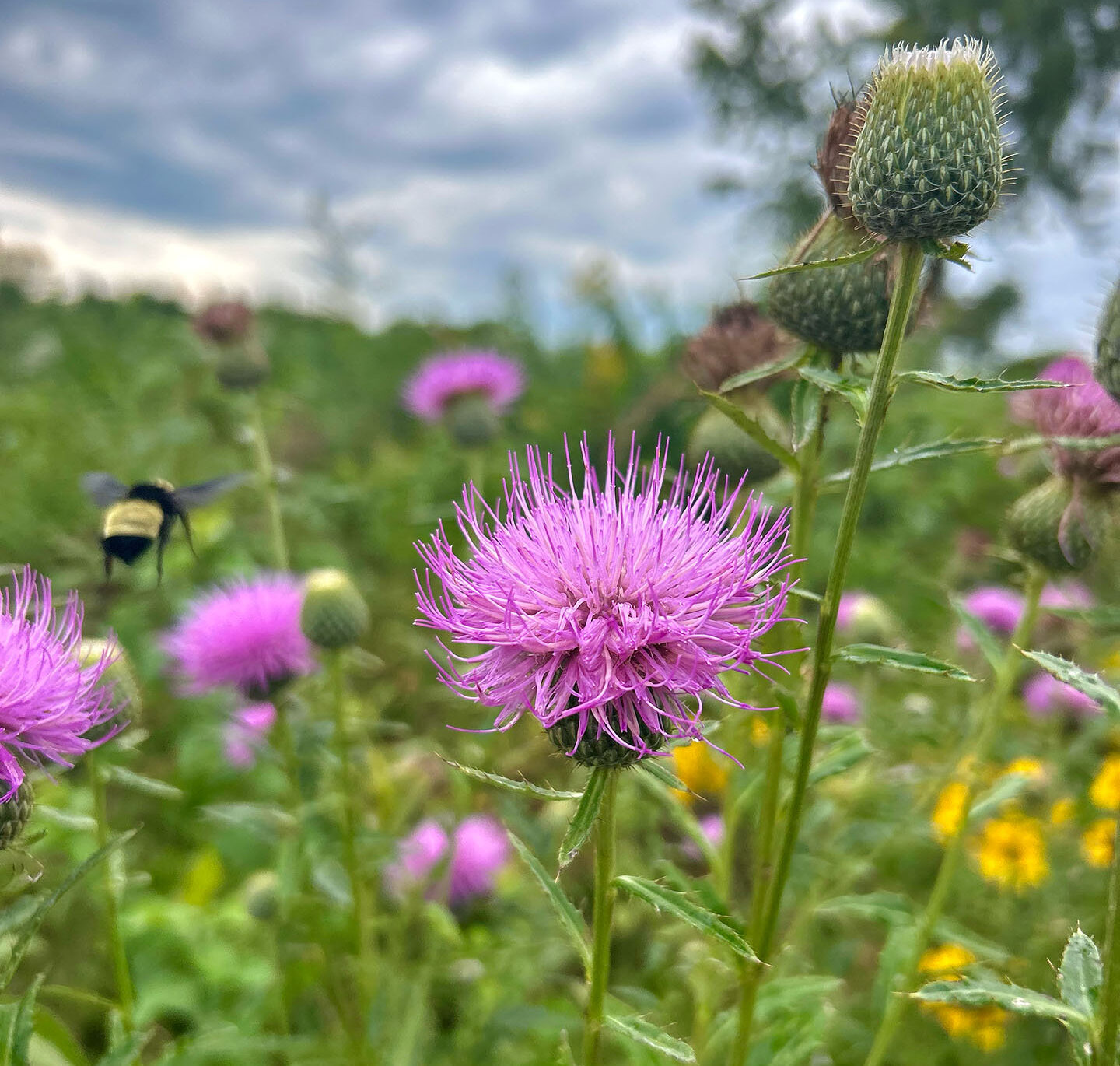
I couldn’t do this alone, and this work around food sovereignty extends far beyond these gardens. Our team is involved in multiple land stewardship efforts across campus, including the woodlands, prairies, and wetlands. We host community workdays where students and community members come together to restore the land such as removing invasive species and reintroducing native plants like prairie grasses.

Everyone at the Haskell Greenhouse wants to help others learn, value, and view these spaces as places of teaching. I know they have taught me so much about responsibility and our relationship with the environment. Through these projects, we’re helping students reconnect with the land and understand the importance of food sovereignty for Indigenous communities. This work is ongoing, and we’re still learning. Every seed planted, and every workday shared brings us one step closer to a more sustainable and connected future.
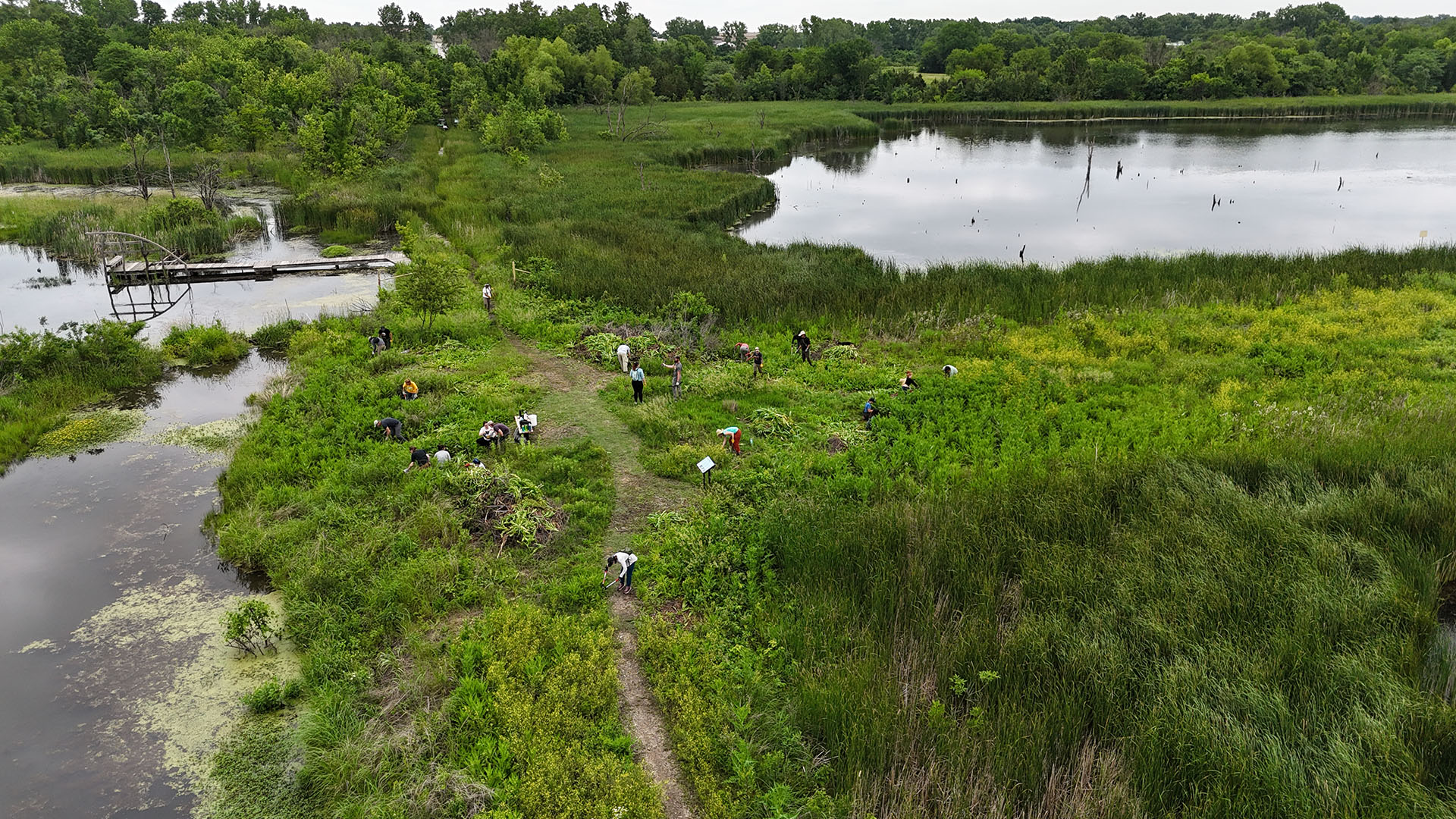
Volunteers in the Haskell Wetlands for a Wetlands Restoration Workday hosted by the Haskell Greenhouse. Volunteers helped cut down invasive teasels.  (June 5th, 2025)
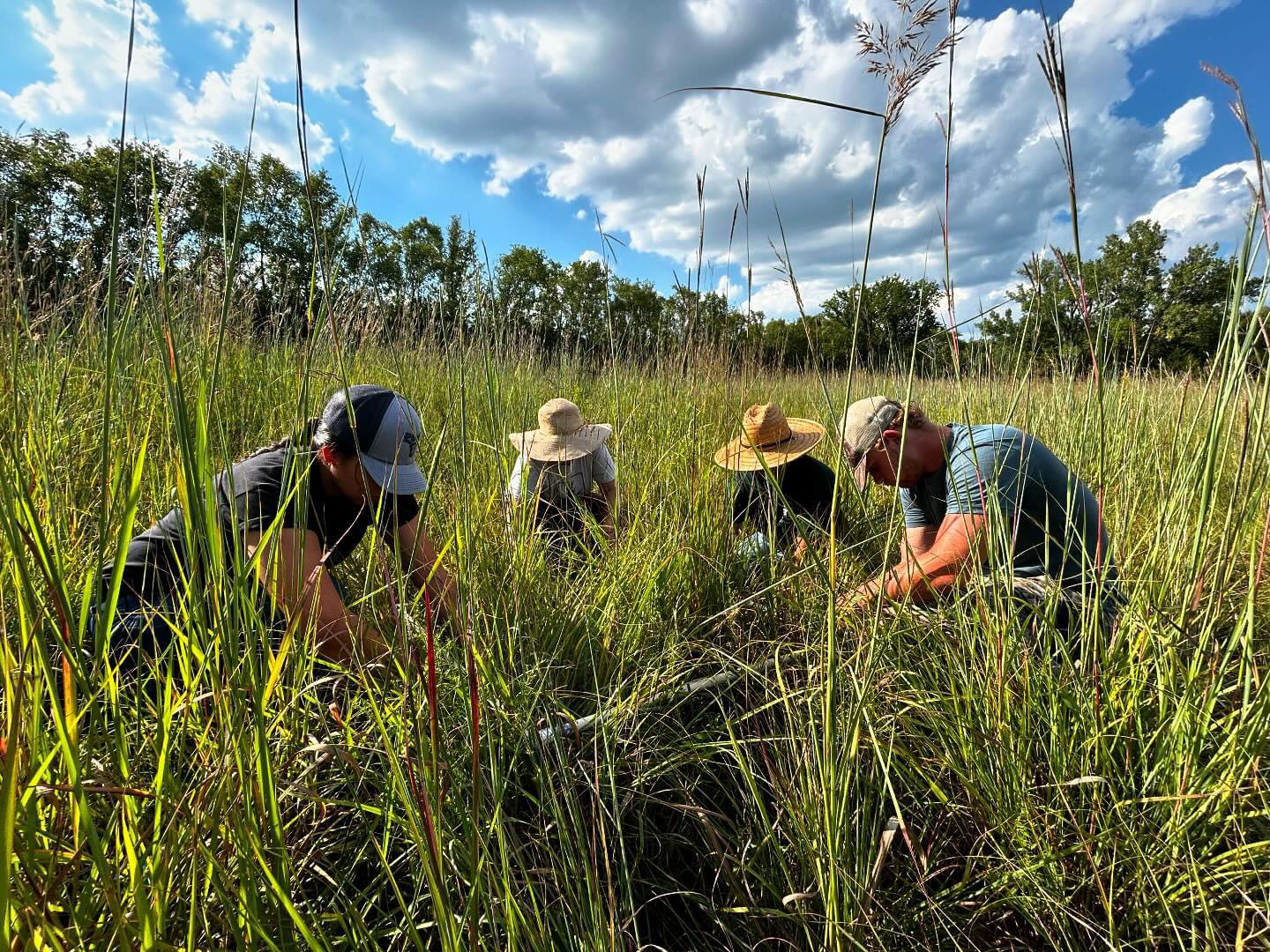
Greenhouse student researchers helping with a land survey in the West Prairie of Haskell lands. The survey solidified the need for restoration in the west prairie. (Aug 29th, 2024)
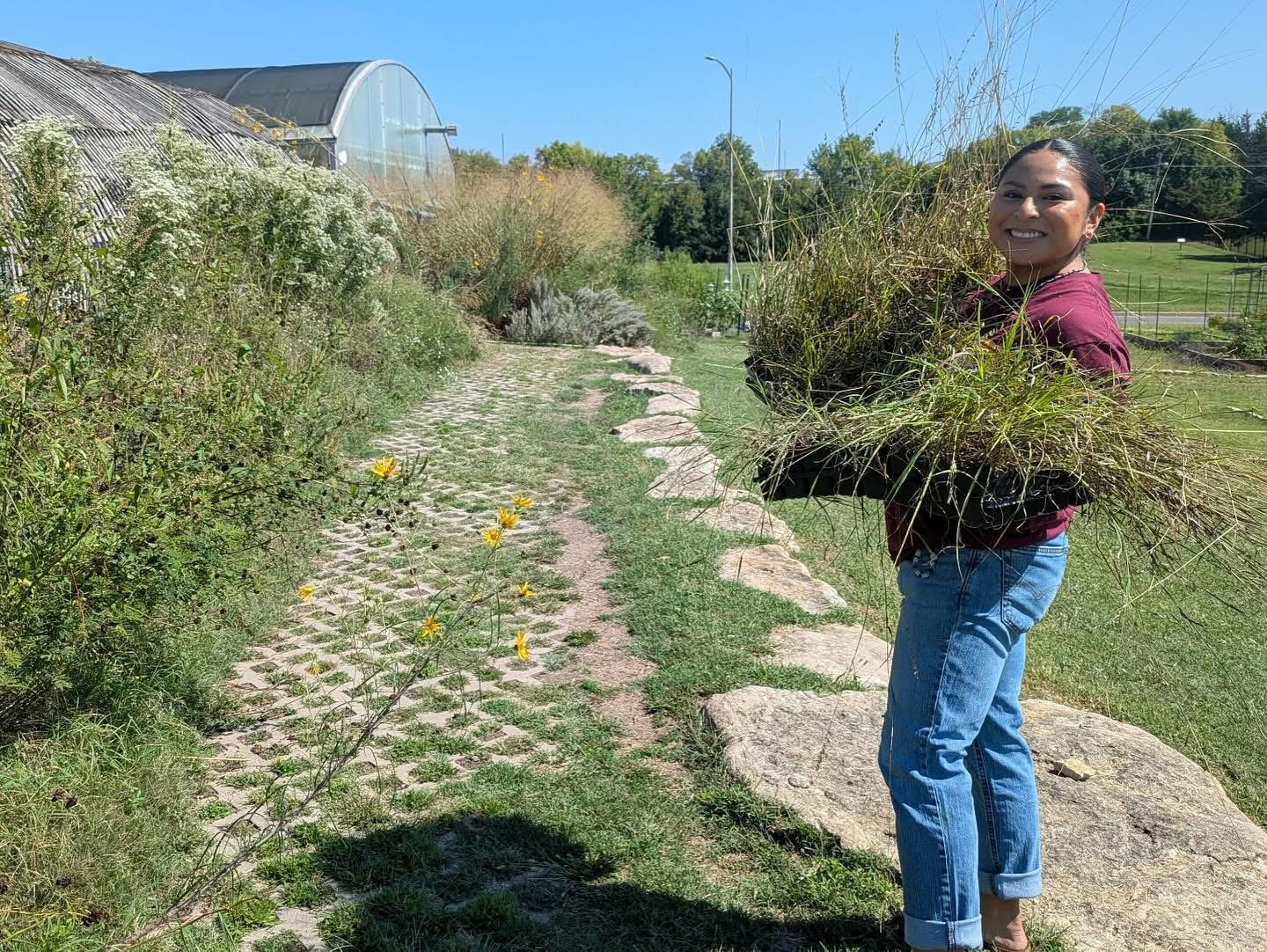
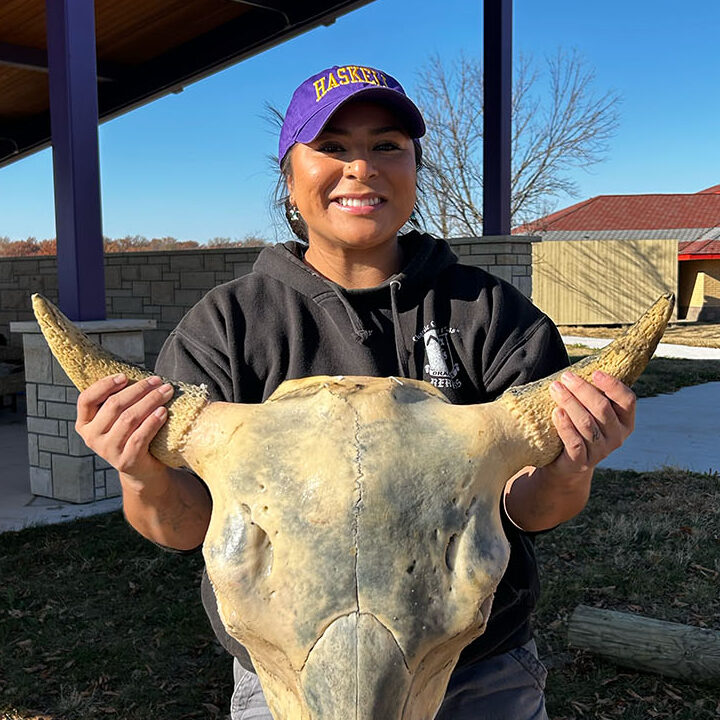
Haskell Greenhouse student researcher Aiyanna T. holding prairie grass species donated by Native Lands Collaborative in front of the greenhouse.
What makes this work powerful is the community behind it. We have a strong group of student researchers and volunteers who show up consistently, not just for Earth Day, but year-round. I am happy that people can be reminded of this day to celebrate our beautiful Mother Earth. She deserves the everyday work of caring for the land, growing food, and supporting each other to do so.

In Caring for Our Kin: Stories of Indigenous Environmental Stewardship, the College Fund shares the stories of Indigenous environmental leaders who are centering kinship and relational knowledge to build healthy ecological systems. These stories remind us that caring for the Earth means caring for one another—and that Indigenous knowledge systems continue to offer guidance, resilience, and hope for the future.

Learn more about our Environmental Stewardship Program.

Ekvnv Vcayecet. Mvto!

(Take care of the Earth/Land. Thank you)

More Blogs

What Does Democracy Mean To You?

What Does Democracy Mean To You?

The American Indian College Fund recognizes that the historical and lived experiences of Native people are deeply impacted in many negative ways by the founding of the United States. We also recognize that the protection of inherent and acquired rights as American Indians and Alaska Natives is vital and essential to our self-determination and identities. For that reason, the American Indian College Fund is exploring the meaning of democracy during the United States’ 250th anniversary year. We invite our tribal college students to join us in this exploration.

Dr. Cynthia Lindquist Joins American Indian College Fund as Chief Strategy Officer 

Dr. Cynthia Lindquist Joins American Indian College Fund as Chief Strategy Officer 

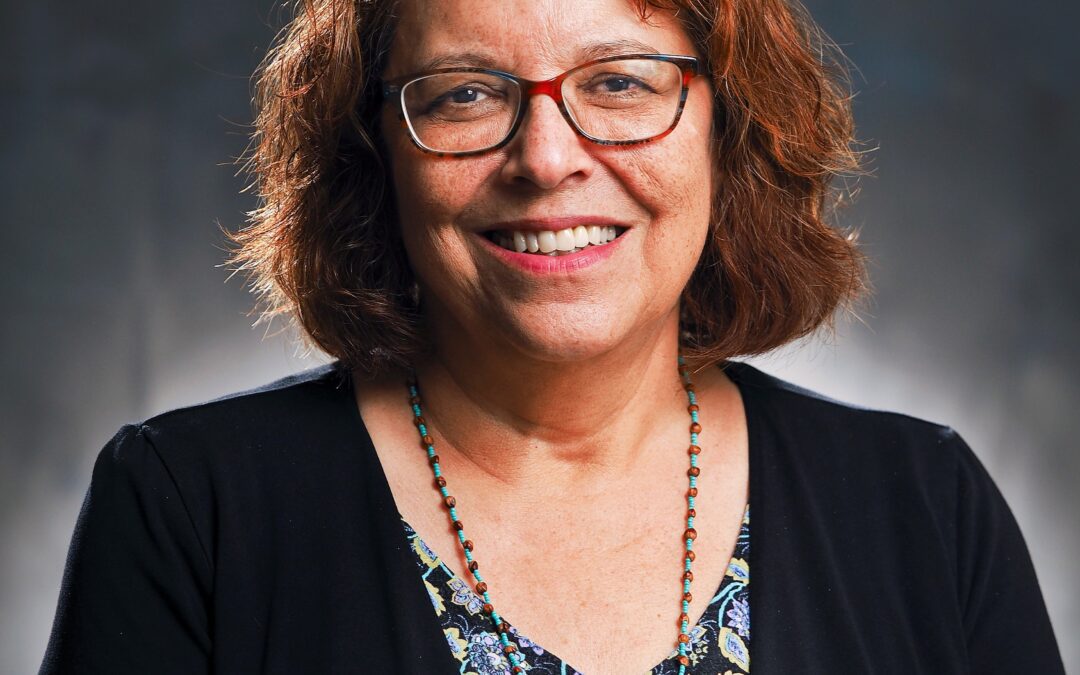
Dr. Cynthia Lindquist, Spirit Lake Dakota Tribe, whose Dakota name is Ta’sunka Wicahpi Winyan (Star Horse Woman), joined the American Indian College Fund as its Chief Strategy Officer on March 2. Dr. Lindquist holds a Doctorate in Educational Leadership from the University of North Dakota and a Master’s in Public Administration from the University of South Dakota. She served as president of Cankdeska Cikana Community College (CCCC) for 21 years and previously sat on the College Fund’s board, making her familiar with the organization’s work. Under her leadership, CCCC’s physical campus quadrupled in size; student enrollment, persistence, and completion rates more than doubled; and 20 years of audits were conducted with no findings. She also oversaw the transition of managing the Spirit Lake Tribe’s Head Start and Early Headstart programs.

American Indian College Fund Names Dr. Leander “Russ” McDonald, President of United Tribes Technical College, its 2025-2026 Tribal College and University President Honoree of the Year

American Indian College Fund Names Dr. Leander “Russ” McDonald, President of United Tribes Technical College, its 2025-2026 Tribal College and University President Honoree of the Year

Congratulations to Dr. Leander “Russ” McDonald on being named the College Fund’s 2025-26 Tribal College and University President Honoree of the Year. Dr. McDonald shares how healing, humility, learning, and evolving have not only shaped his mindset as president of United Tribes Technical College but a life dedicated to others.

Inspired Women Inspire Us

Inspired Women Inspire Us

Every year, the American Indian College Fund honors, recognizes, and celebrates notable women and their contributions during Women’s History Month and International Women’s Day (March 8). But the women who shape our lives, communities, and world deserve recognition that extends far beyond a single month.

Ichigo Foundation Awards American Indian College Fund Adult Education Program

The Ichigo Foundation has gifted the American Indian College Fund a $100,000 award to support the Wounspe E’cetkiya O’takuye Piya A’yazunta Pi (Reconnecting Relatives to Education) Program over the next two years. With its first four graduates celebrated in 2025, this program, that provides resources to help American Indians who’ve had encounters with the justice system complete their high school equivalency, hopes to strengthen its partnership and explore other learning opportunities.

Building On Hope

By Deb Leatherman, ABE/GED Program Director, SBC Many of us have arrived where we are in life due to positive learning experiences and people who have helped guide us as we look to our future. We may come from a thriving community where opportunities exist, family is...

Investing in Tribal Colleges and Our Shared Future

During the first week of February, representatives from 36 tribal colleges travelled from across the country to Washington, D.C. to remind Congress that supporting TCUs is not optional — it’s part of the federal government’s trust and treaty obligations. TCUs are not only here; they are creating a ripple of generational change with every student who walks through their doors.

American Indian College Fund Staff Co-Author Research in Support of Indigenous Women’s Leadership 

American Indian College Fund Staff Co-Author Research in Support of Indigenous Women’s Leadership 

In recognition of the fact that the leadership experiences of Indigenous women is an under-researched topic, two Native leaders at the American Indian College Fund co-authored a journal article on this topic. Their team analyzed 18 peer-reviewed articles to identify key concepts and available support for Indigenous women’s leadership.