
Planting the Seeds of Cultural Sustainability
April 22, 2026 | Student Ambassador Aiyanna Tanyan’s (Seminole Nation of Oklahoma) work to reclaim food sovereignty
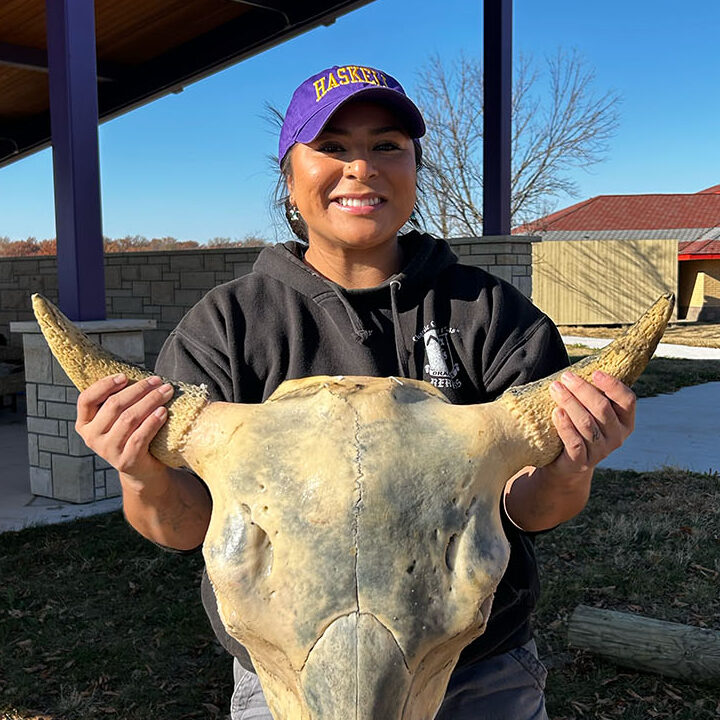
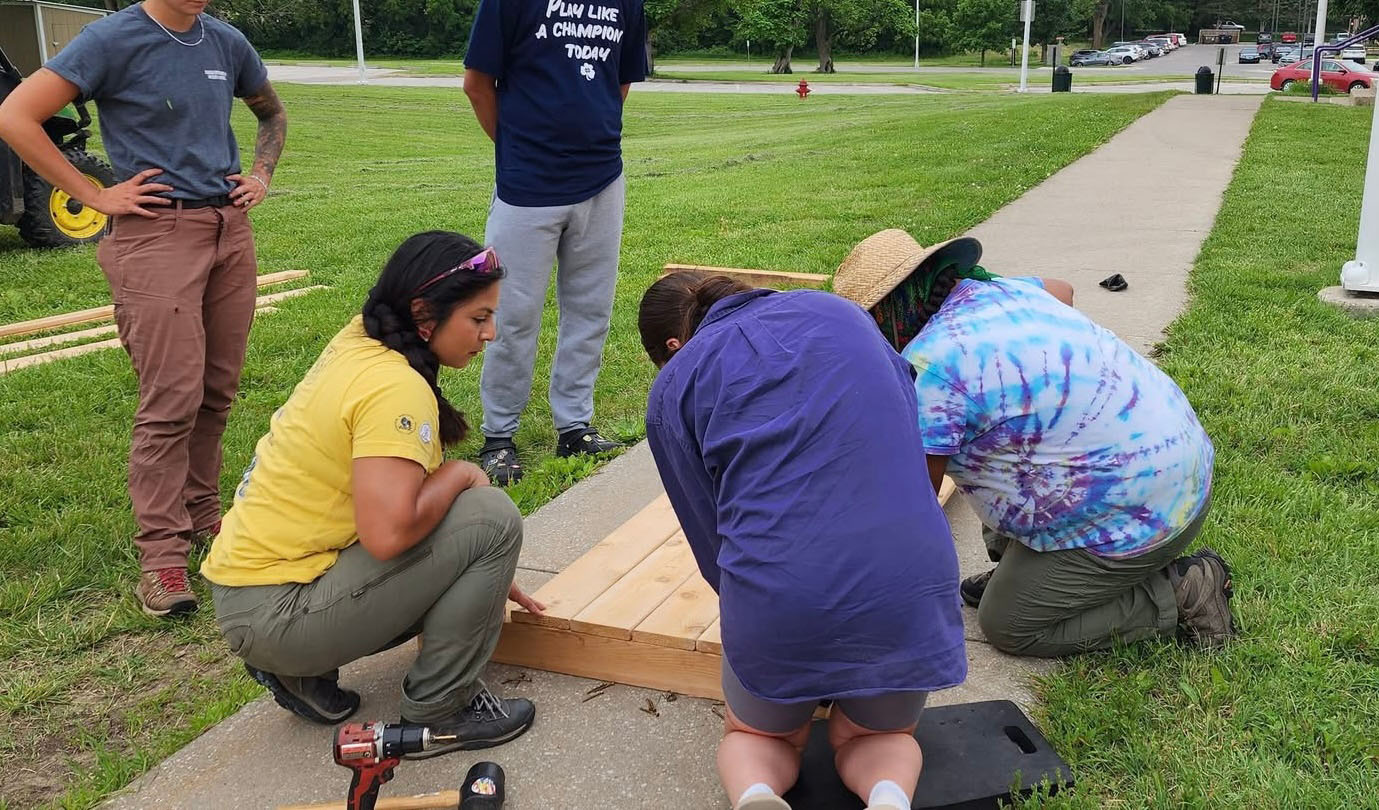
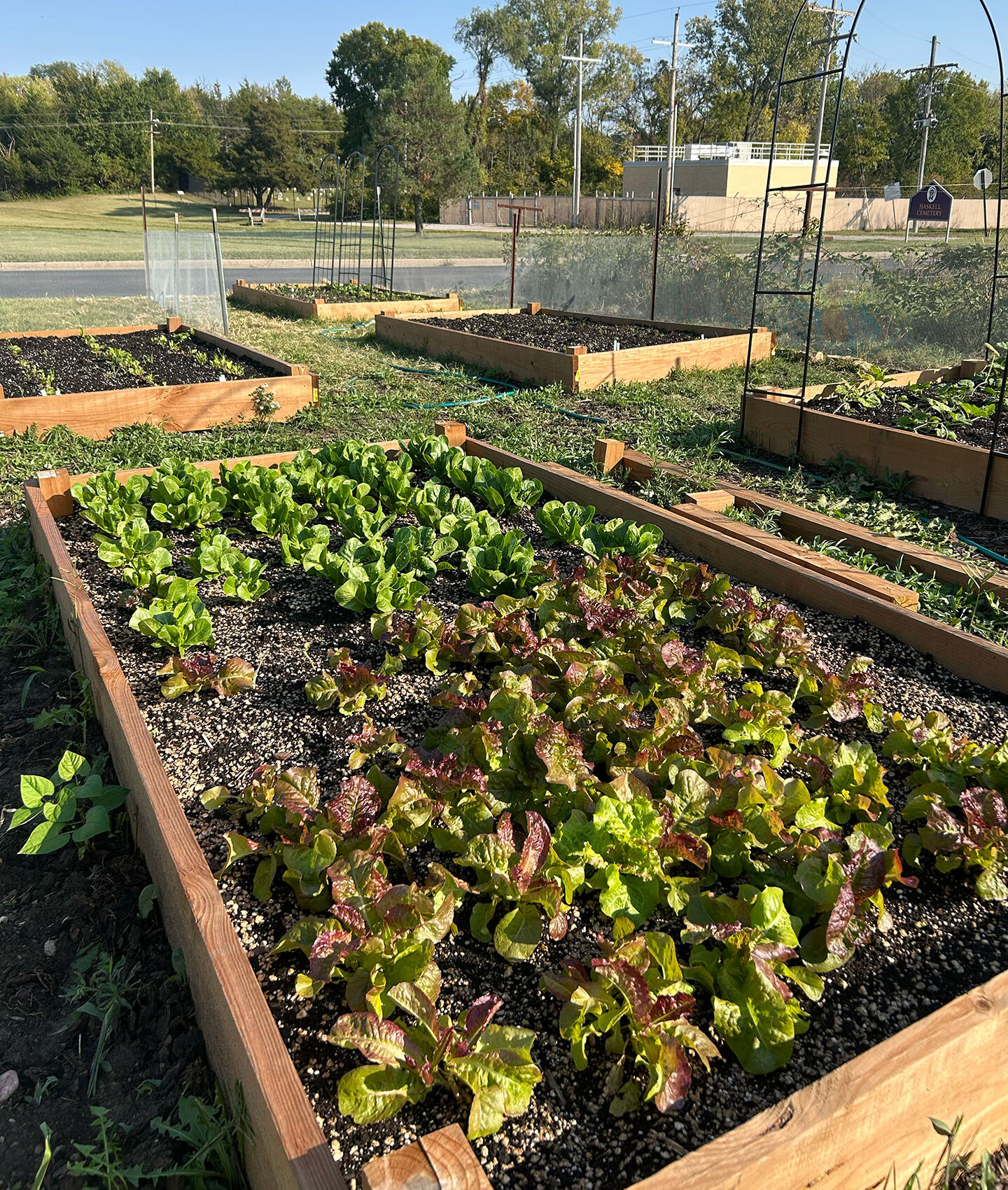
We came up with the idea of building raised garden beds near the dorms so students can easily access fresh foods and learn how to grow them themselves. Through support from the Haskell Greenhouse (funded through the USDA Equity Grant), we started building.
Last year was our first year doing this project and it was a learning experience as with many community-based projects, it comes with trial and error. However, that process taught us a lot about what works, what doesn’t, and how to build something more sustainable moving forward. This year, we’re continuing this work with stronger systems, more involvement, and a clearer vision.
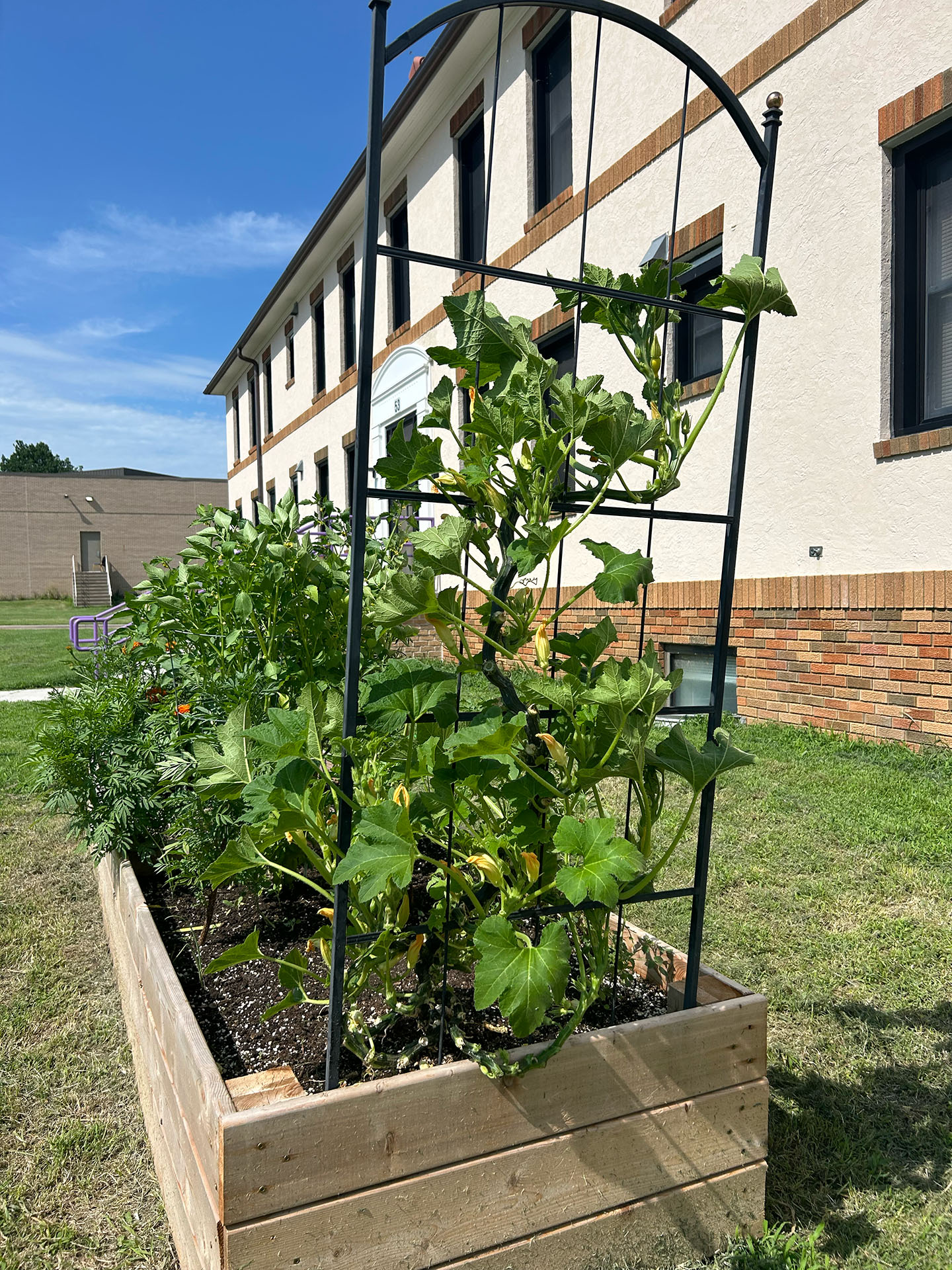
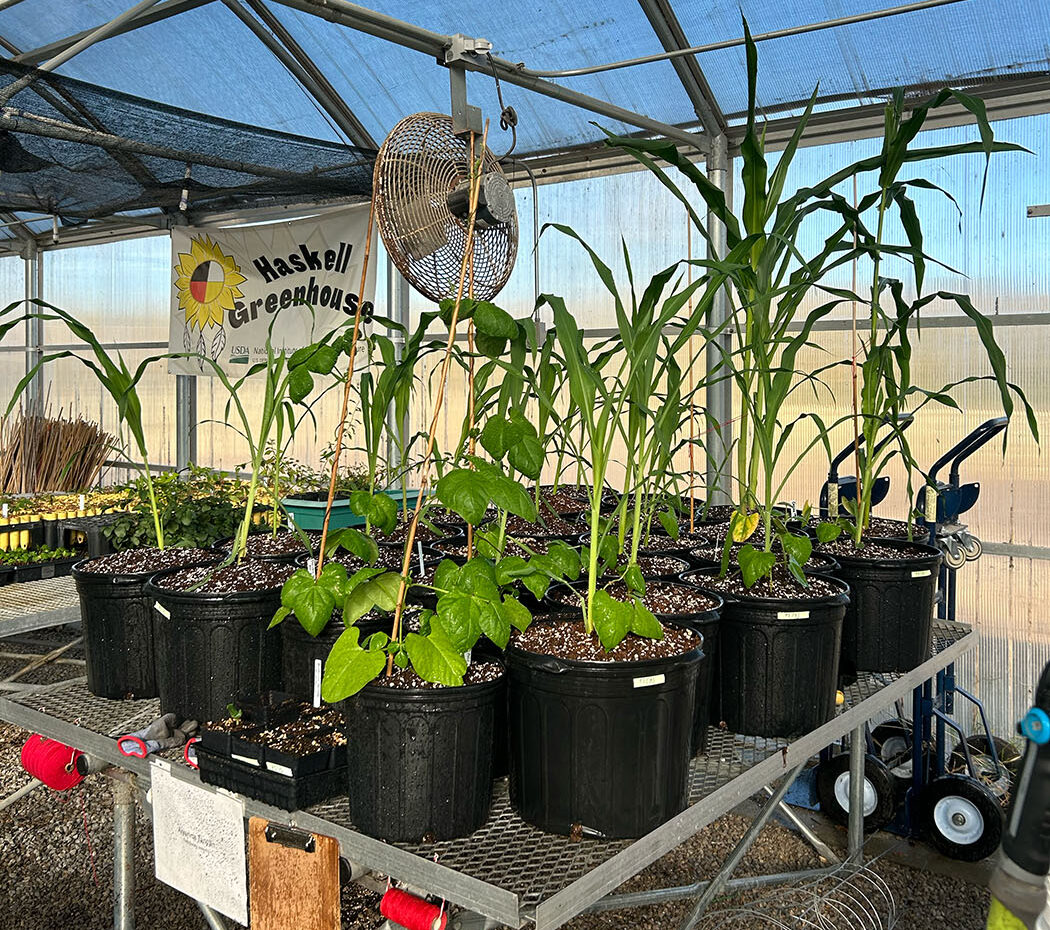
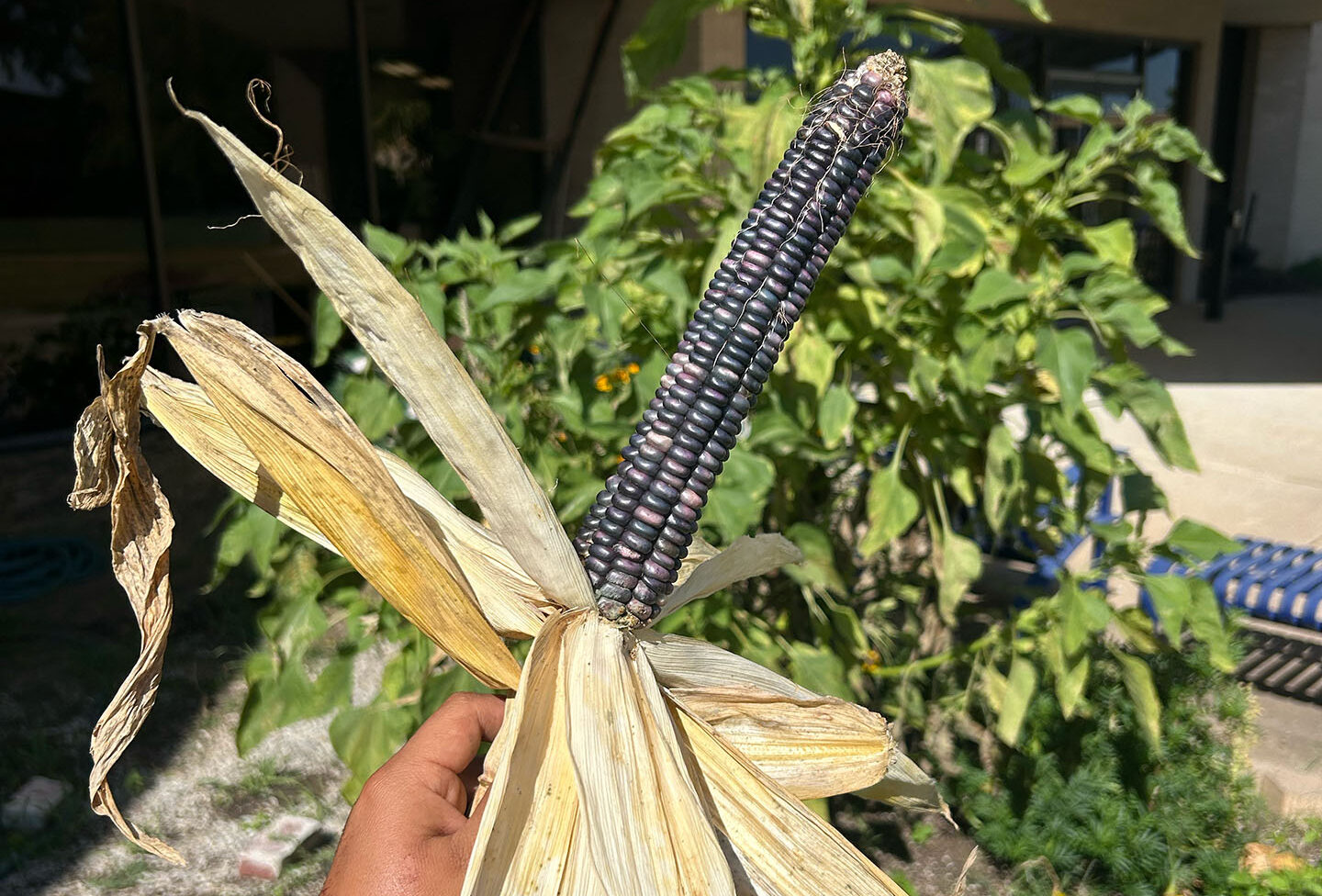
Everyone at the Haskell Greenhouse wants to help others learn, value, and view these spaces as places of teaching. I know they have taught me so much about responsibility and our relationship with the environment. Through these projects, we’re helping students reconnect with the land and understand the importance of food sovereignty for Indigenous communities. This work is ongoing, and we’re still learning. Every seed planted, and every workday shared brings us one step closer to a more sustainable and connected future.
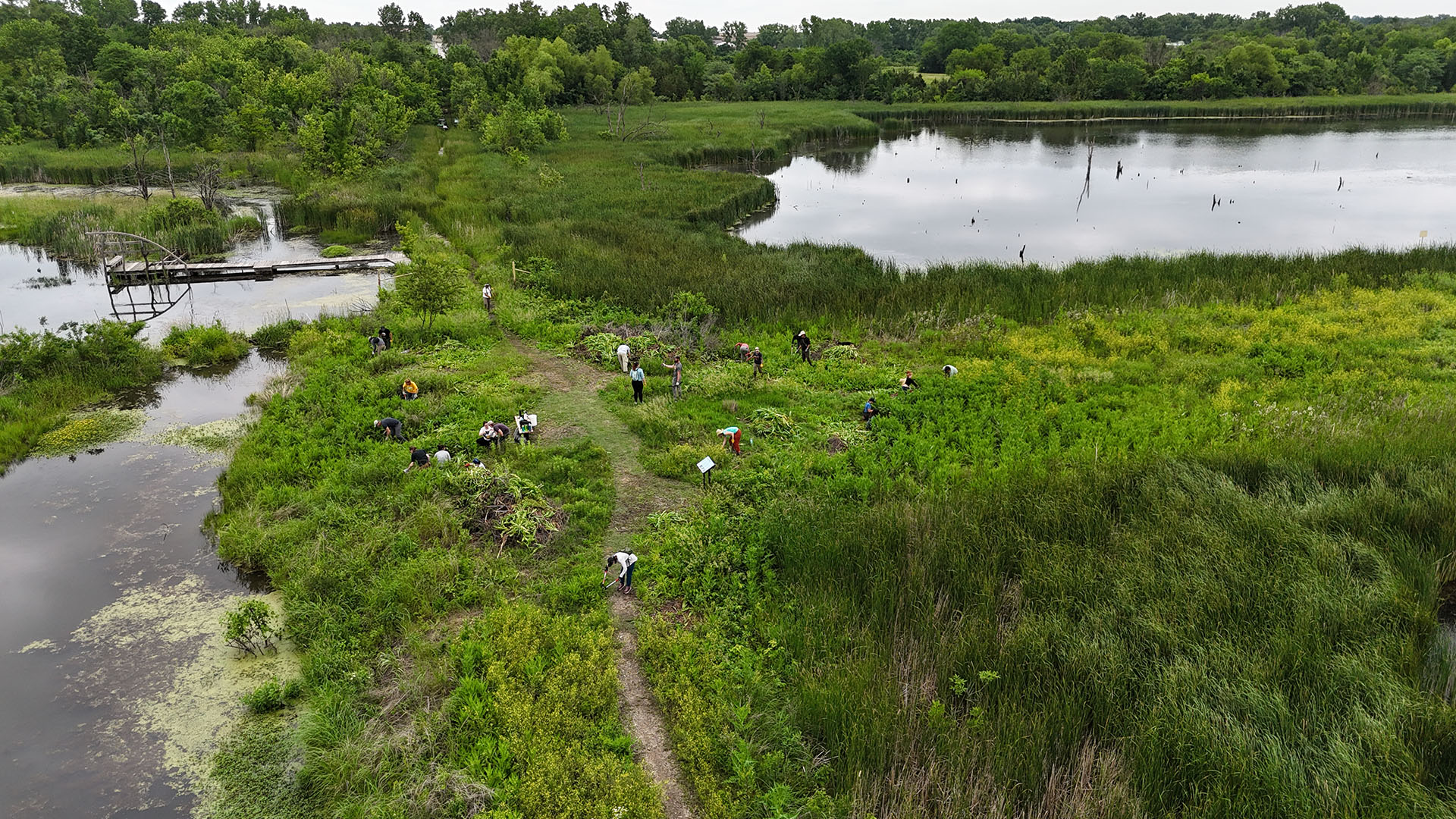
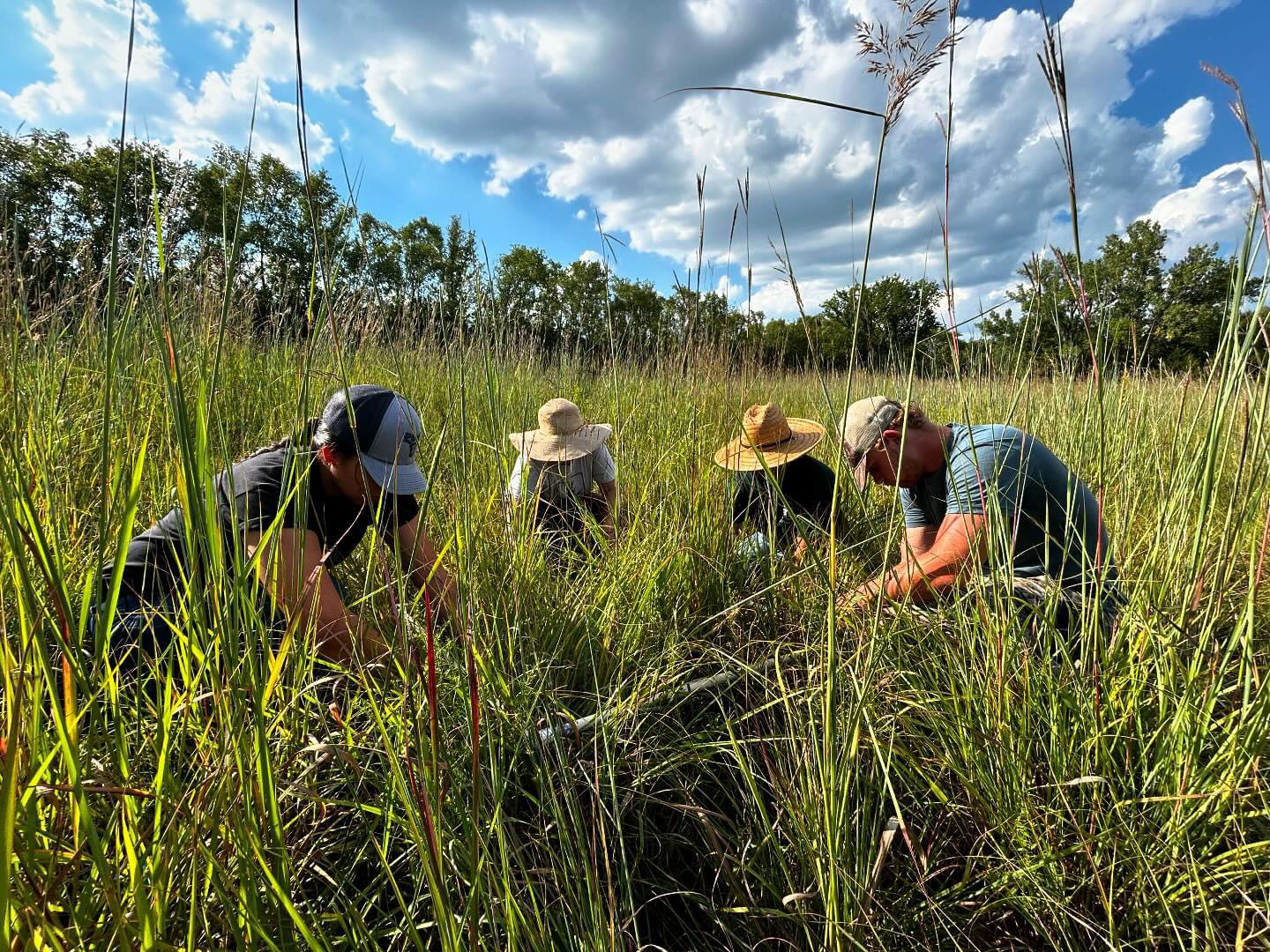
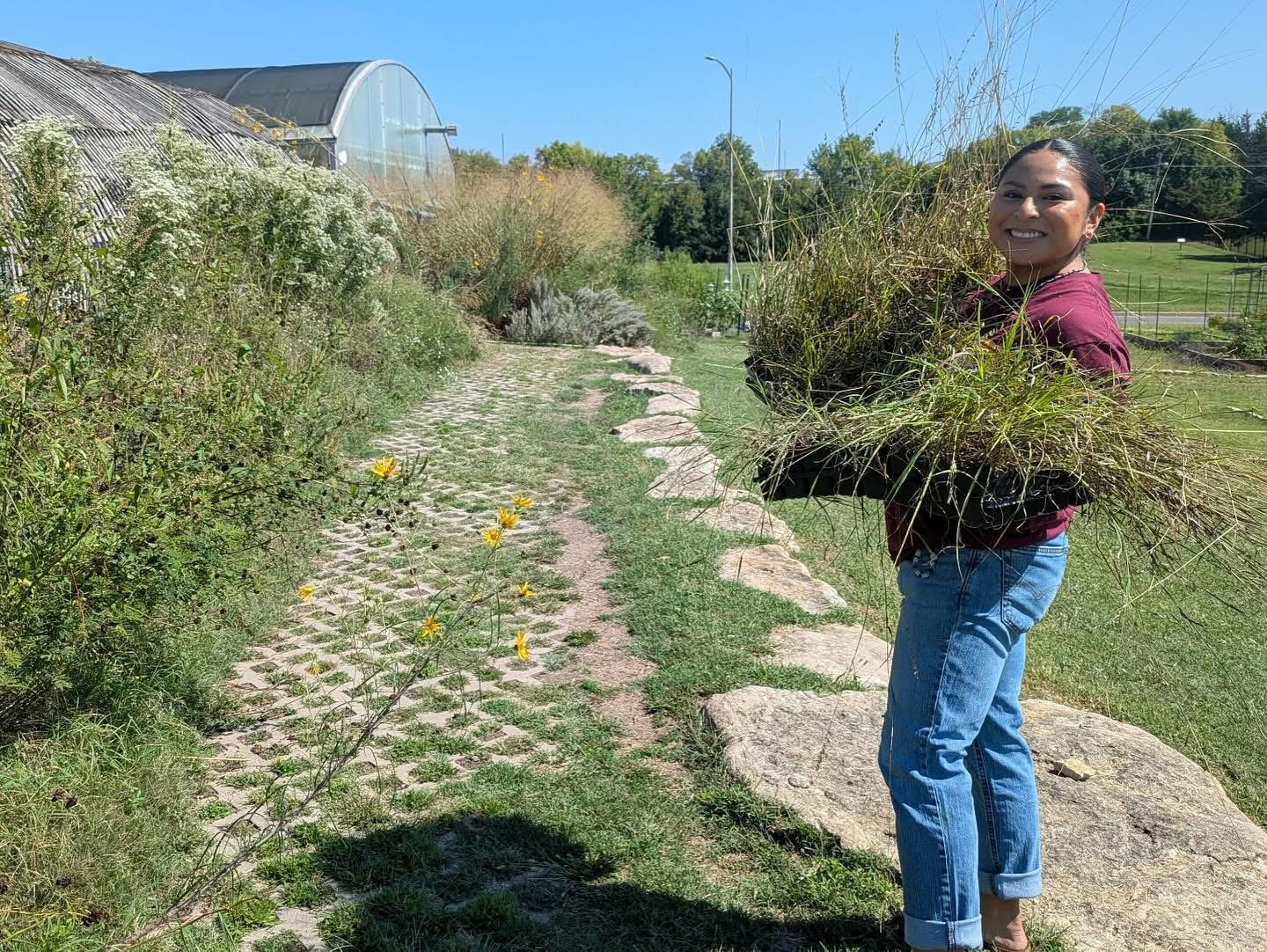
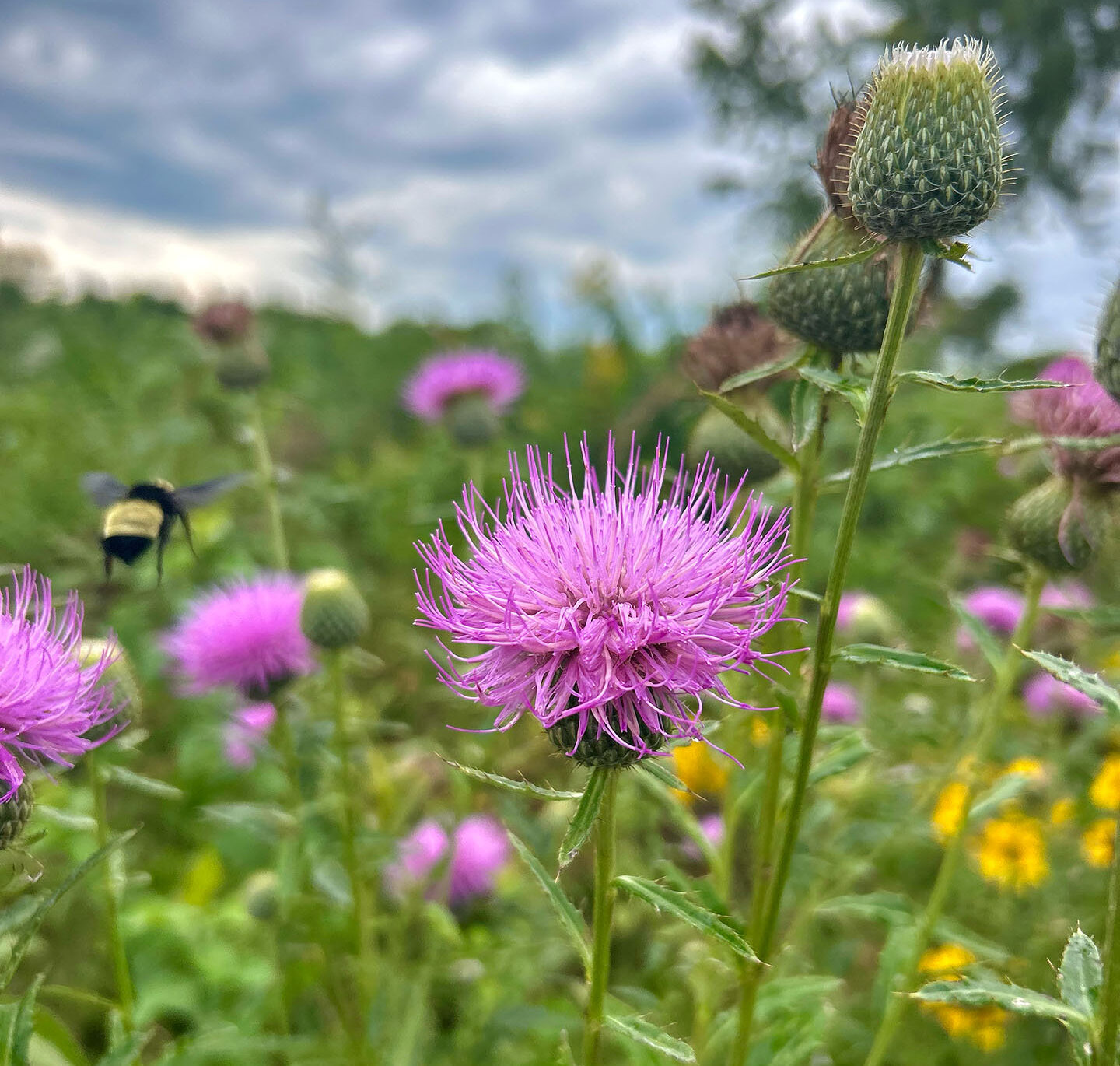
In Caring for Our Kin: Stories of Indigenous Environmental Stewardship, the College Fund shares the stories of Indigenous environmental leaders who are centering kinship and relational knowledge to build healthy ecological systems. These stories remind us that caring for the Earth means caring for one another—and that Indigenous knowledge systems continue to offer guidance, resilience, and hope for the future.
Learn more about our Environmental Stewardship Program.
Ekvnv Vcayecet. Mvto!
(Take care of the Earth/Land. Thank you)
More Blogs
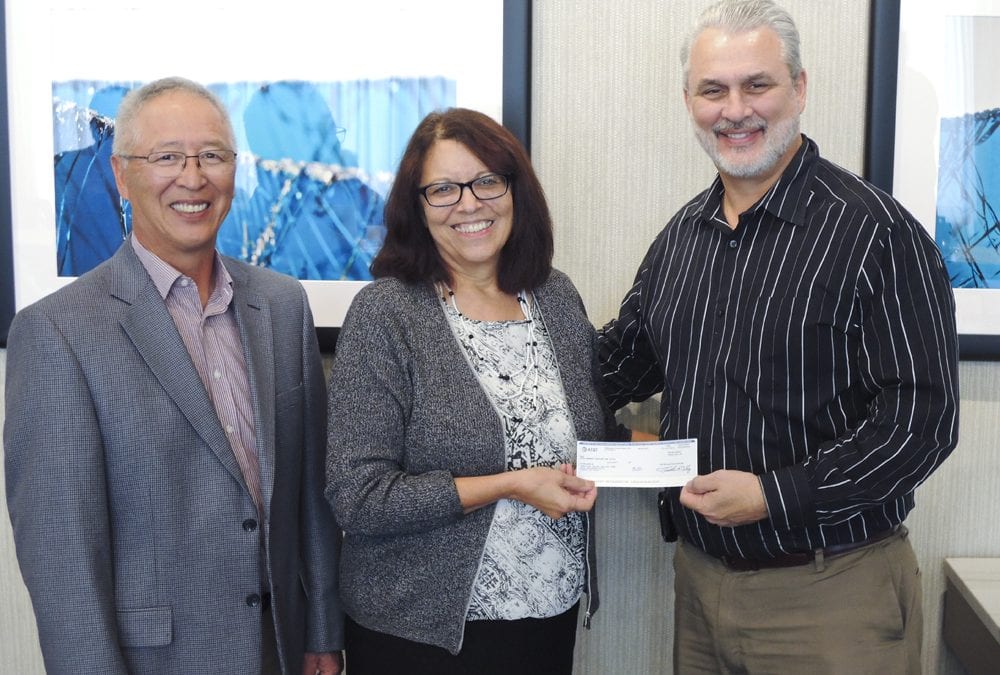
Native American Youth Programs Receive More Than $1 Million from AT&T to Help Students Graduate and Succeed in College
To commemorate Native American Heritage Month, AT&T is furthering its commitment to Indian Country with more than $1 million dollars in contributions to connect Native youth to education that leads them to the 21st century workforce. The contribution includes $600,000 to the American Indian College Fund (College Fund) and $450,000 to George Washington University (GW).
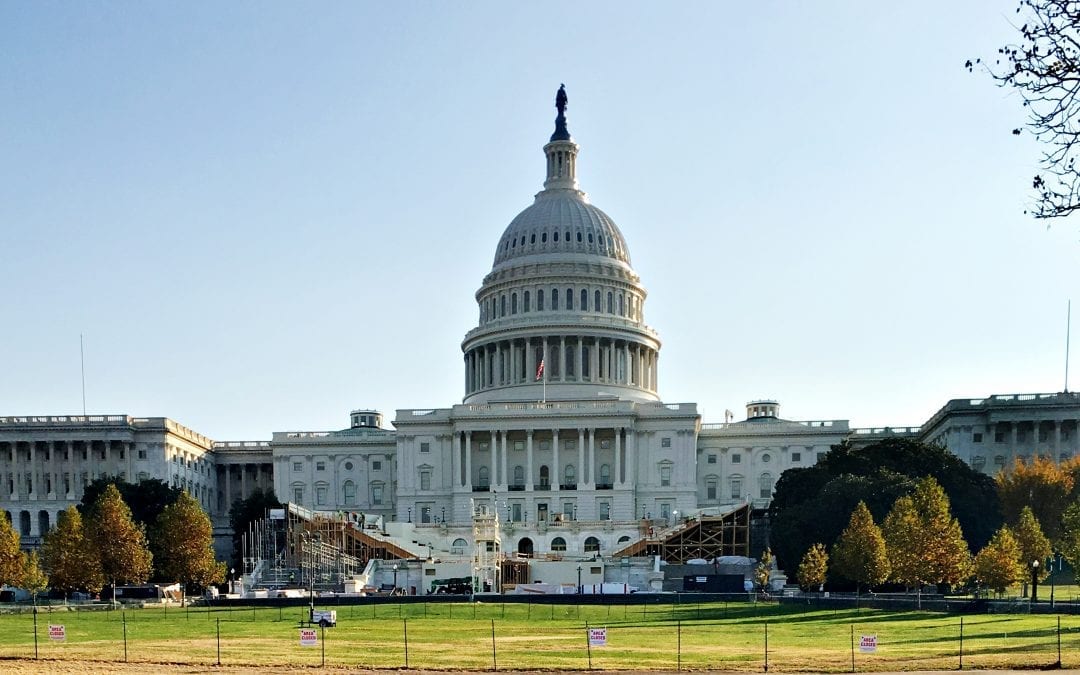
The College Fund’s Post-Election Message
The American Indian College Fund’s mission is transforming higher education by providing American Indians with funding for access to a higher education while also creating public awareness of this nation’s tribal higher education institutions and American Indians.
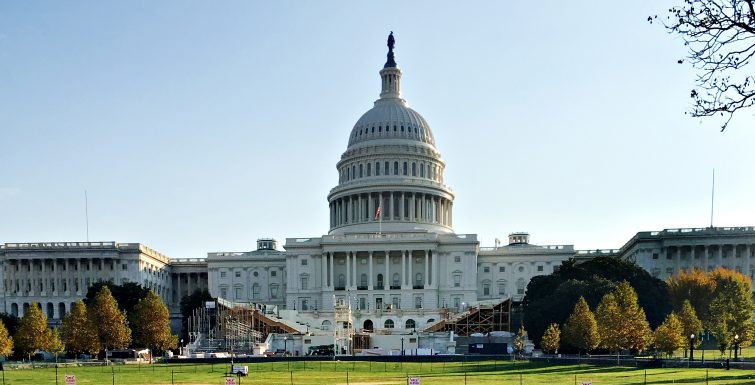
The College Fund’s Post-Election Message
The American Indian College Fund’s mission is transforming higher education by providing American Indians with funding for access to a higher education while also creating public awareness of this nation’s tribal higher education institutions and American Indians.
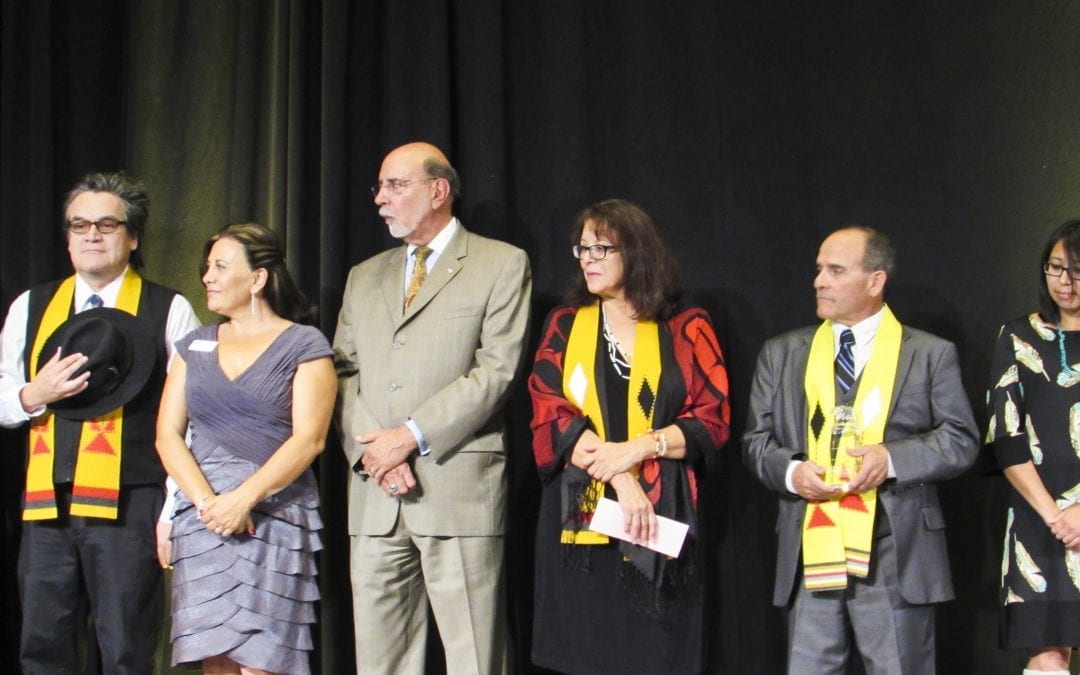
American Indian College Fund Named American Indian Non-Profit of the Year
Cheryl Crazy Bull, President and CEO of the American Indian College Fund, accepted the award on behalf of the organization, which was chosen for its national work to provide higher education opportunities for American Indians.
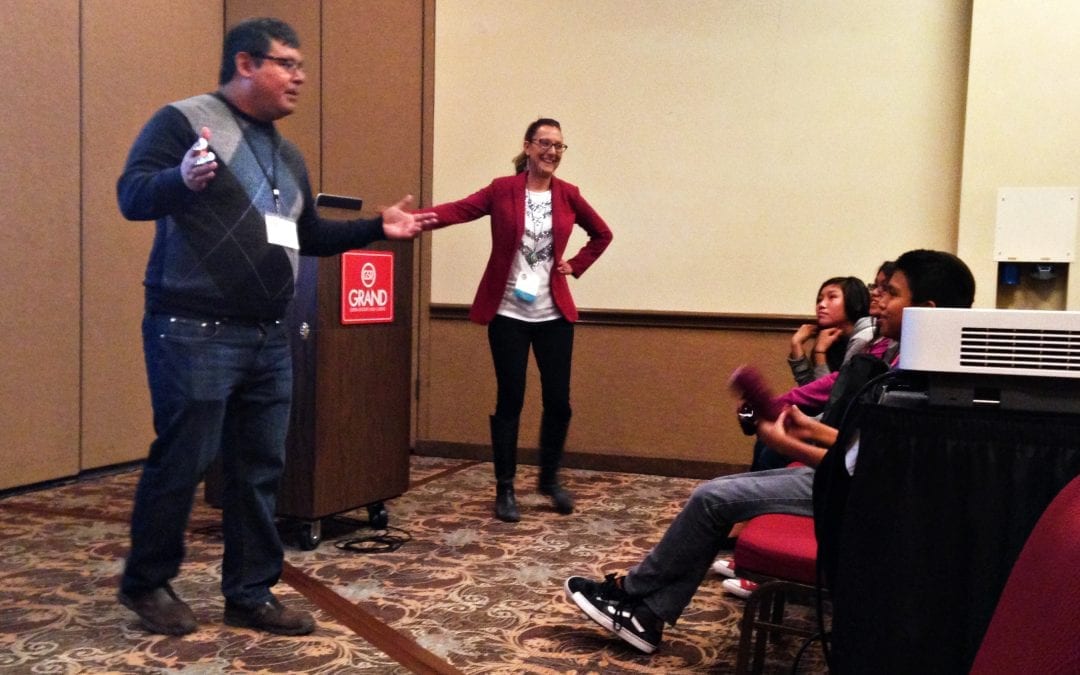
College Fund to Help Educators Create College Culture for Native Students at National Forum
American Indians and Alaska Natives (AI/AN) have the lowest higher education enrollment numbers and education attainment levels for people age 25 and older of any ethnic or racial group in the United States. Matthew Van Alstine Makomenaw, Ph.D., the College Pathways Administrator at the American Indian College Fund, will share ways to develop a college pipeline for AIAN students at the College Board National Forum 2016 on October 27 in Chicago, Illinois.
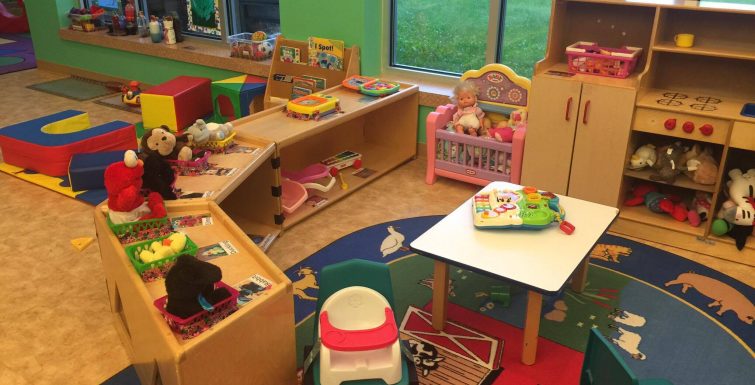
Sitting Bull College Kicks Off Restorative Teachings Project
The American Indian College Fund’s (College Fund) Tribal College and Universities (TCU) Early Childhood Education (ECE) Initiatives launched a new project called Restorative Teachings TCU ECE Initiative, a health and wellness initiative funded by the W. K. Kellogg Foundation. The program is geared to build the physical and emotional health, strength, and well-being of early childhood learners. This initiative engages four TCUs in programming which includes partnerships with local ECE centers and tribal education partners.
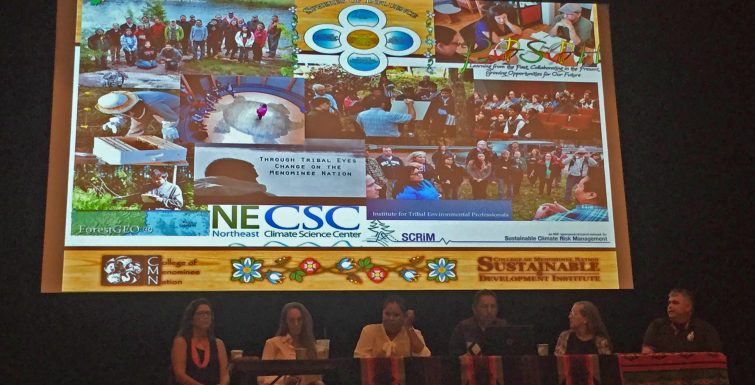
Tribal College, Community Tackle Ways to Share Environmental Stewardship
The Indigenous Peoples Climate Change Working Group, hosted by Haskell Indian Nations College, is in its tenth year. This year’s annual meeting began with intention. The community was invited as a community to participate in two full days of dialogue, and all participants found their way to a fire that was kept burning for the duration of the gathering.
Pendleton® Weaves New 2016 American Indian College Fund Blanket
Mills, an acclaimed-lifestyle brand headquartered in Portland, Oregon announces the release of an exclusive blanket to benefit the American Indian College Fund, the nation’s largest philanthropic effort supporting Native American higher education for more than 25 years. Naskan Saddle Blanket, a new release for 2016, represents the collaboration between Pendleton® and the College Fund to honor and reawaken a vital part of Native history.
Celebrating What It Means to Be Indigenous
This weekend I drove with my family across the plains of Colorado into the sand hills of Nebraska then journeyed over vast prairies into the tree-filled hills, through weather that ranged from warm sun to pouring rain and slush, and blowing snow settling into the chilly night of a fall day. I felt very indigenous, native, naturally occurring in place.
College Fund Staff Shares Ways to Improve Native Student Success at NIEA
American Indians and Alaska Natives (AIAN) have the lowest higher education attainment rates for people age 25 and older in the United States. Several American Indian College Fund professionals shared their expertise for improving Native student academic success at the 47th National Indian Education Association Convention.