
Planting the Seeds of Cultural Sustainability
April 22, 2026 | Student Ambassador Aiyanna Tanyan’s (Seminole Nation of Oklahoma) work to reclaim food sovereignty
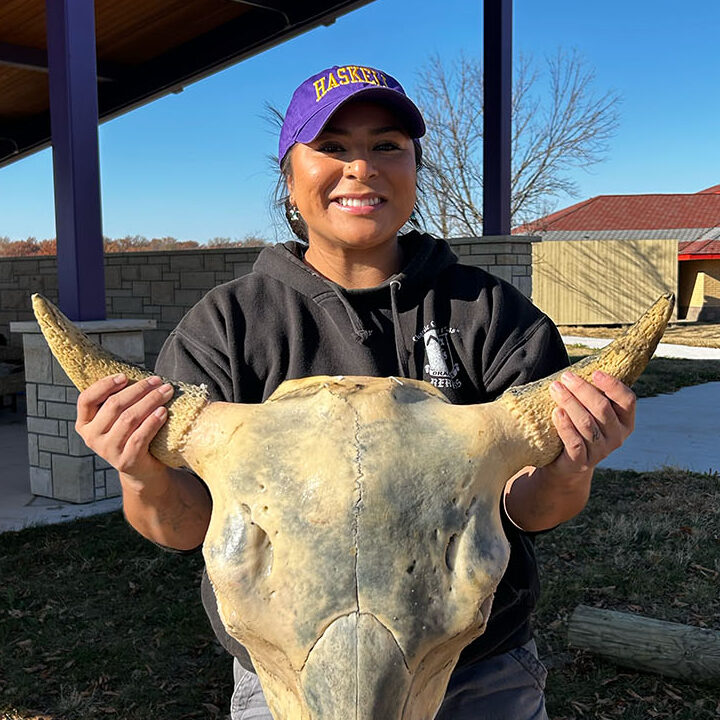
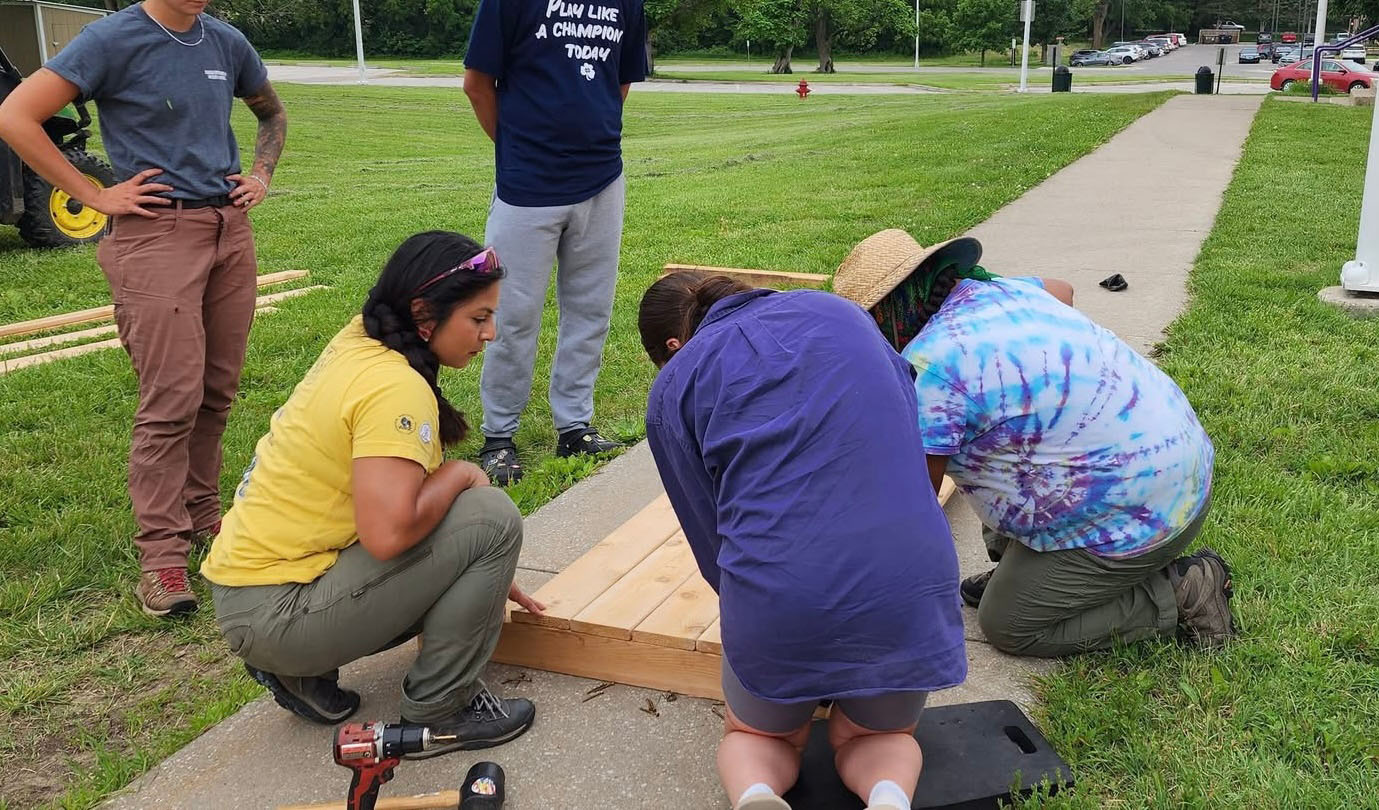
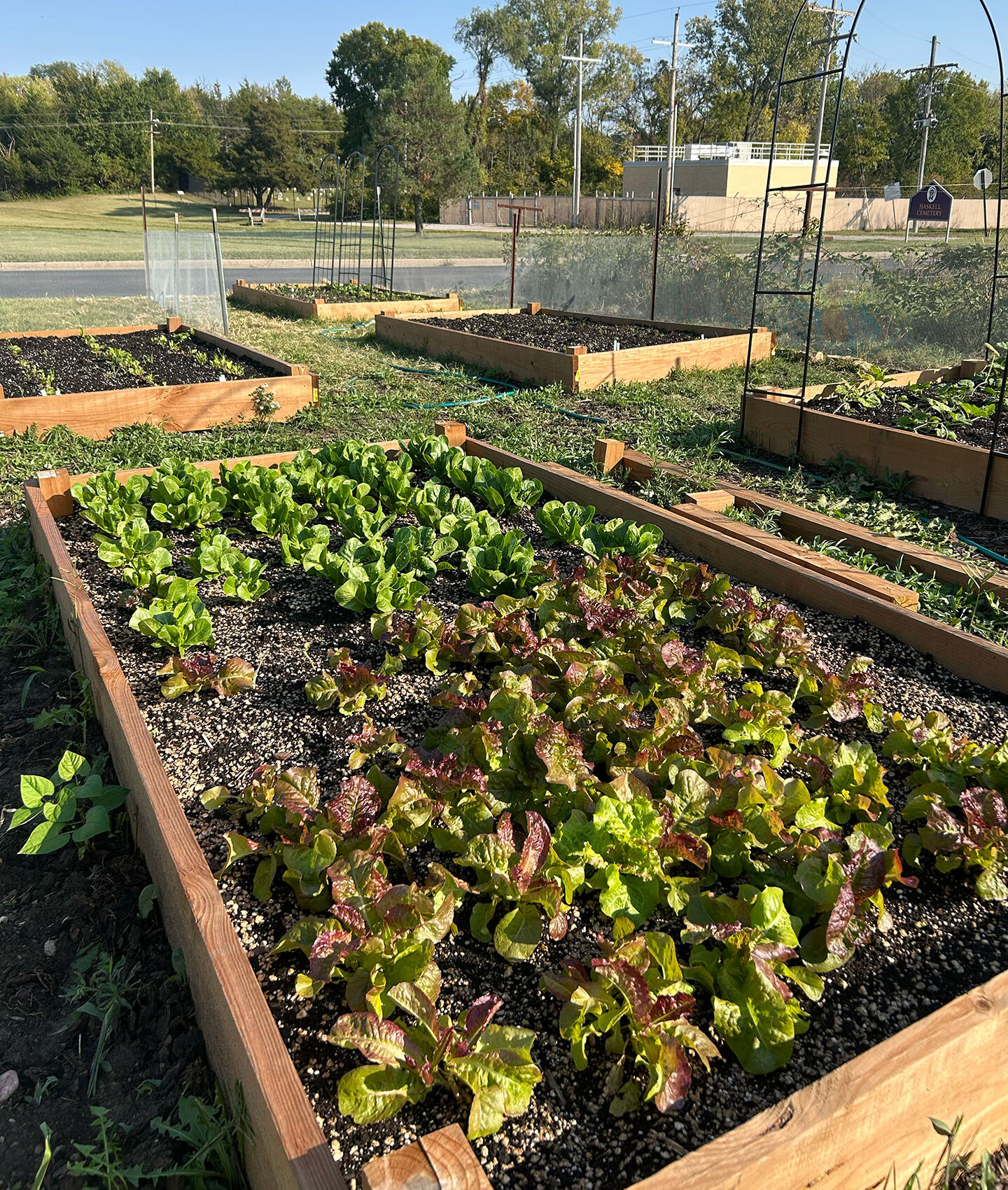
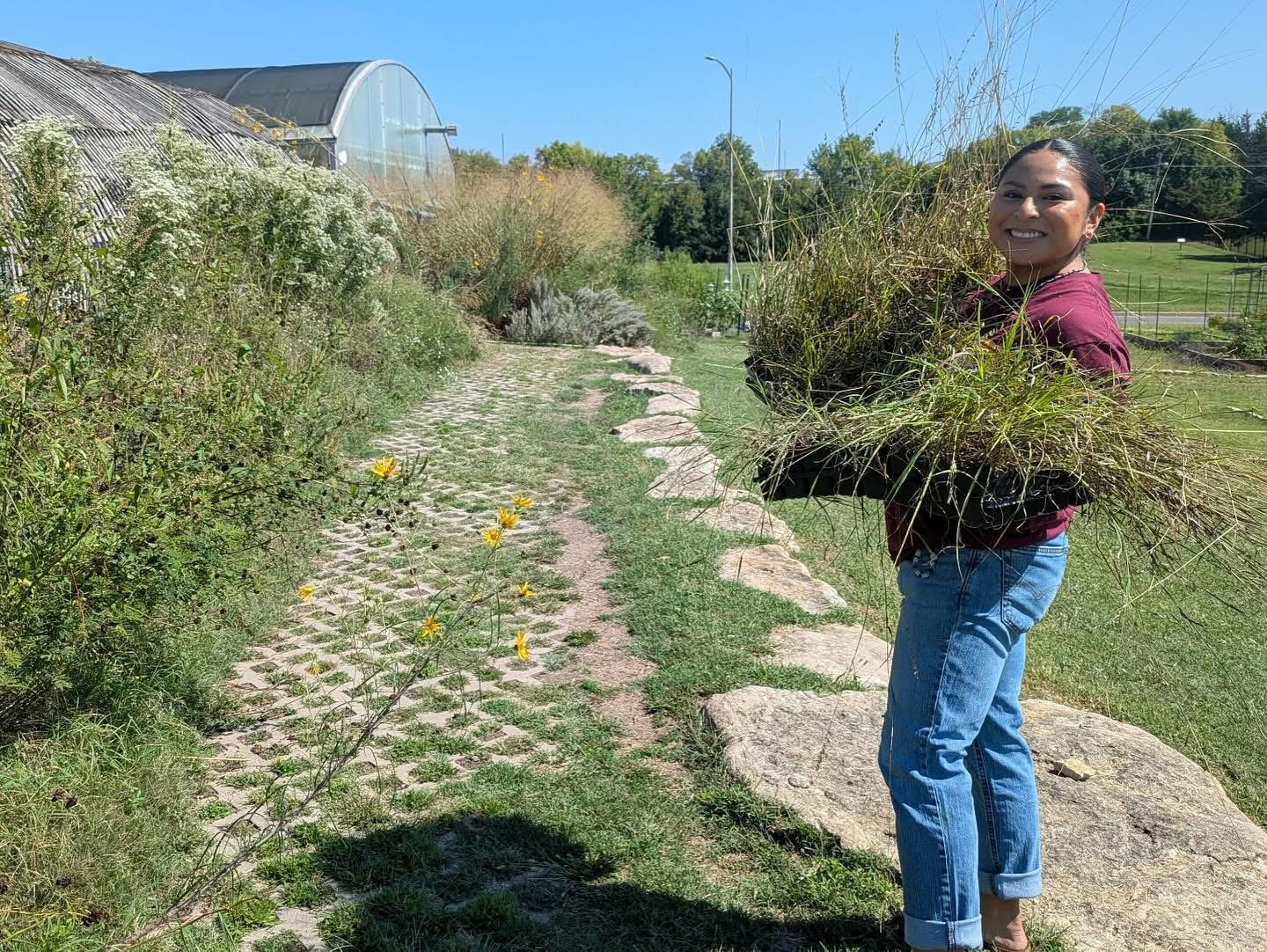
We came up with the idea of building raised garden beds near the dorms so students can easily access fresh foods and learn how to grow them themselves. Through support from the Haskell Greenhouse (funded through the USDA Equity Grant), we started building.
Last year was our first year doing this project and it was a learning experience as with many community-based projects, it comes with trial and error. However, that process taught us a lot about what works, what doesn’t, and how to build something more sustainable moving forward. This year, we’re continuing this work with stronger systems, more involvement, and a clearer vision.
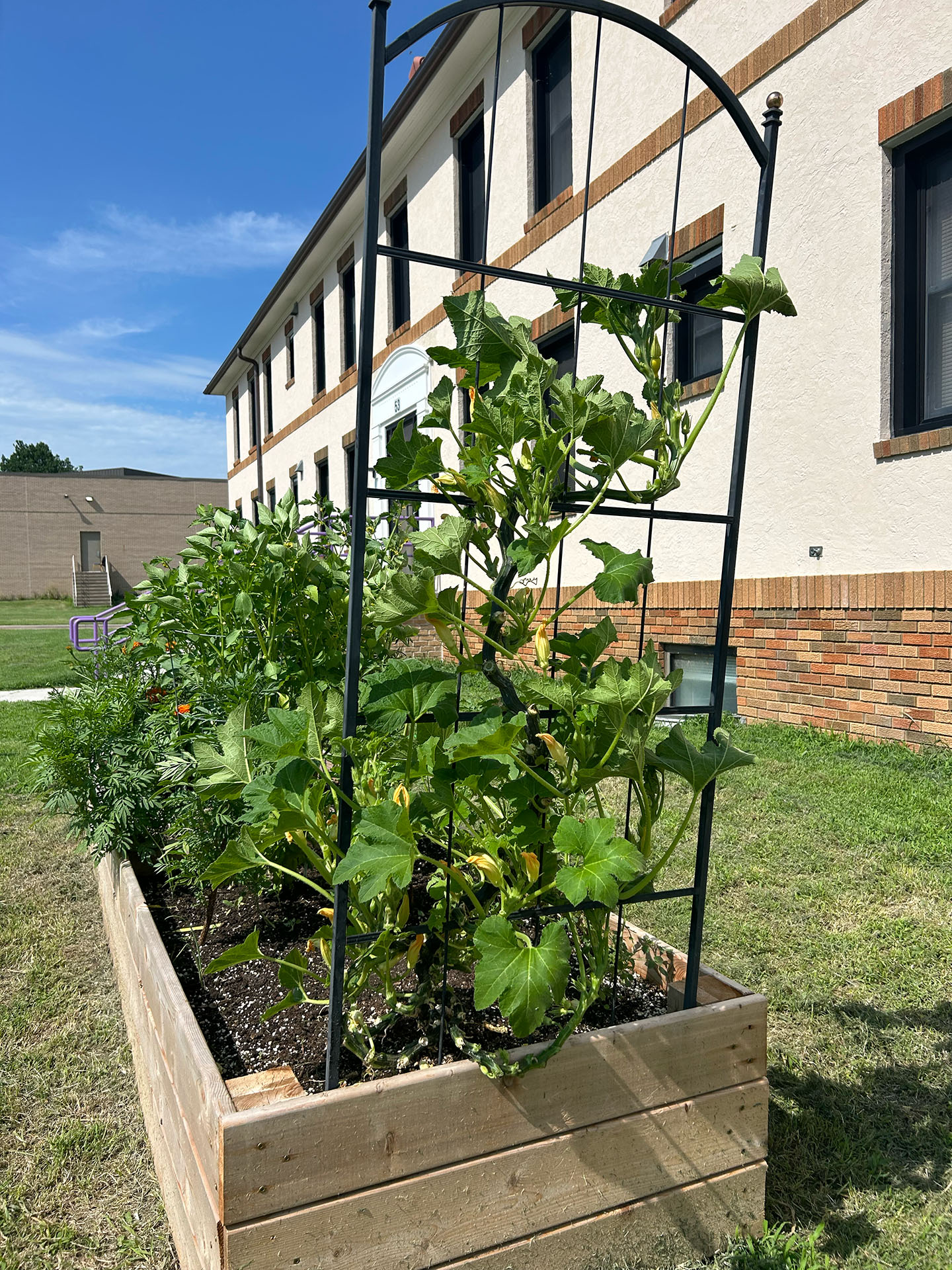
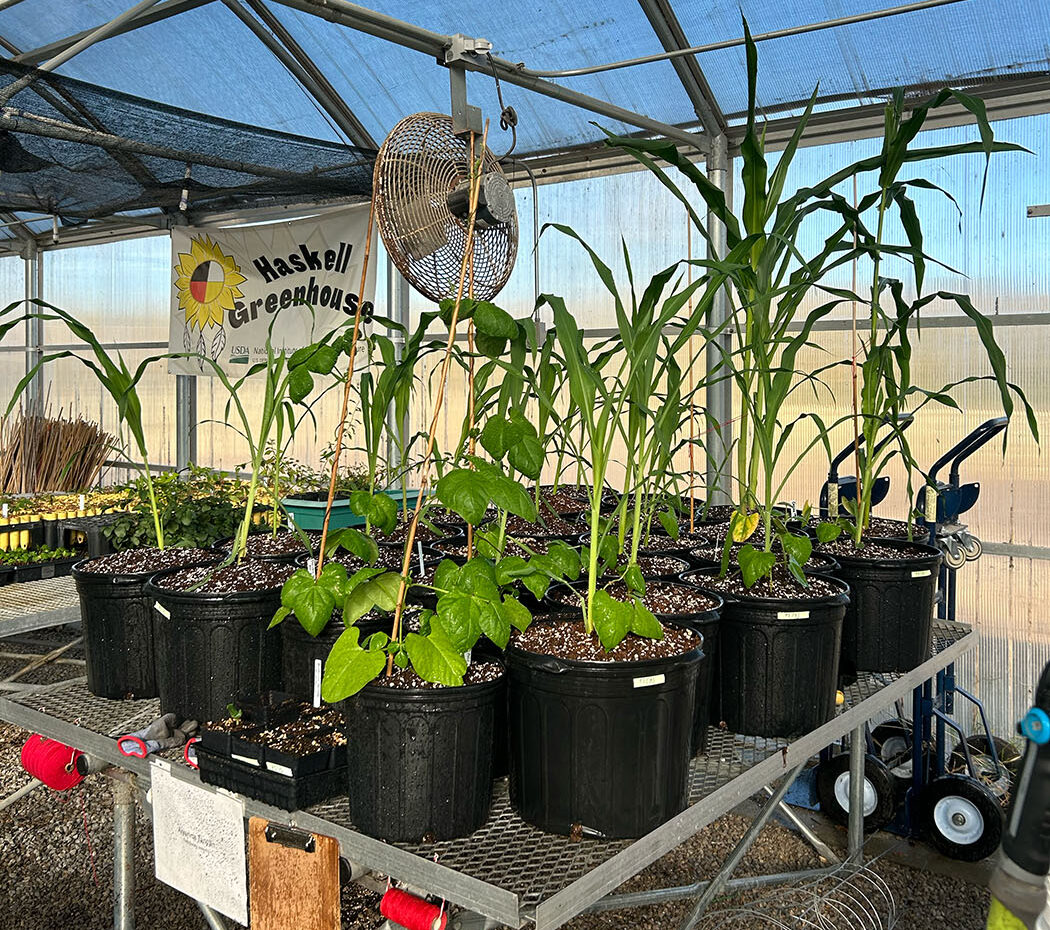
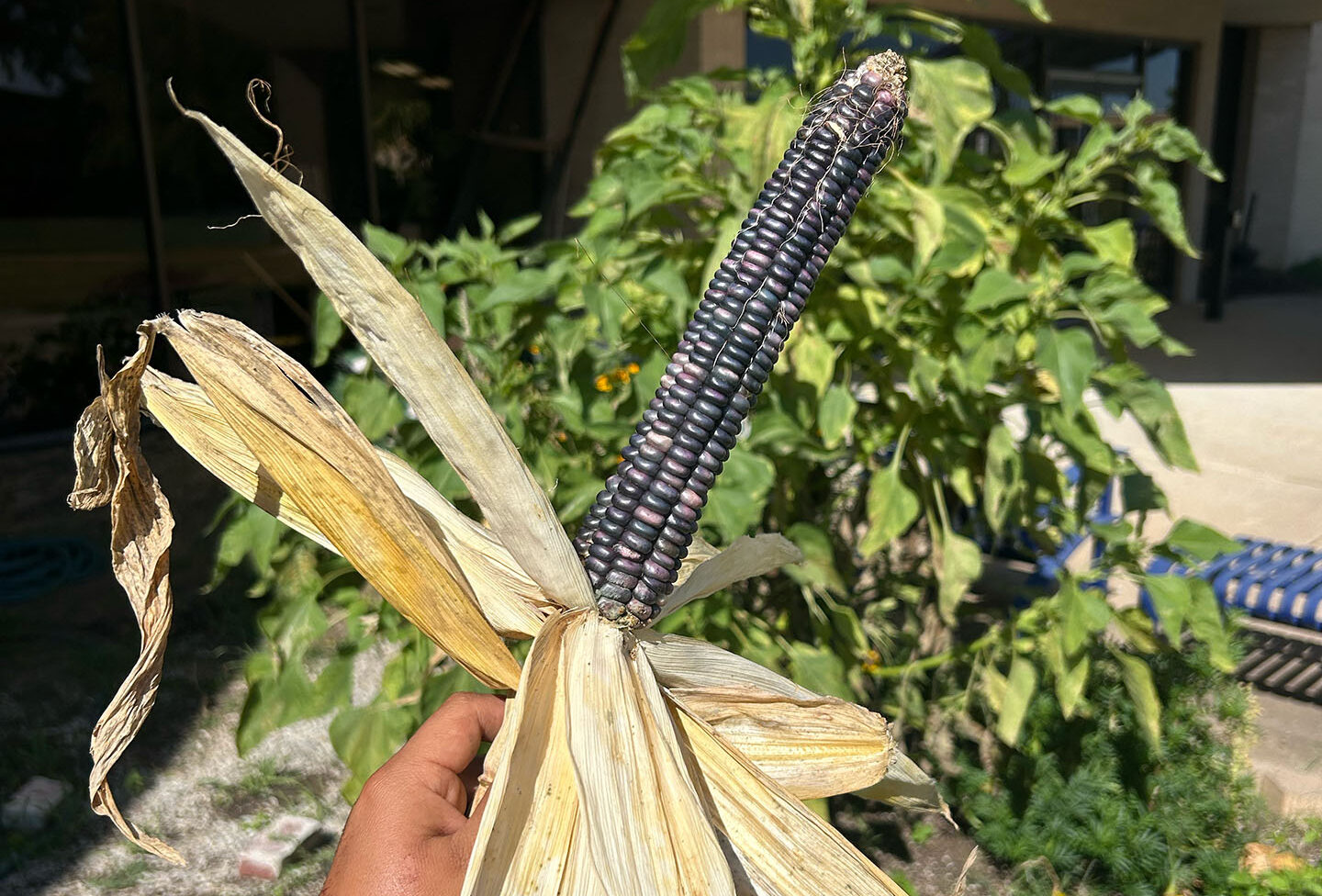
Everyone at the Haskell Greenhouse wants to help others learn, value, and view these spaces as places of teaching. I know they have taught me so much about responsibility and our relationship with the environment. Through these projects, we’re helping students reconnect with the land and understand the importance of food sovereignty for Indigenous communities. This work is ongoing, and we’re still learning. Every seed planted, and every workday shared brings us one step closer to a more sustainable and connected future.
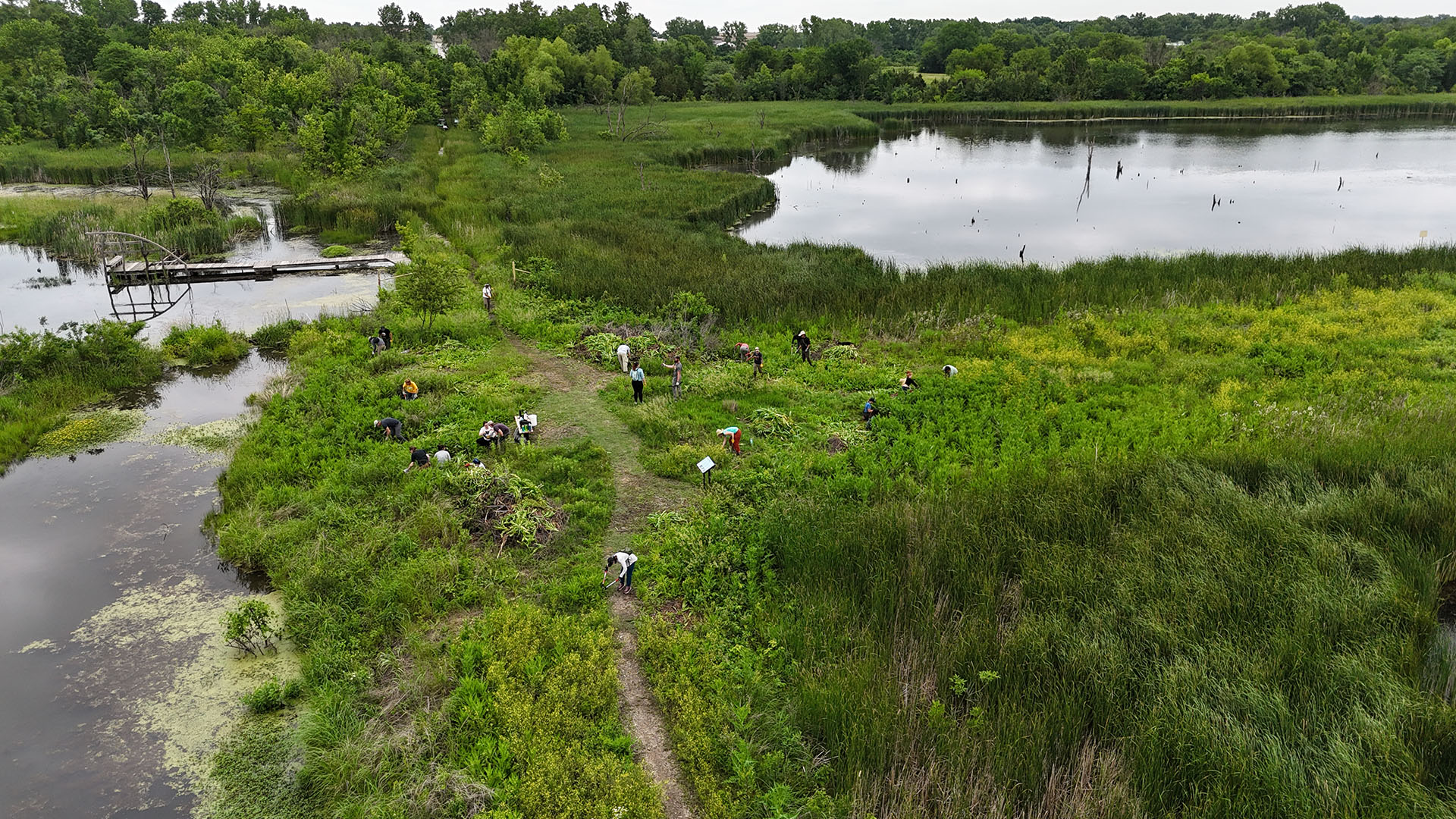
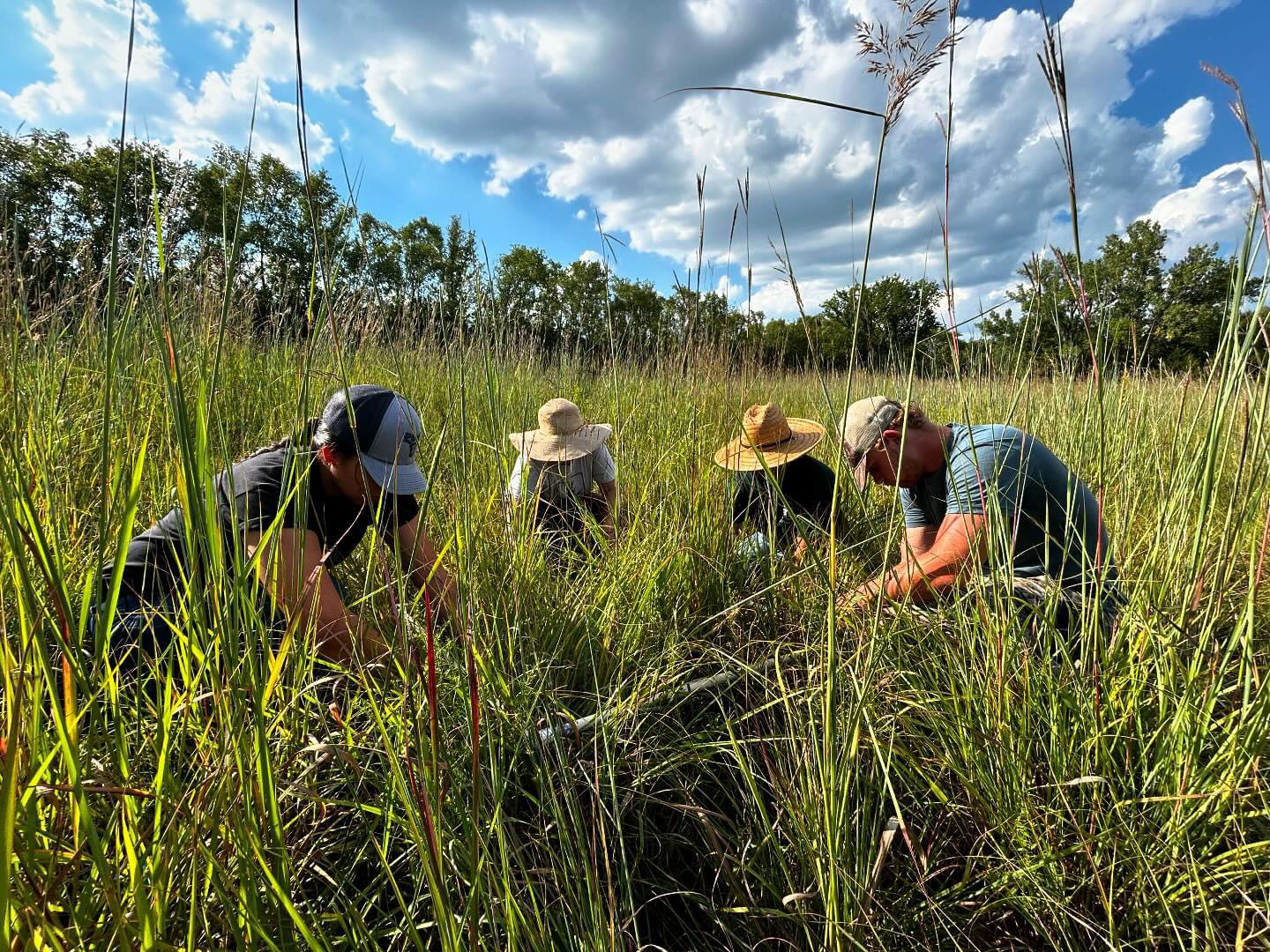
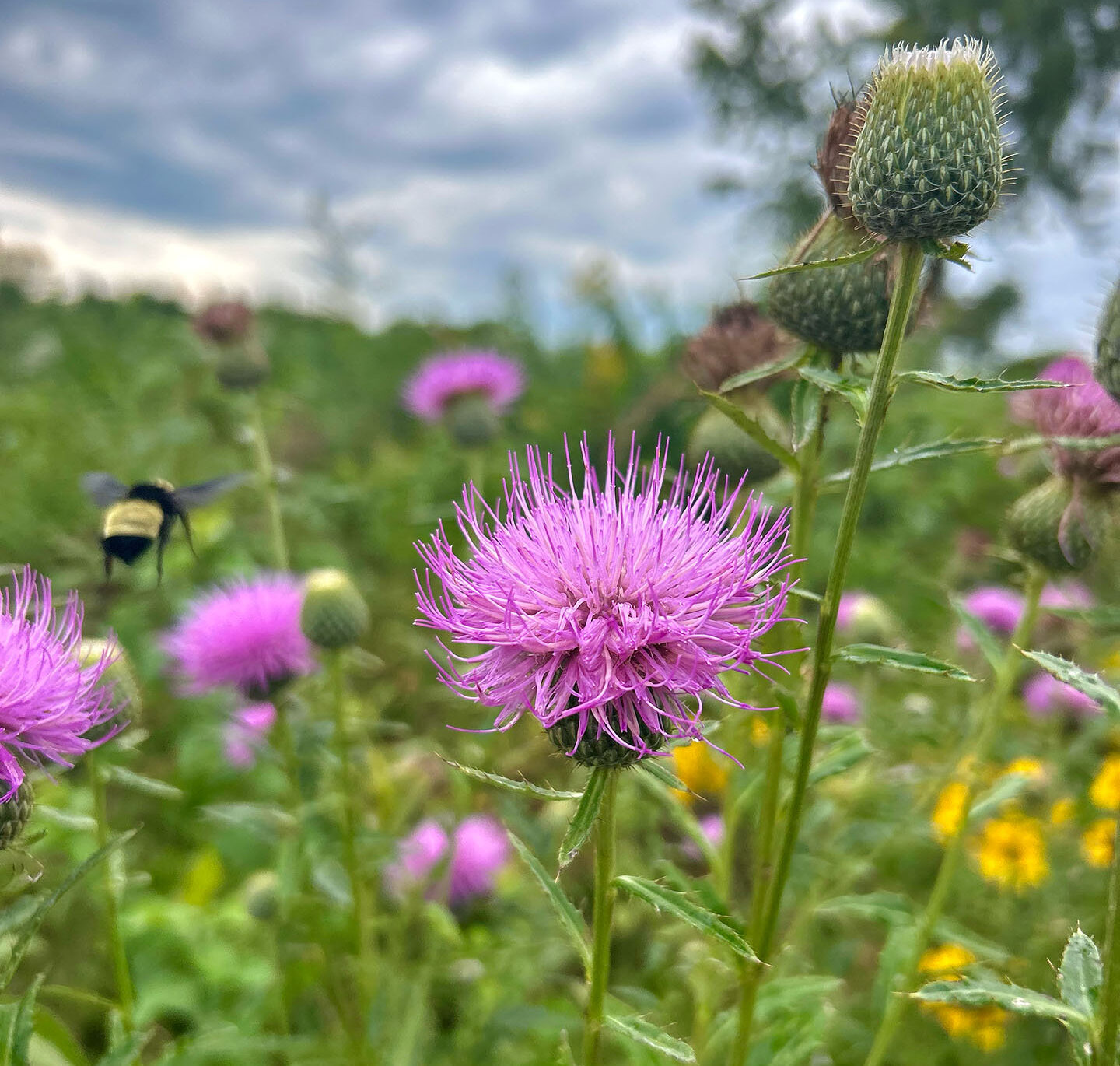
In Caring for Our Kin: Stories of Indigenous Environmental Stewardship, the College Fund shares the stories of Indigenous environmental leaders who are centering kinship and relational knowledge to build healthy ecological systems. These stories remind us that caring for the Earth means caring for one another—and that Indigenous knowledge systems continue to offer guidance, resilience, and hope for the future.
Learn more about our Environmental Stewardship Program.
Ekvnv Vcayecet. Mvto!
(Take care of the Earth/Land. Thank you)
More Blogs
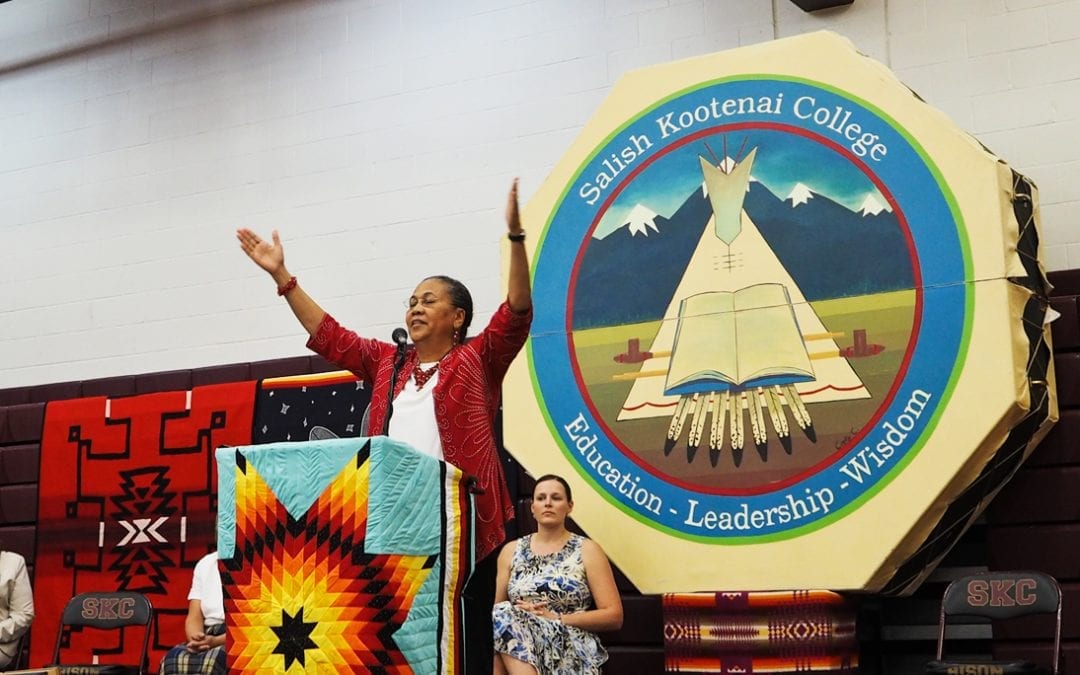
Salish Kootenai College Offering Master of Science Degree Program in Natural Resources Management
Devastating mega forest fires and watershed contamination and other effects in the west resulting from global climate change make the work of natural resources professionals more important than ever. Salish Kootenai College (SKC), a four-year tribal college located on the Flathead Indian Reservation, began offering a Master of Science degree in Natural Resources Management in the fall of 2021 to meet this urgent need.
Udall Foundation Names Jessica Arkeketa a 2022 Native American Congressional Intern
Congratulations to Jessica Arkeketa (of the Jiwere Nut’achi (Otoe-Missouria) and Muscogee Creek from Tulsa, Oklahoma), an American Indian College Fund Full Circle scholar who is one of 11 students selected to participate in the Udall Foundation’s class of 2022 as a Congressional intern.
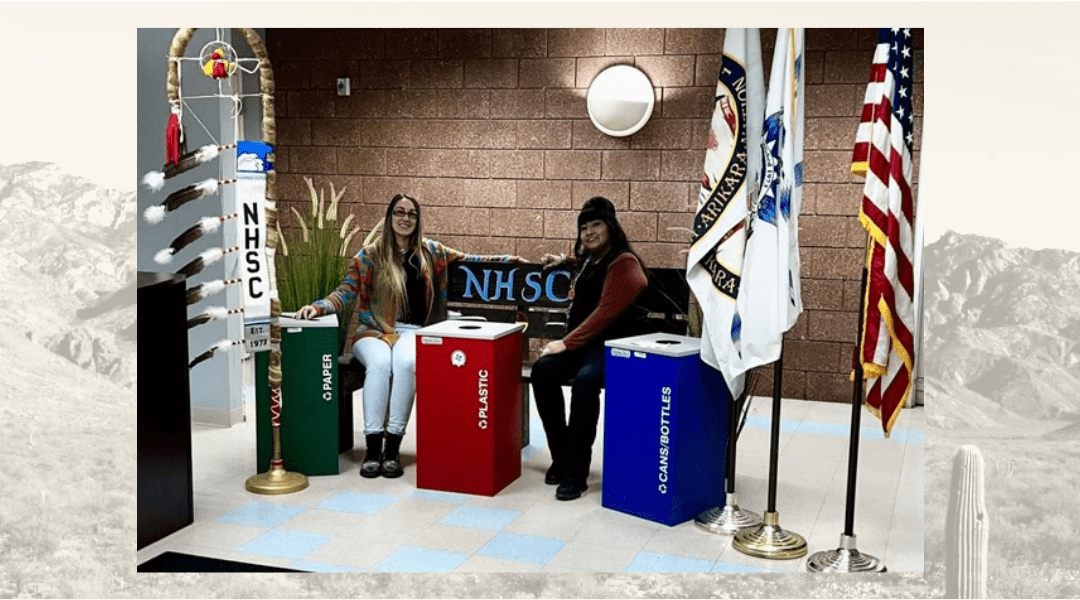
MHA-TAT Waste Reduction/Recycling Project at Nueta Hidatsa Sahnish College
By American Indian College Fund Indigenous Visionary Sasha Sillitti My family’s historical home is in the community of New Town, North Dakota, located on the Fort Berthold reservation. The closest recycling collection center for a wide range of materials is located...
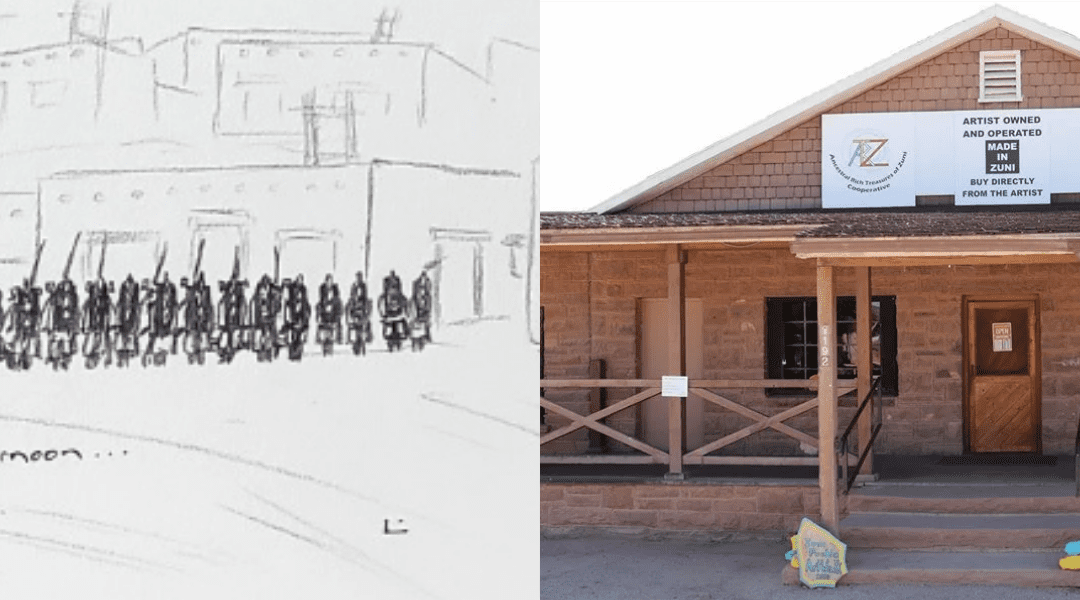
SIPI Drawing Workshop Taps into Native Philosophies of Awareness in Art, Native Identity, Sacredness, and Value
The warm smell of burning firewood wafted around us as we stepped out of the car. The cool still morning and chirping birds greeted us as we entered the building of the Ancestral Rich Treasures of Zuni (ARTZ) which houses silver and turquoise jewelry and is adorned with colorful paintings all created by Zuni artists.
American Indian College Fund Launches 200-Mile Cycle Challenge on Facebook
Spring is here and it is time to pump up the tires on your bicycles to build those quads while supporting the American Indian College Fund and its mission of providing Native students with access to higher education.

American Indian College Fund to Host NYC Indigenous Food Event Featuring Four Indigenous Celebrity Chefs
American Indian College Fund to Host NYC Indigenous Food Event Featuring Four Indigenous Celebrity Chefs May 17 EATTS Event to Benefit Native American College Students Denver, Colo., April 5, 2022--Can you imagine a world without chocolate, blueberries, or guacamole?...
Udall Foundation Names Samantha Maltais a 2022 Native American Congressional Intern
Congratulations to Samantha Maltais (Wampanoag Tribe of Gay Head (Aquinnah) of Massachusetts), an American Indian College Fund student scholar and student ambassador. Samantha received the College Fund’s prestigious three-year Law School Scholarship and studies at Harvard Law School.
Brandon Earns GED through SCTC’s HSE Program
In this HSE student highlight, we see how encouragement can transform a student’s confidence, academic success, and plans for his future.
American Indian College Fund Honors Tribal College Students of the Year, Coca Cola Scholars at Virtual Ceremony
American Indian College Fund Honors Tribal College Students of the Year, Coca Cola Scholars at Virtual Ceremony Scholarships to Be Awarded at Virtual Ceremony on April 4, 2022 Denver, Colo., March 24, 2022—The American Indian College Fund will honor 35 Tribal College...
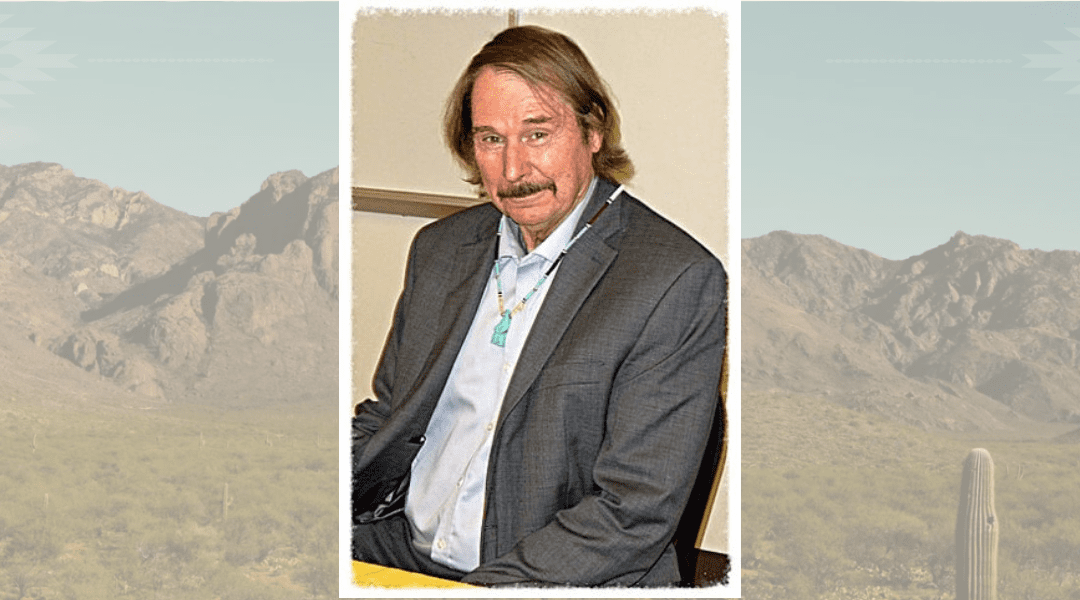
The American Indian College Fund Honors Paul Robertson, President, Tohono O’odham Community College, as Tribal College and University Honoree of the Year
The American Indian College Fund has named Paul Robertson, President of Tohono O’odham Community College (TOCC) in Sells, Arizona, as its 2021-22 Tribal College and University Honoree of the Year for his dedication to tribal college education. President Robertson will receive a $1,200 honorarium sponsored by The Adolph Coors Foundation.
