
Planting the Seeds of Cultural Sustainability
April 22, 2026 | Student Ambassador Aiyanna Tanyan’s (Seminole Nation of Oklahoma) work to reclaim food sovereignty
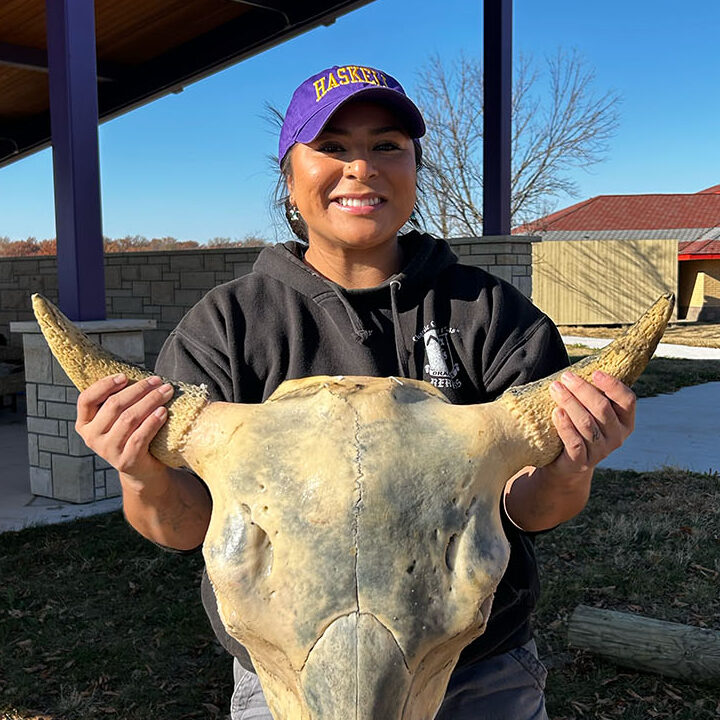
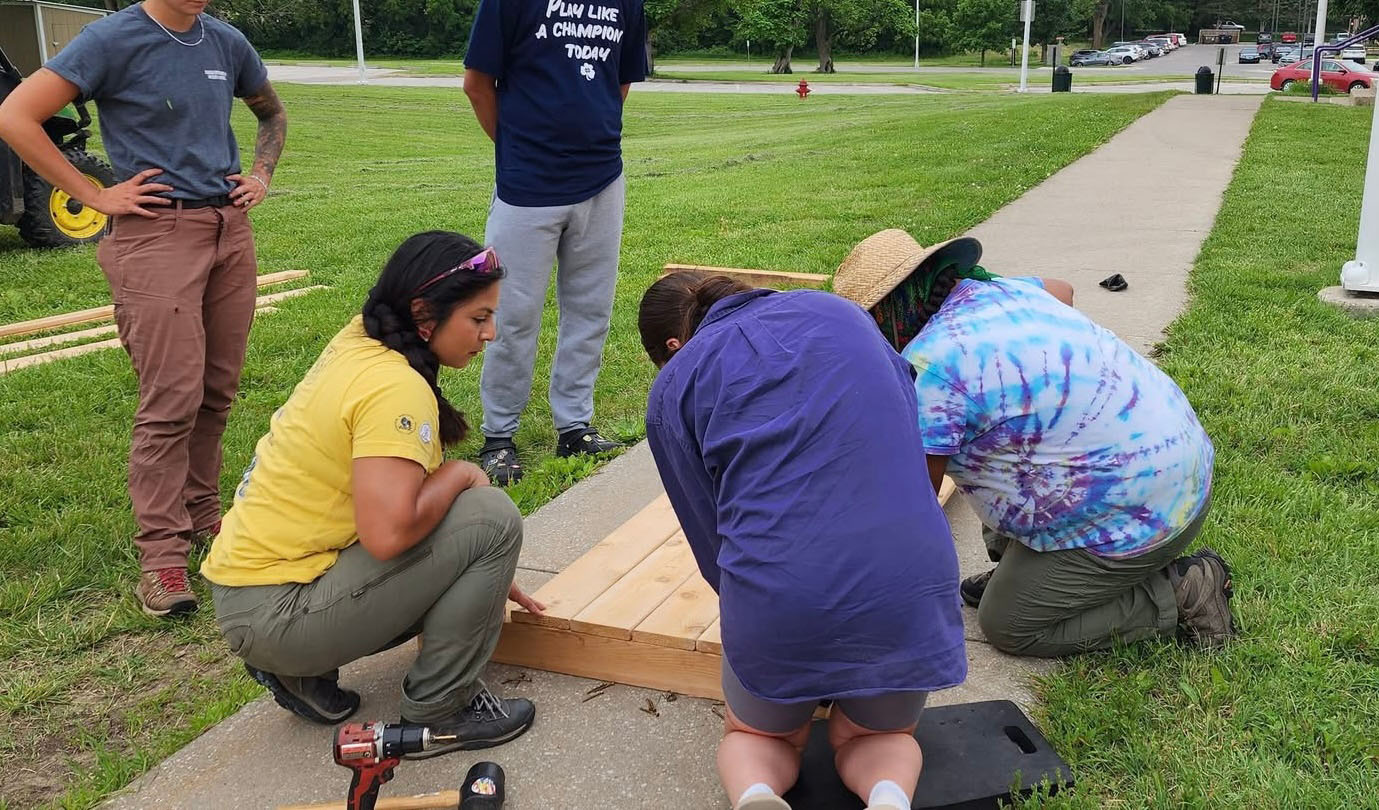
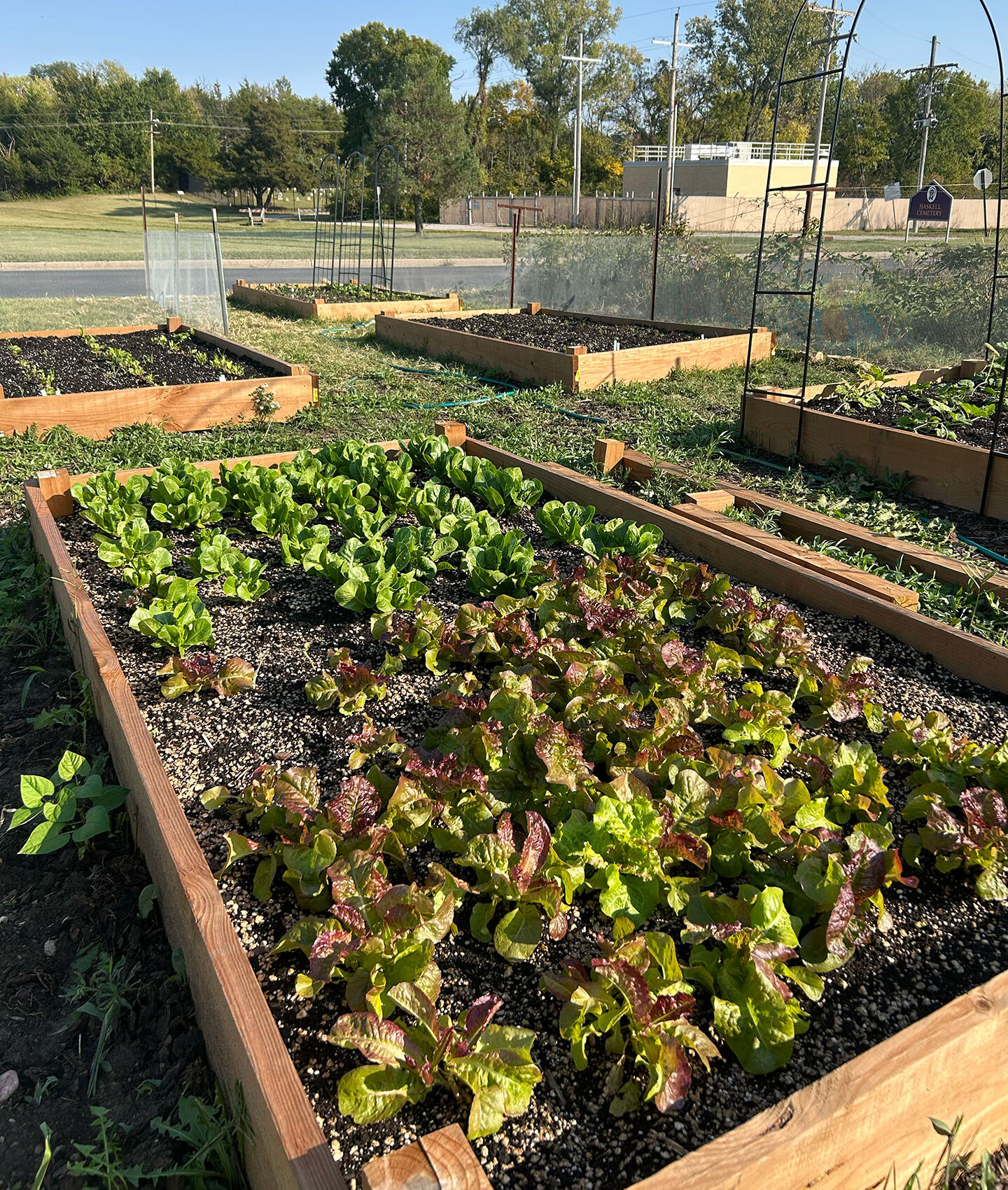
We came up with the idea of building raised garden beds near the dorms so students can easily access fresh foods and learn how to grow them themselves. Through support from the Haskell Greenhouse (funded through the USDA Equity Grant), we started building.
Last year was our first year doing this project and it was a learning experience as with many community-based projects, it comes with trial and error. However, that process taught us a lot about what works, what doesn’t, and how to build something more sustainable moving forward. This year, we’re continuing this work with stronger systems, more involvement, and a clearer vision.
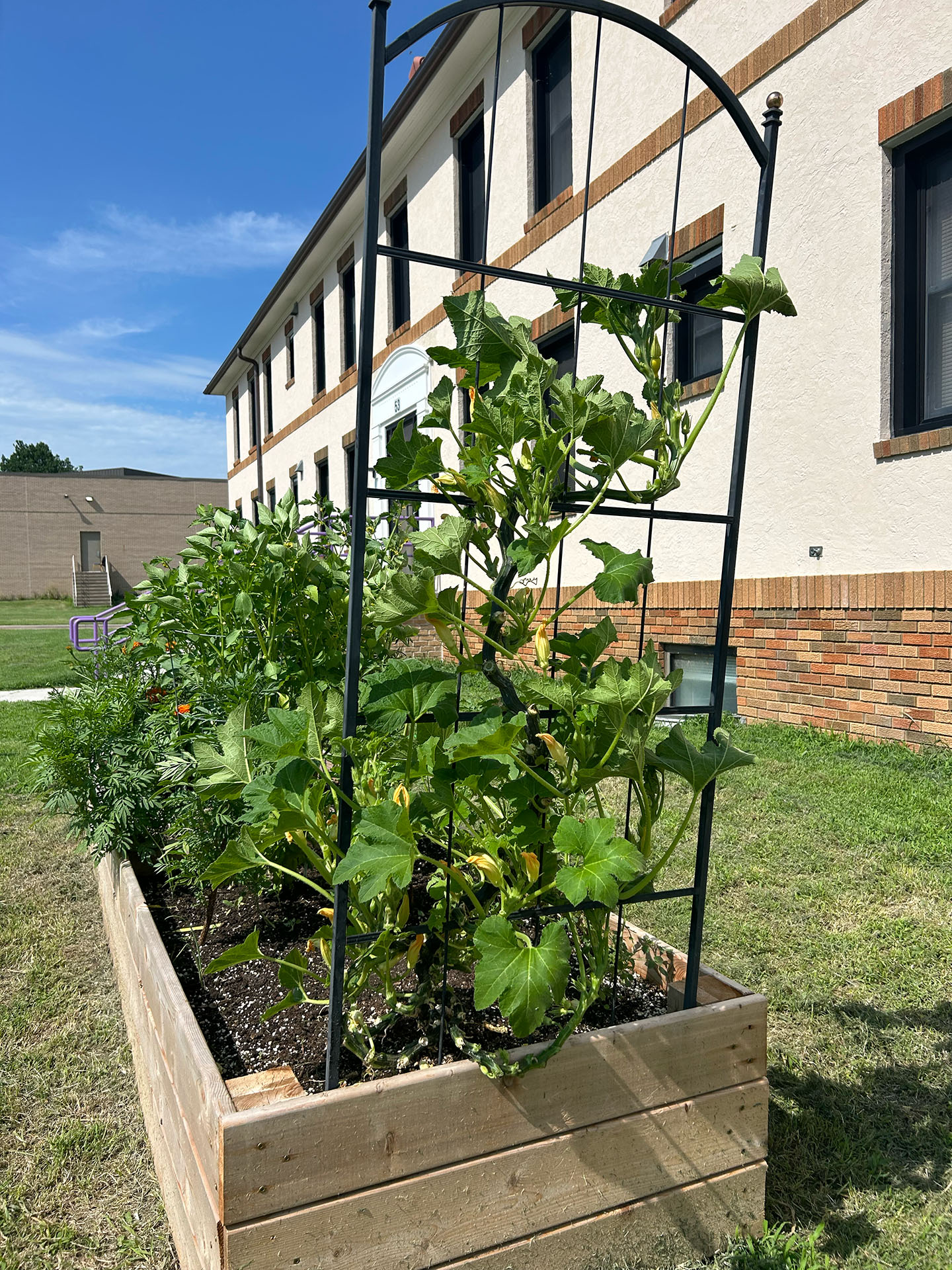
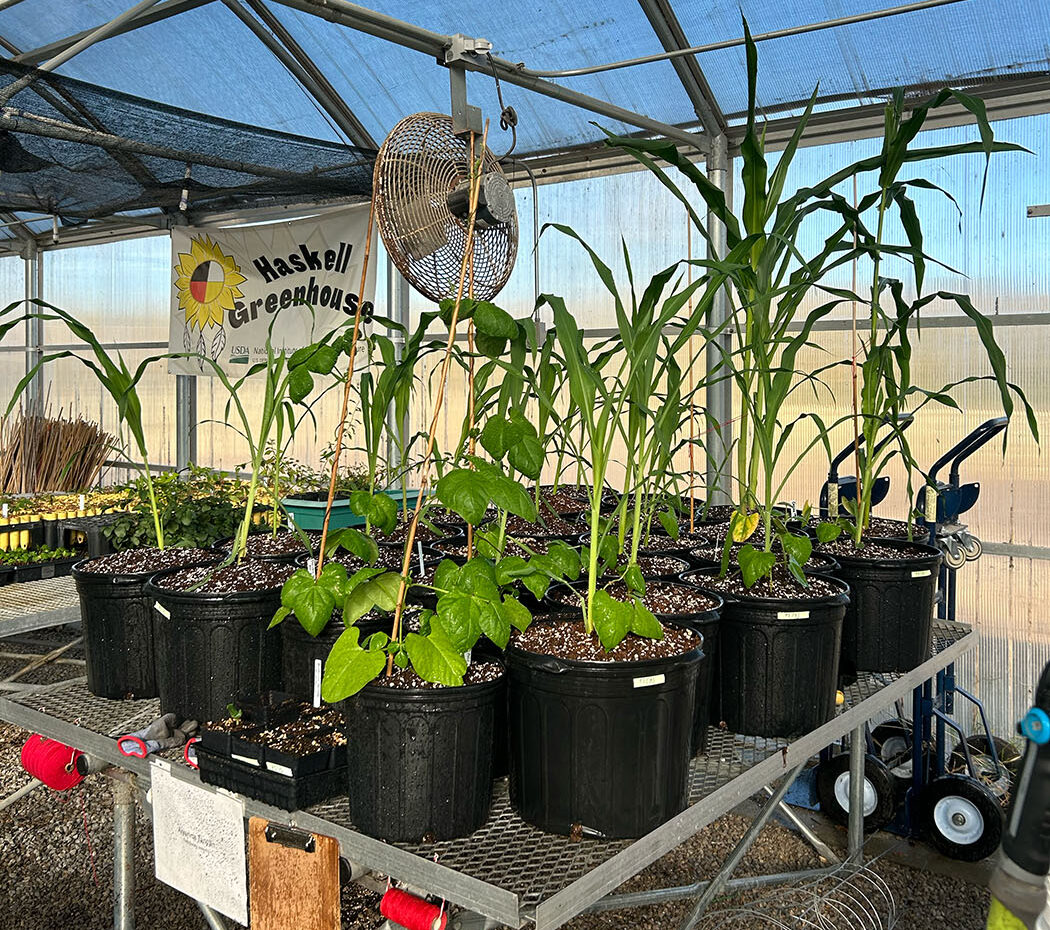
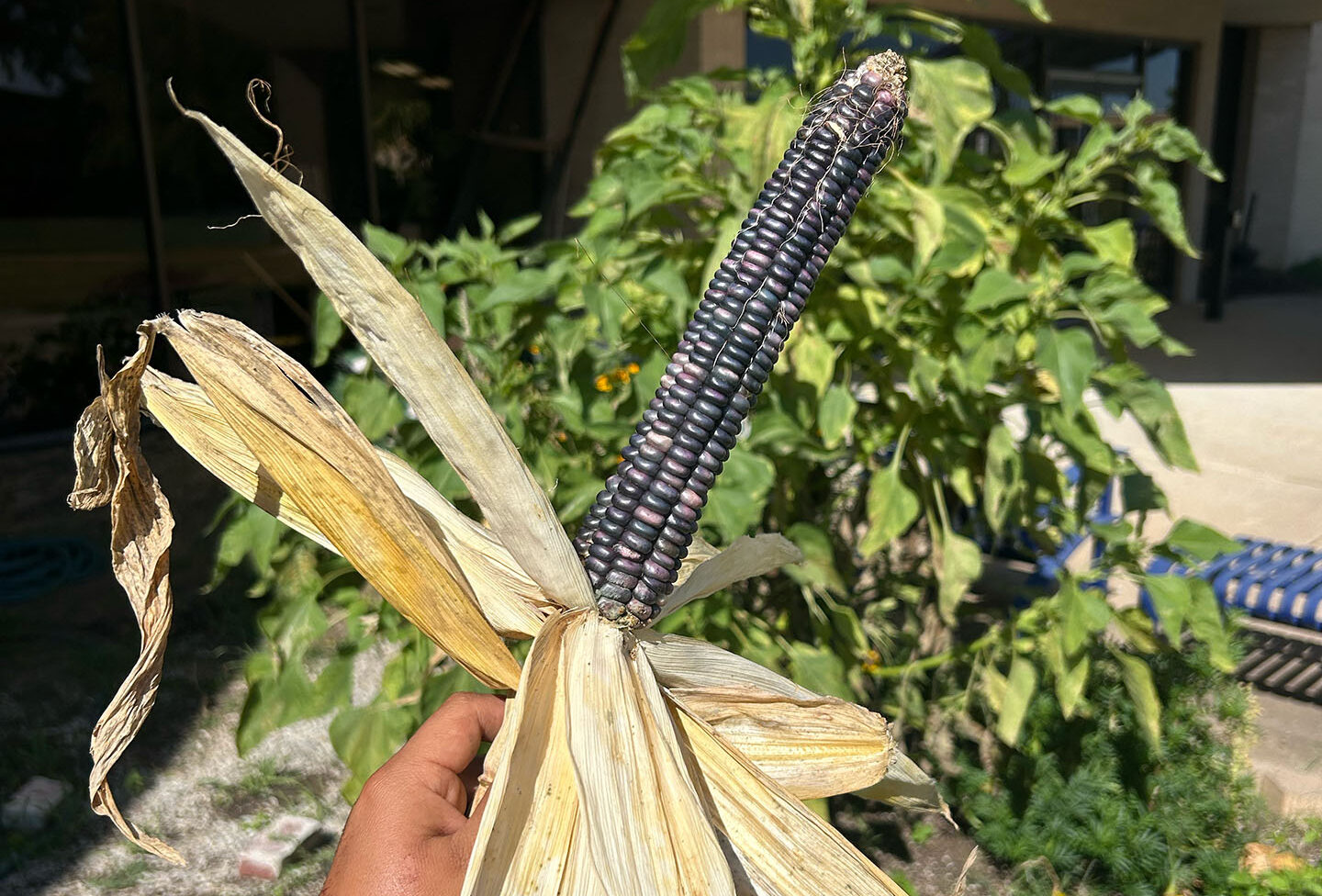
Everyone at the Haskell Greenhouse wants to help others learn, value, and view these spaces as places of teaching. I know they have taught me so much about responsibility and our relationship with the environment. Through these projects, we’re helping students reconnect with the land and understand the importance of food sovereignty for Indigenous communities. This work is ongoing, and we’re still learning. Every seed planted, and every workday shared brings us one step closer to a more sustainable and connected future.
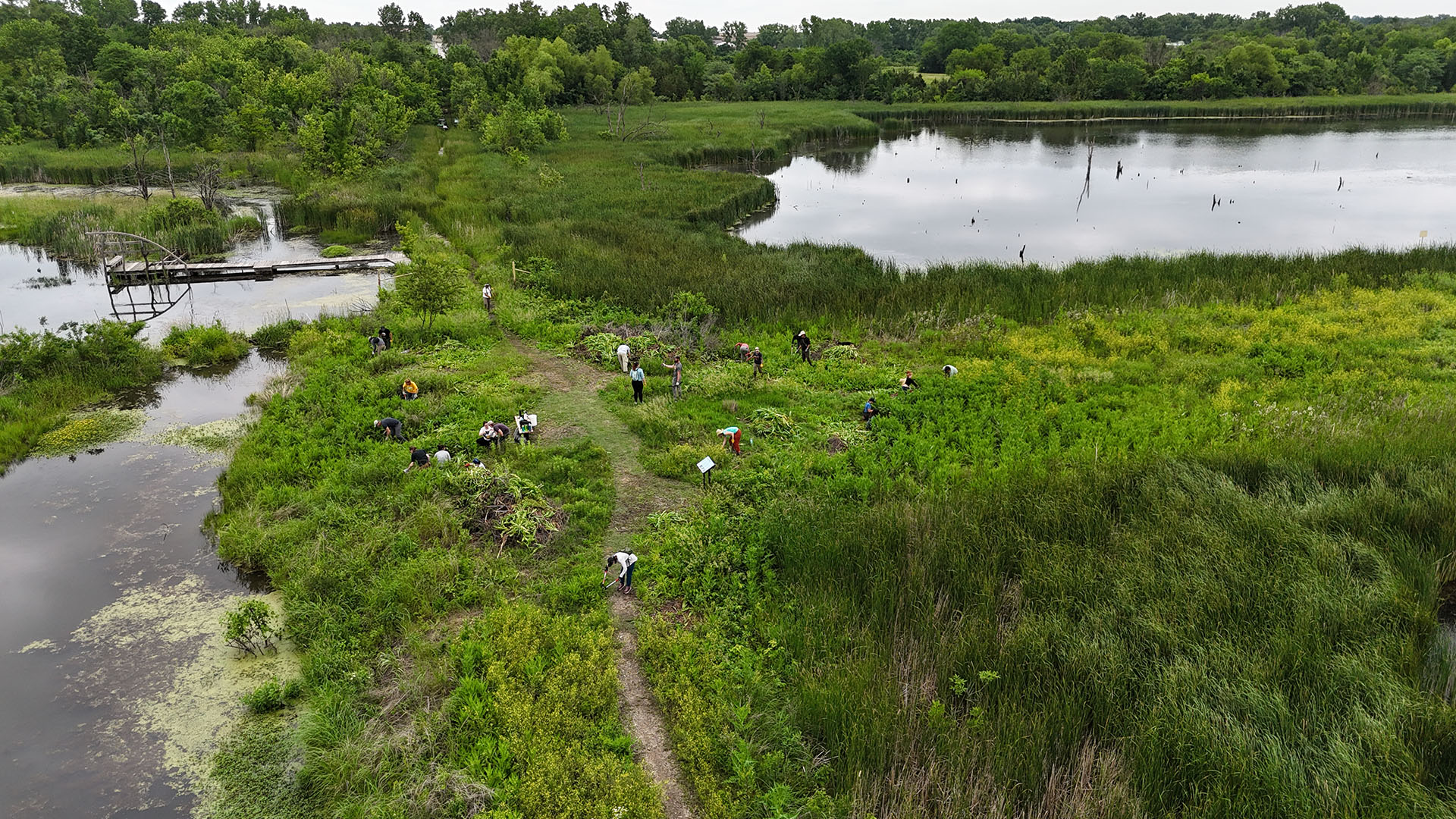
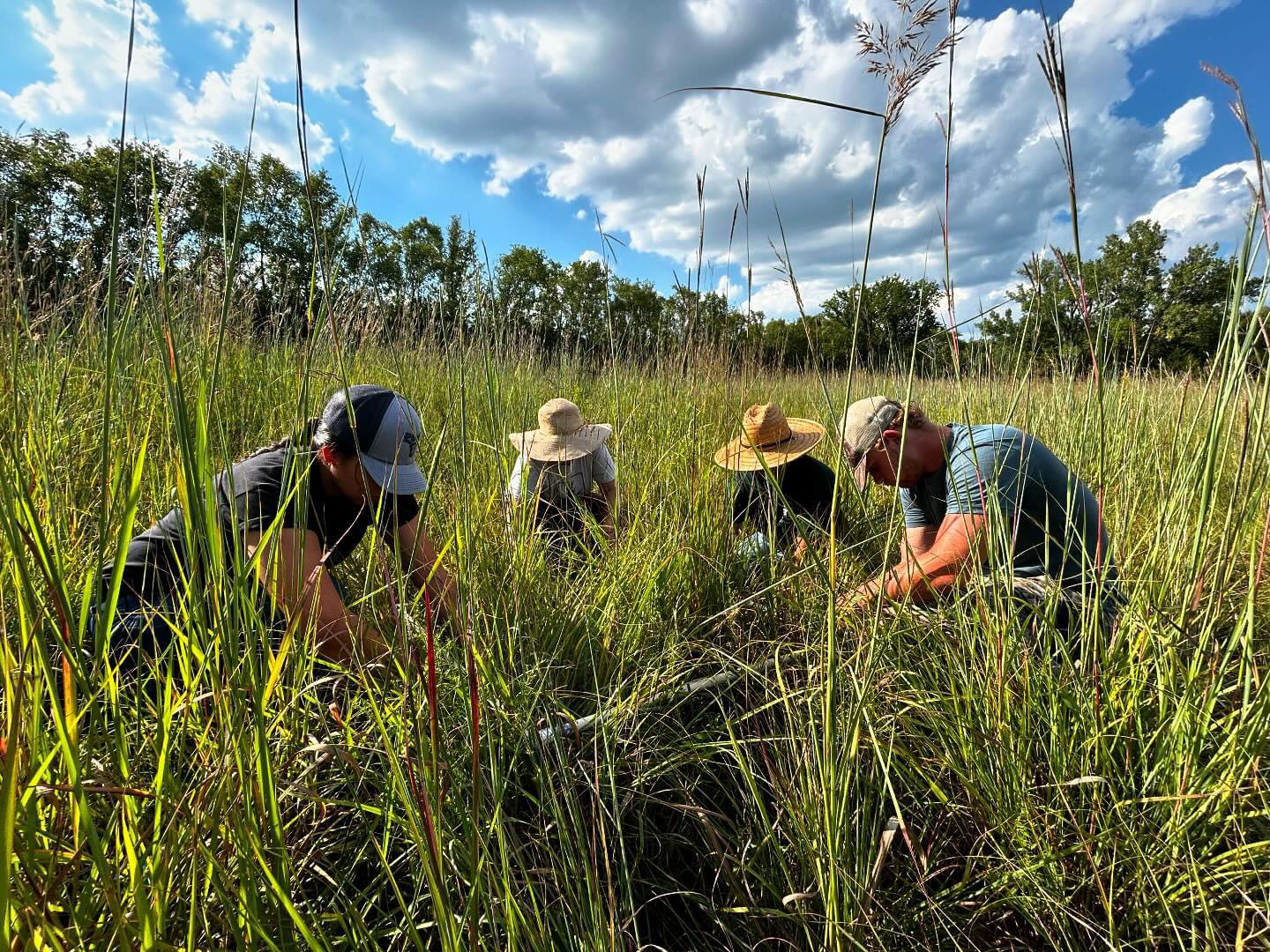
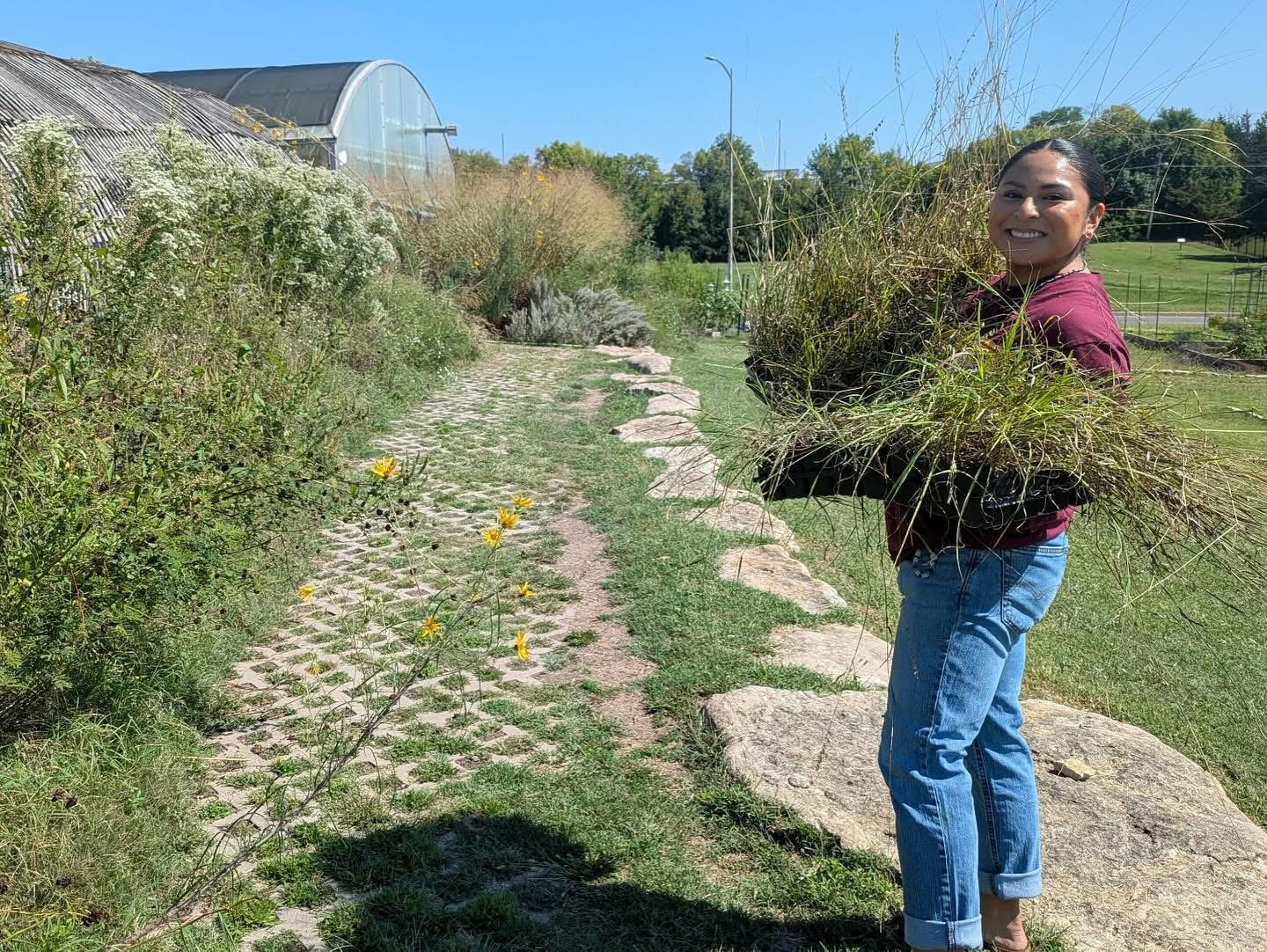
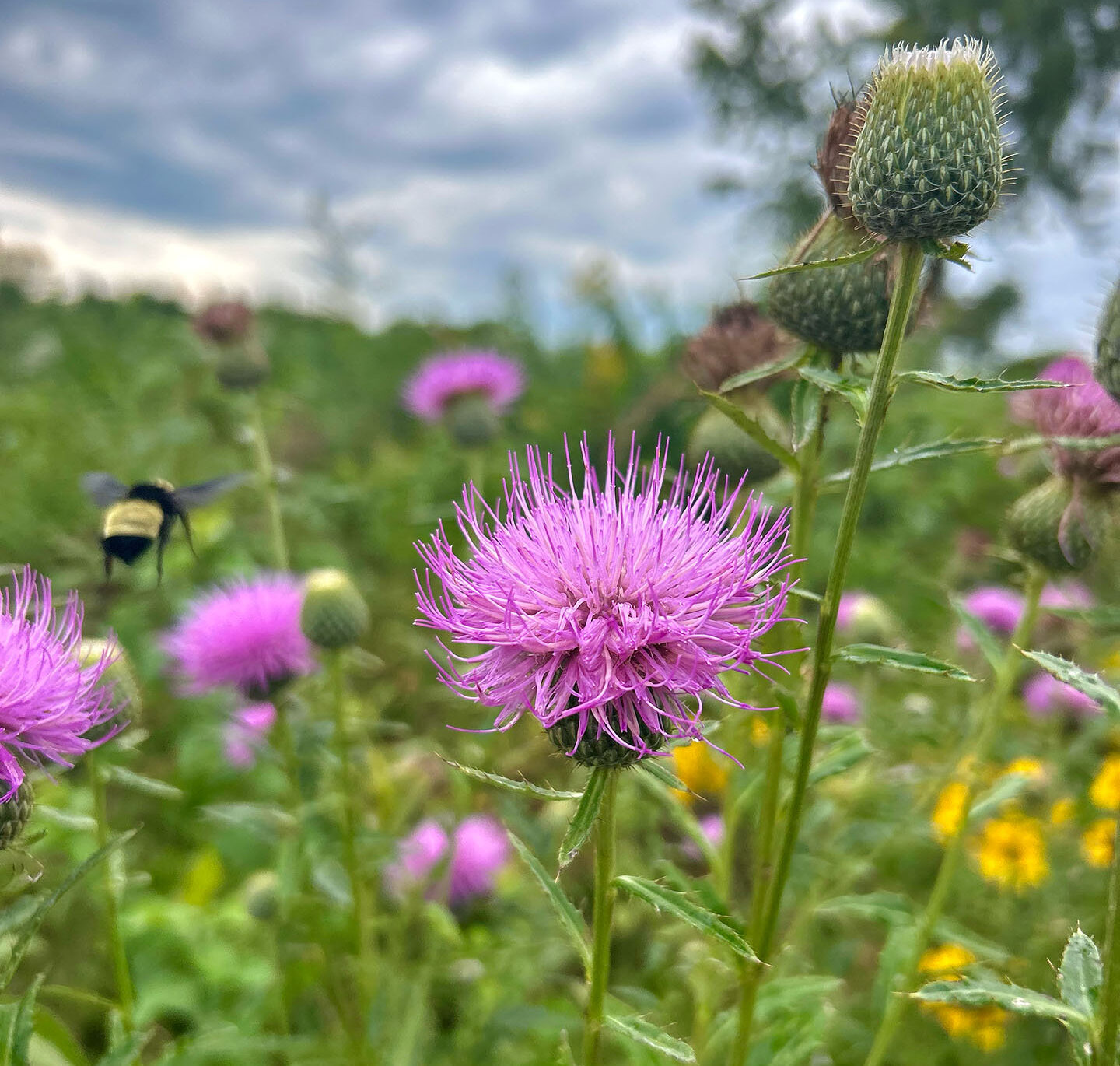
In Caring for Our Kin: Stories of Indigenous Environmental Stewardship, the College Fund shares the stories of Indigenous environmental leaders who are centering kinship and relational knowledge to build healthy ecological systems. These stories remind us that caring for the Earth means caring for one another—and that Indigenous knowledge systems continue to offer guidance, resilience, and hope for the future.
Learn more about our Environmental Stewardship Program.
Ekvnv Vcayecet. Mvto!
(Take care of the Earth/Land. Thank you)
More Blogs
A Video Message for Mark Zuckerberg
Greetings to our friends and supporters. This week I shared a video message on social media for Facebook founder Mark Zuckerberg and his wife Priscilla in the wake of their visit to the Blackfeet Reservation in Montana. In his Facebook post it was clear that the social and economic issues they saw made a powerful impression on them.
Meet Our 2017 Summer Research Interns
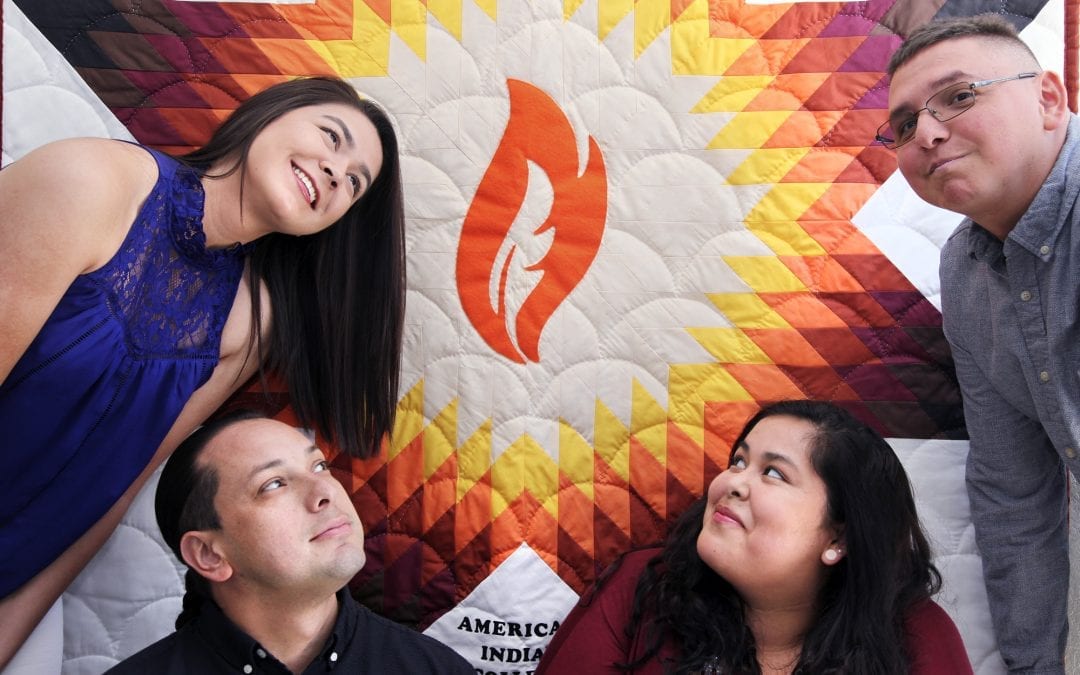
Pōsōh, māwaw new weyak, Corryn Besaw newīhswan mesek Wāqnemōhsaeh eneg, āēkaeyan, mamāceqtaw newīhswan. Hello everyone, my name is Corryn Besaw. My Indian name is Wāqnemōhsaeh, meaning Firefly. I am from Keshena, Wisconsin and am an enrolled member of the Menominee tribe.
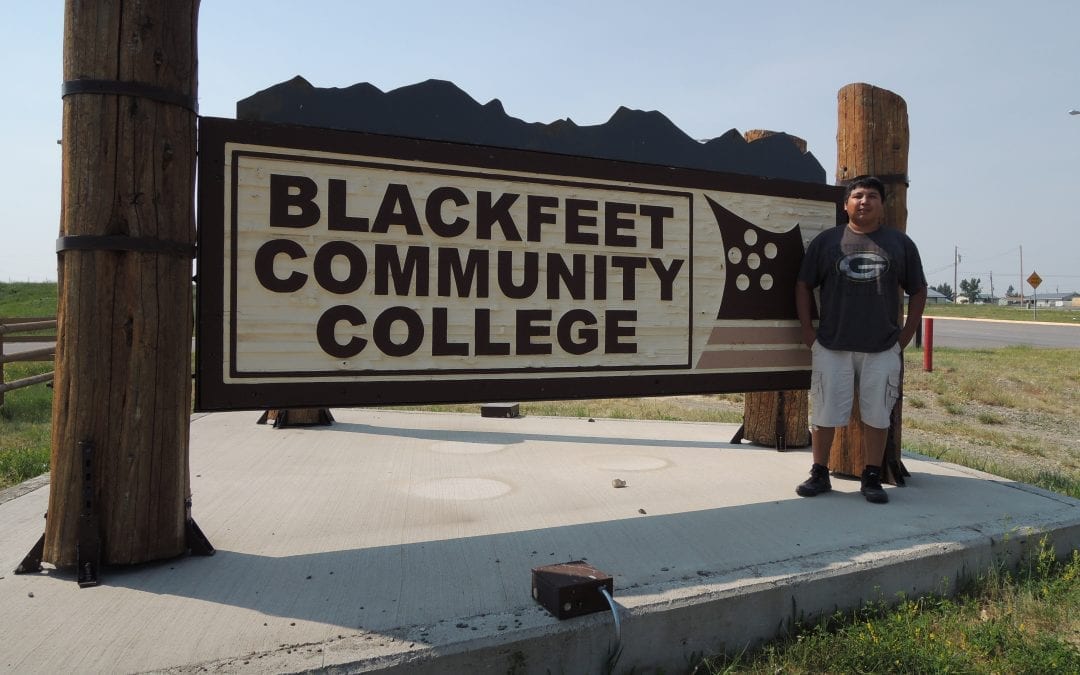
Share Your Story with Facebook Founder to Make a Difference in Your Community
Mark Zuckerberg, founder and President and CEO of Facebook, visited the Blackfeet Reservation last week. He posted his impressions about the social, economic, and health issues he encountered last week, including joblessness, substance abuse, diabetes, and more.
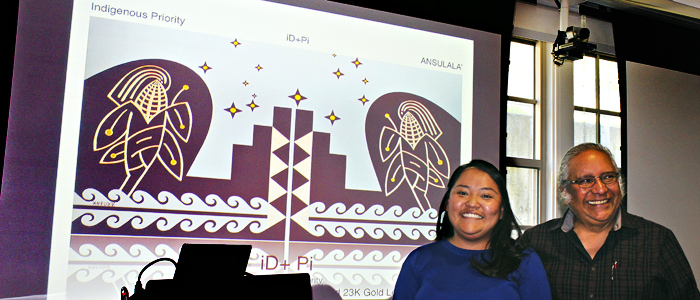
Three-Year Environmental Design and Stewardship Program to Restore Native Knowledge for Healthy Earth
Groundwater contamination, erosion, lack of access to healthy foods, and poor air quality are just some of the environmental concerns facing American Indian communities across the United States. Yet indigenous people have long held specialized knowledge that can lead to unique solutions to these challenges.
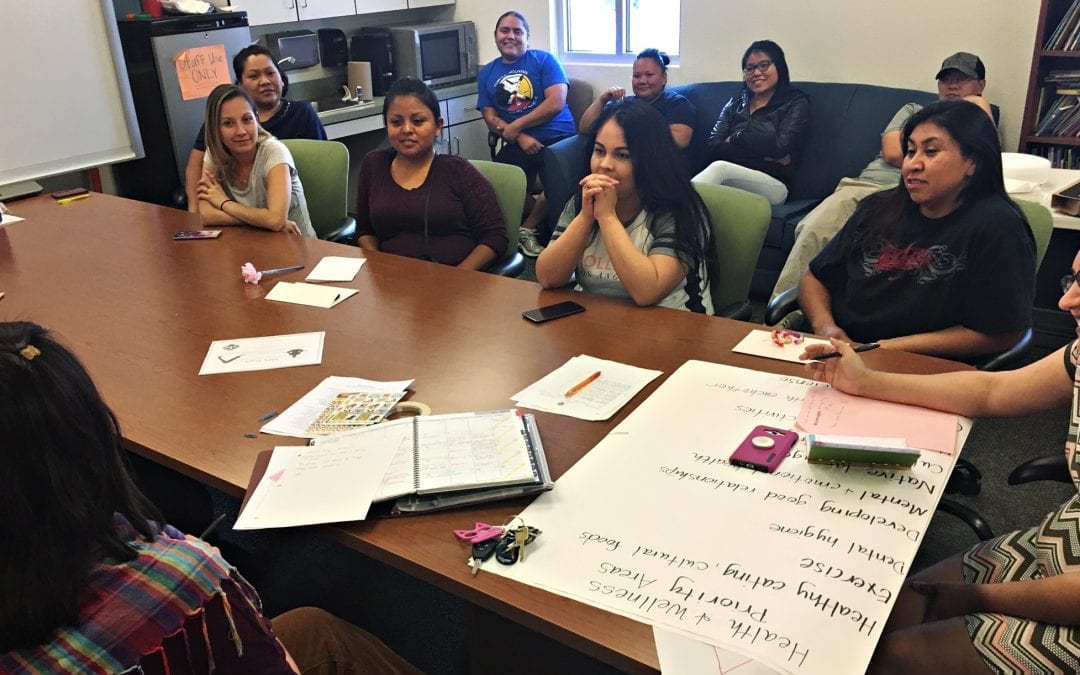
SIPI Parents Lead the Way
SIPI has worked hard to make sure its Restorative Teachings Initiative is grounded in community needs and parent voices. Parents were empowered through the initiative to ensure that the program is culturally responsive and meets their children’s needs. They have led the way in defining priority areas for learning since the American Indian College Fund’s Restorative Teachings Initiative was awarded to SIPI in 2016.
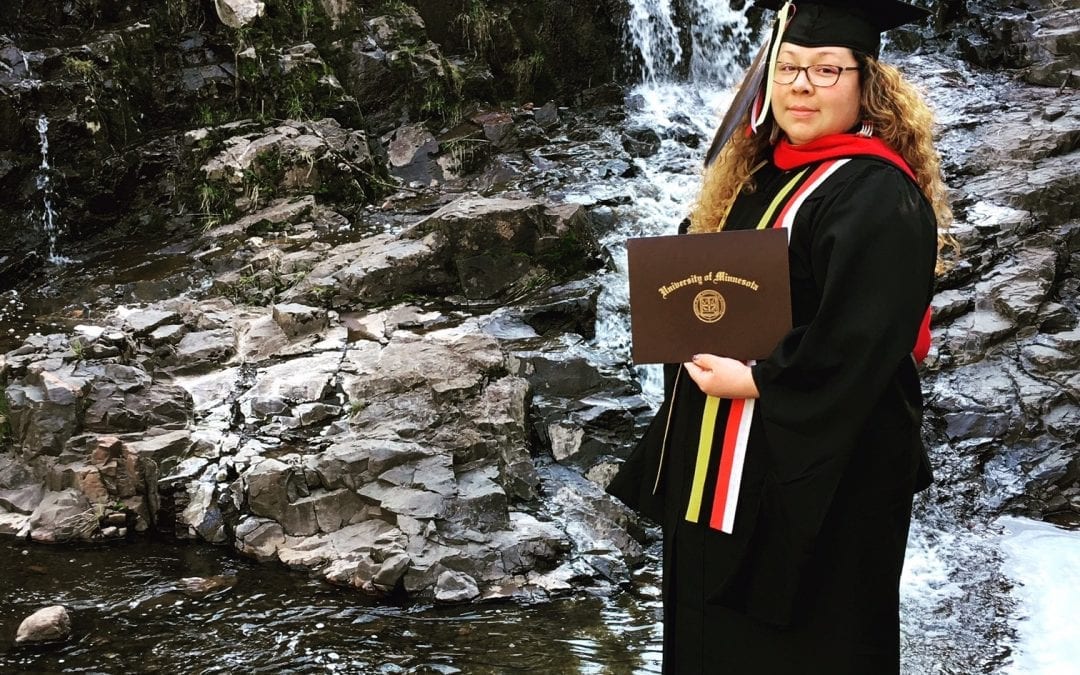
American Indian College Fund Announces Mellon Faculty Master’s Degree Program Graduates
The American Indian College Fund congratulates the three 2017 graduates from its Mellon Faculty Master’s Degree Program. The program provides financial assistance to tribal college and university faculty and staff with teaching responsibilities who are likely to become faculty and who are pursuing a master’s degree. Candidates may qualify for up to $20,000 in assistance under the program, with preference given to individuals studying the humanities and humanistic social sciences.
College Fund Convenes Educators from Across Nation to Explore Role of Indigenous Knowledge in Education
Dr. Nader Vadiee, Ph.D., professor at Southwestern Indian Polytechnic Institute, (foreground) asks a question during the “Place Based Curriculum Development (Science and Mathematics) The Role of Mathematics in the Ojibwe Art of Beadwork and Weaving” presentation by Dennis R. White, Lac Courte Oreilles Ojibwe Community College at the Tribal Colleges and Universities Research Conference on June 19, 2017 in Denver, Colo
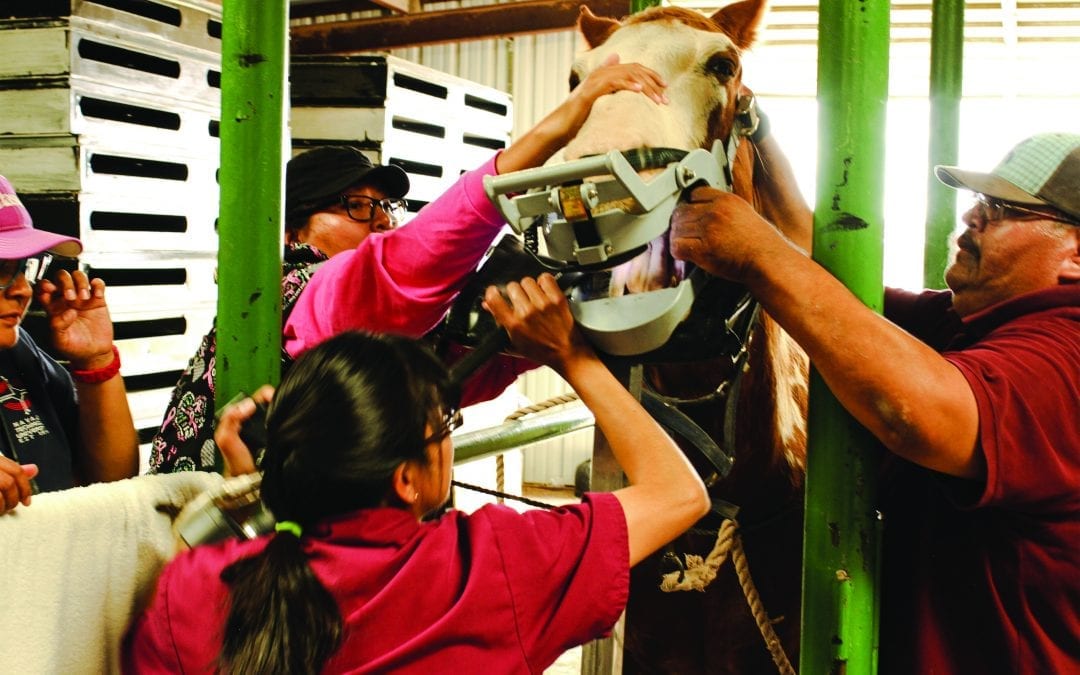
Navajo Technical University Becomes First Tribal University to Achieve Accreditation with AVMA
Dr. Germaine Daye works with students Jenneth Begay and Celestina Salt and technician Royce Craig in examining a horse’s teeth at the NTU Vet Teaching Hospital’s barn. NTU’s Veterinary Technology program received AVMA accreditation on May 4, 2017.
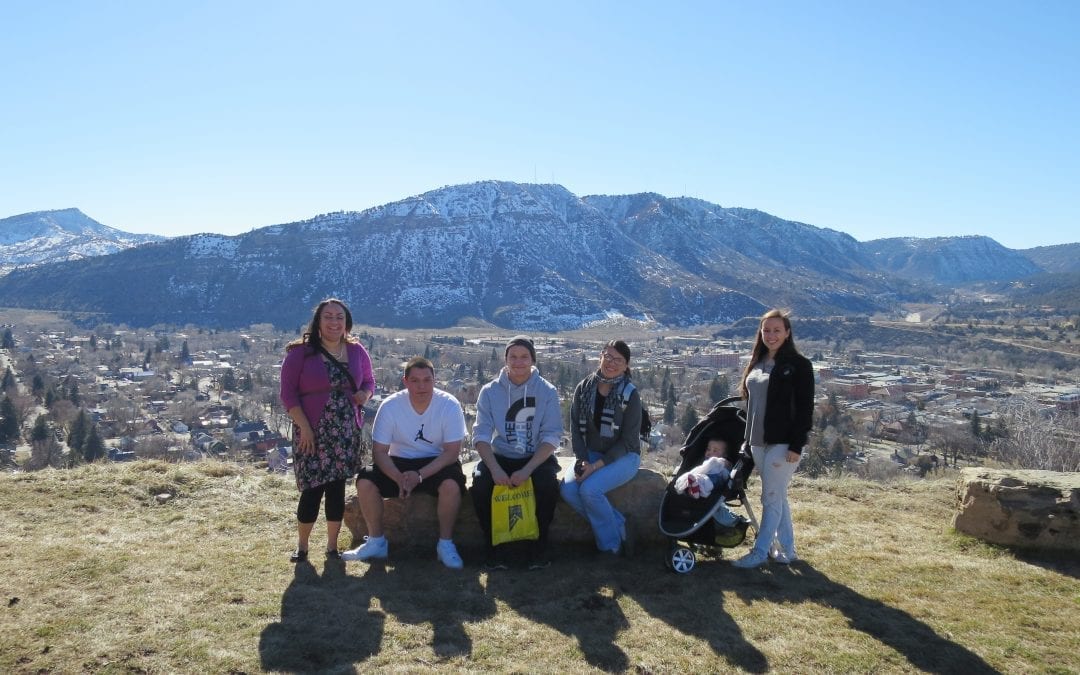
Pathways for Minnesota Native Transfer Students
Three Native college students attending Leech Lake Tribal College (LLTC) in Cass Lake, Minnesota traveled to Durango, Colorado to visit the Fort Lewis College campus, a private four-year college that offers a tuition-waiver program to American Indian students.
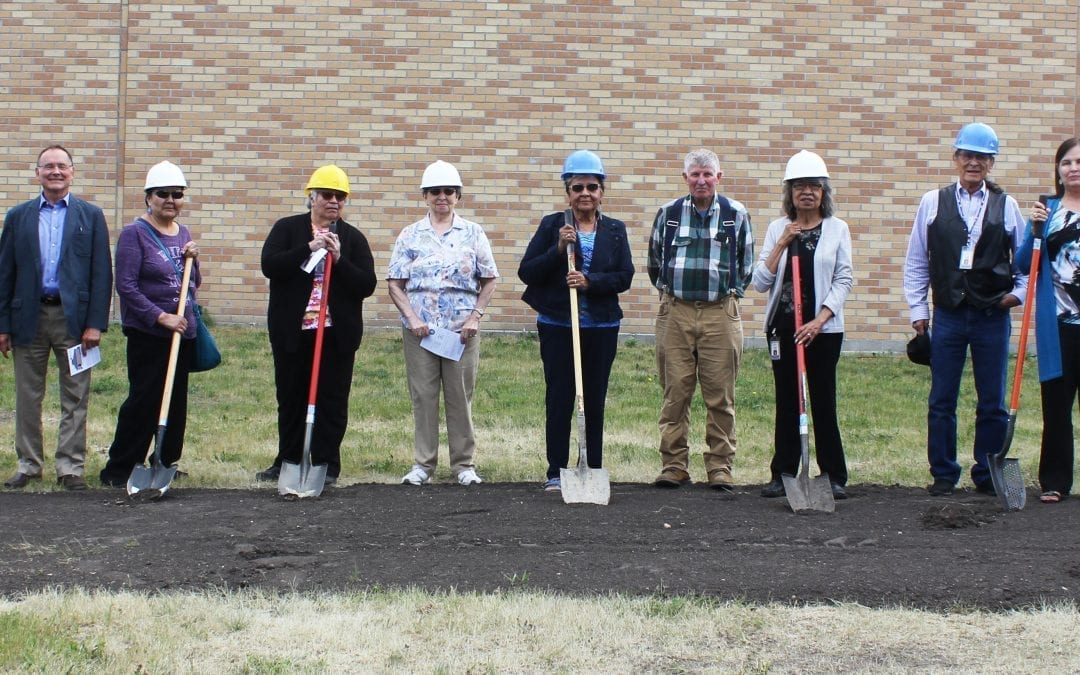
Cankdeska Cikana Community College held Ground Breaking Ceremony for New Center for Cultural Arts
Left to right: Mark McLean, JLG Architects; Vern Lambert; Mark Wax, USDA ND Rural Development Community Project Director; Joel Davey, JLG Architects; Jeanette Herald, Board of Regents Chairperson; Bernice Cavanaugh-John; Helen Jacobs; Lorraine Greybear; Louis Garcia; LaVerne Sullivan; Phillip “Skip” Longie; Dr. Cynthia Lindquist; Laurel Reuter, NDMOA Director.
