
Planting the Seeds of Cultural Sustainability
April 22, 2026 | Student Ambassador Aiyanna Tanyan’s (Seminole Nation of Oklahoma) work to reclaim food sovereignty
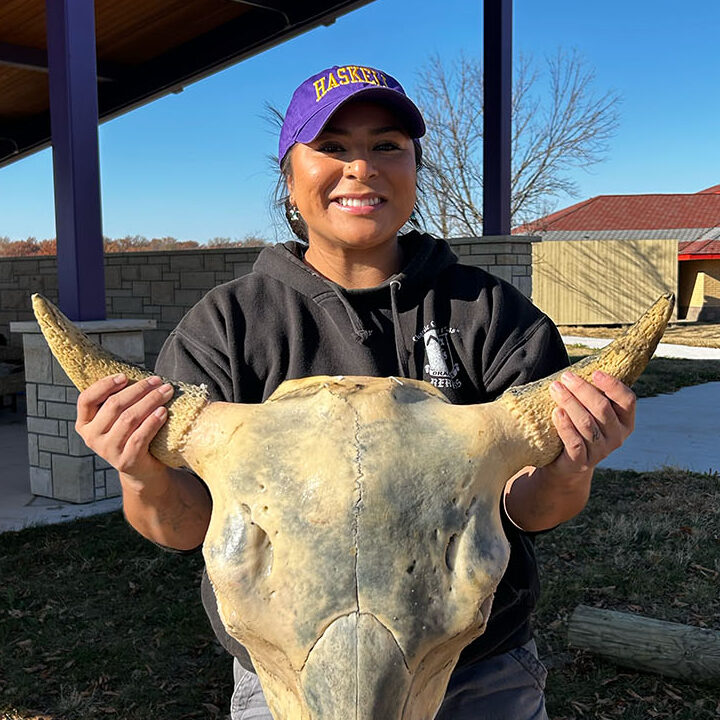
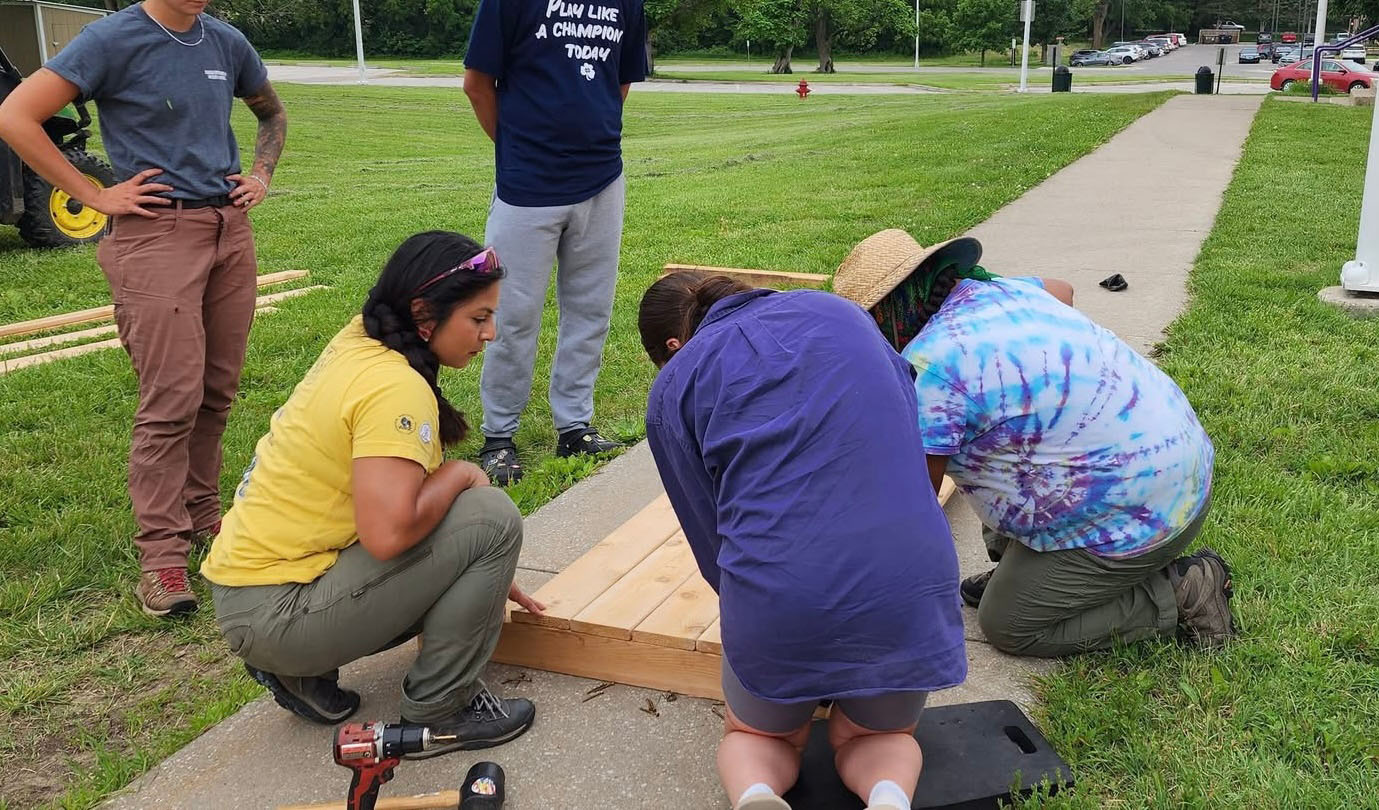
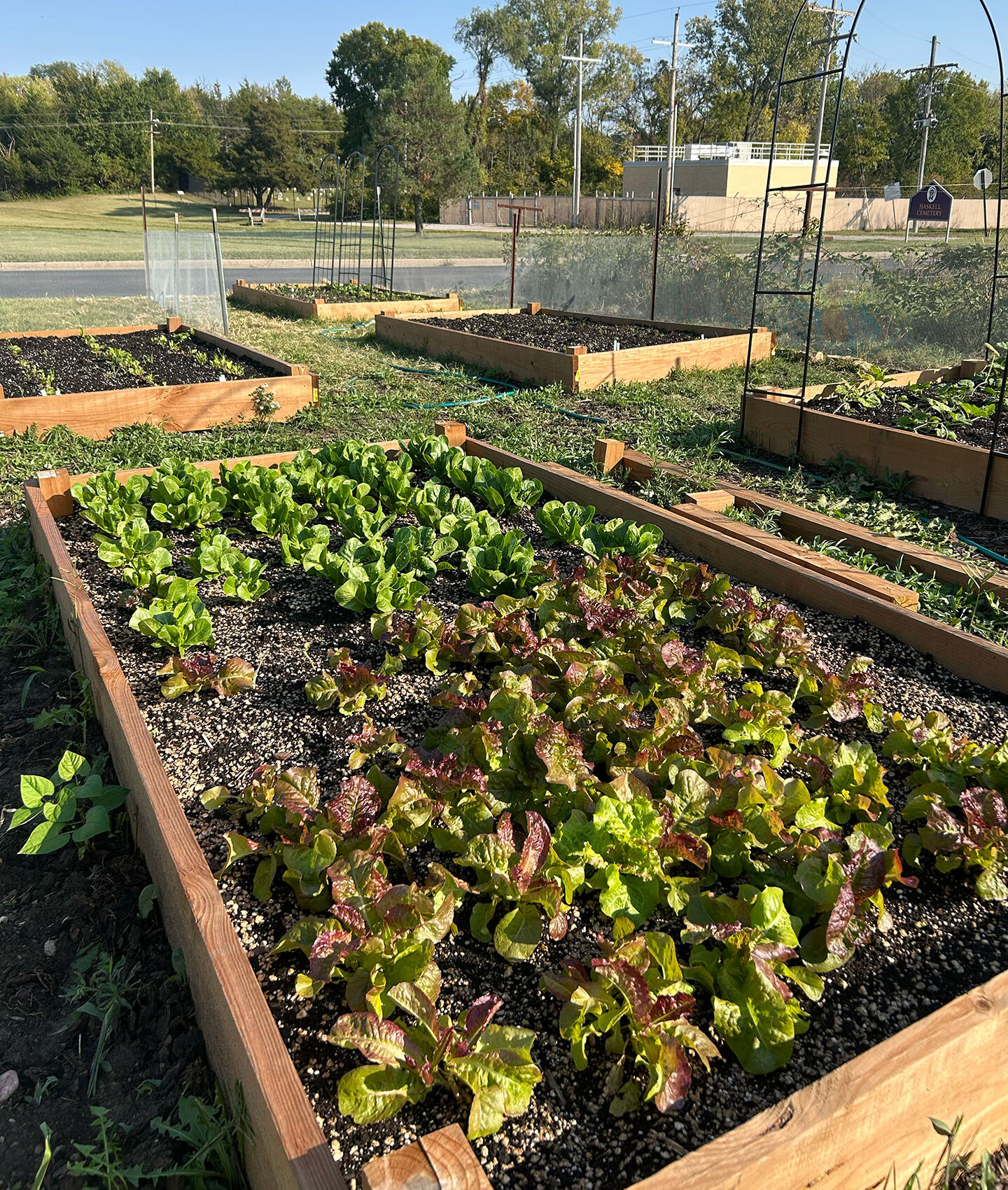
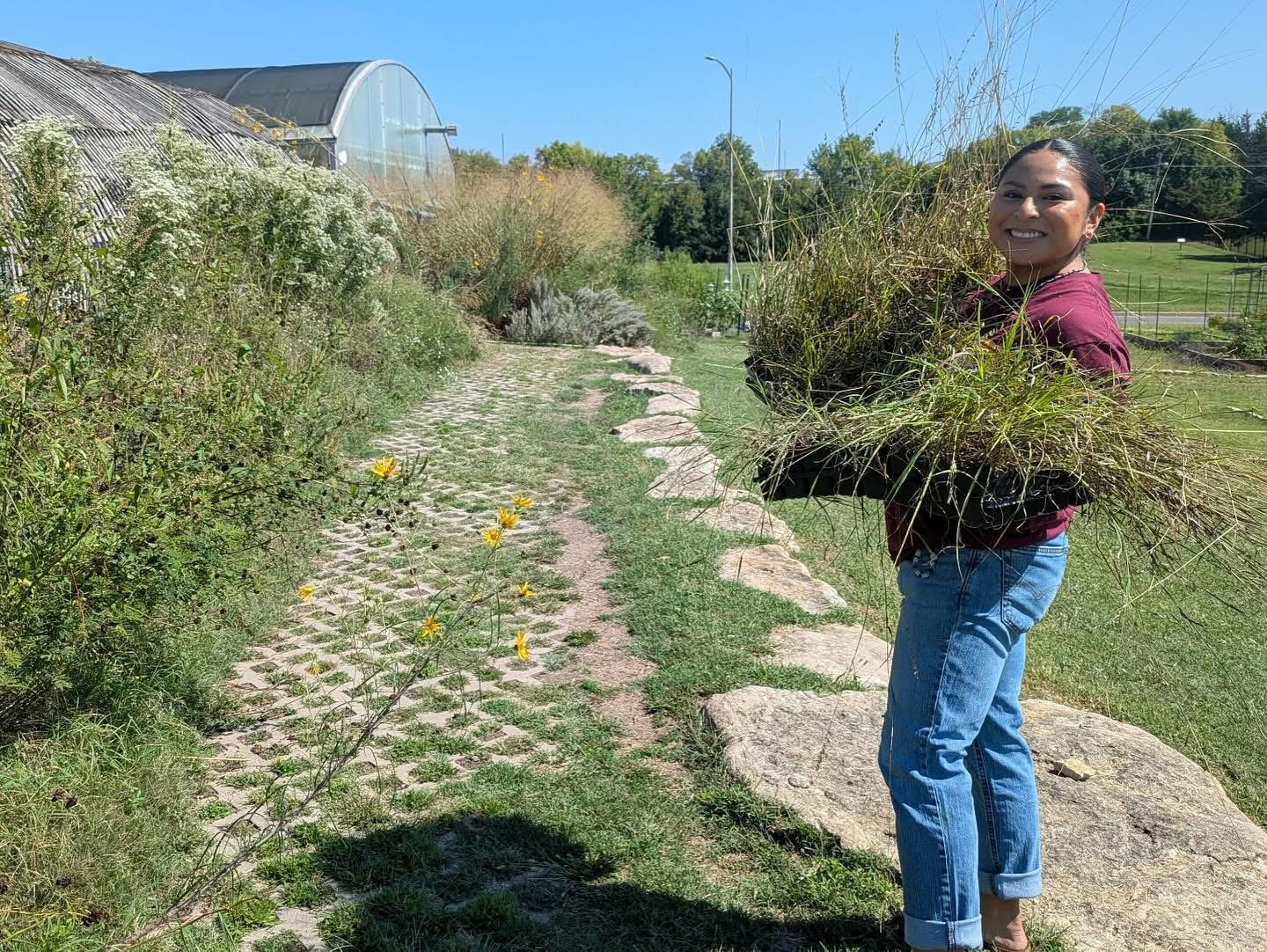
We came up with the idea of building raised garden beds near the dorms so students can easily access fresh foods and learn how to grow them themselves. Through support from the Haskell Greenhouse (funded through the USDA Equity Grant), we started building.
Last year was our first year doing this project and it was a learning experience as with many community-based projects, it comes with trial and error. However, that process taught us a lot about what works, what doesn’t, and how to build something more sustainable moving forward. This year, we’re continuing this work with stronger systems, more involvement, and a clearer vision.
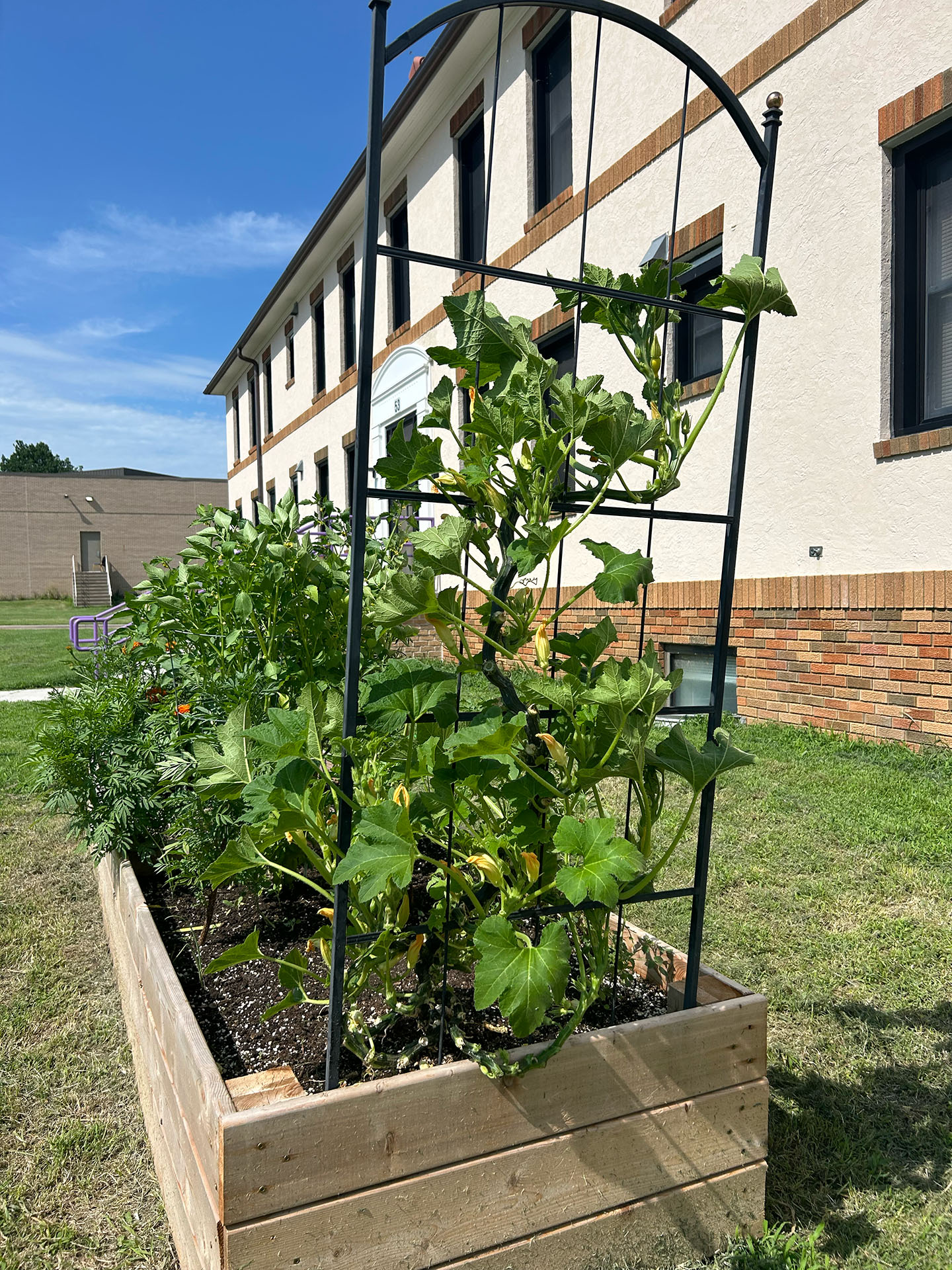
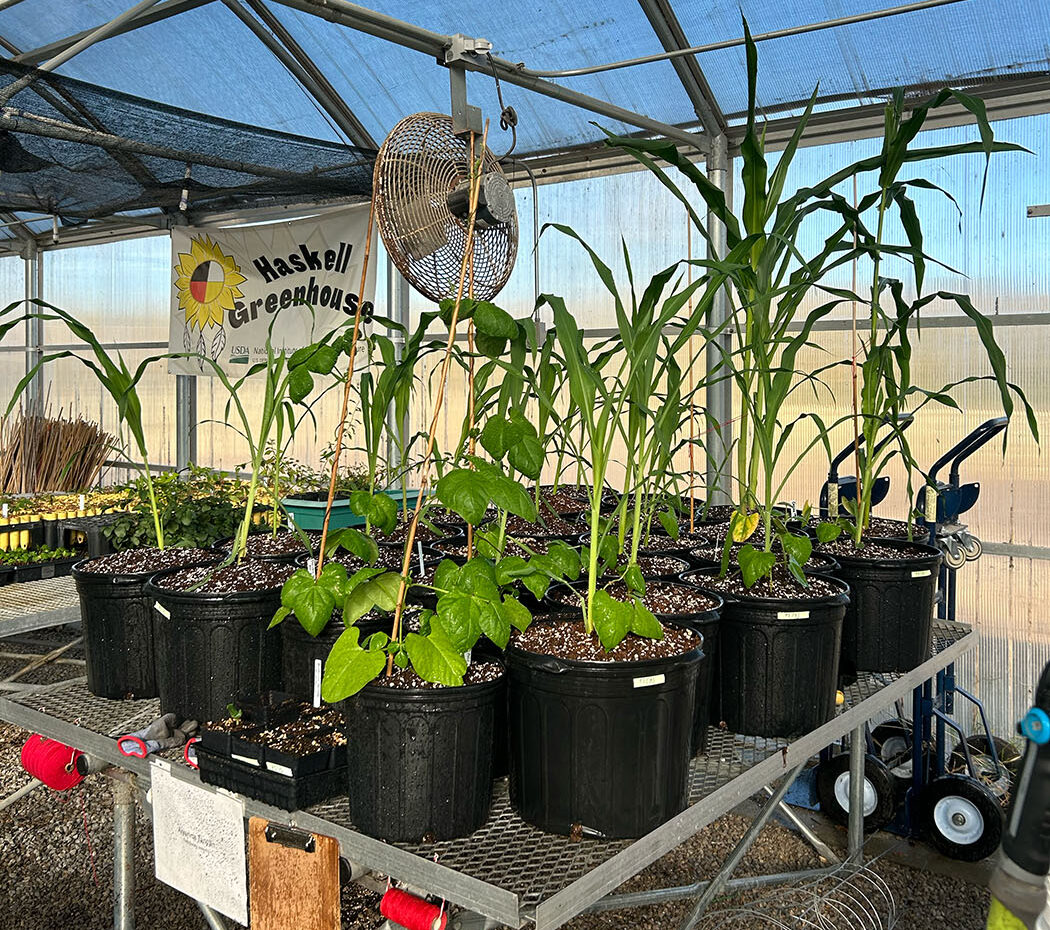
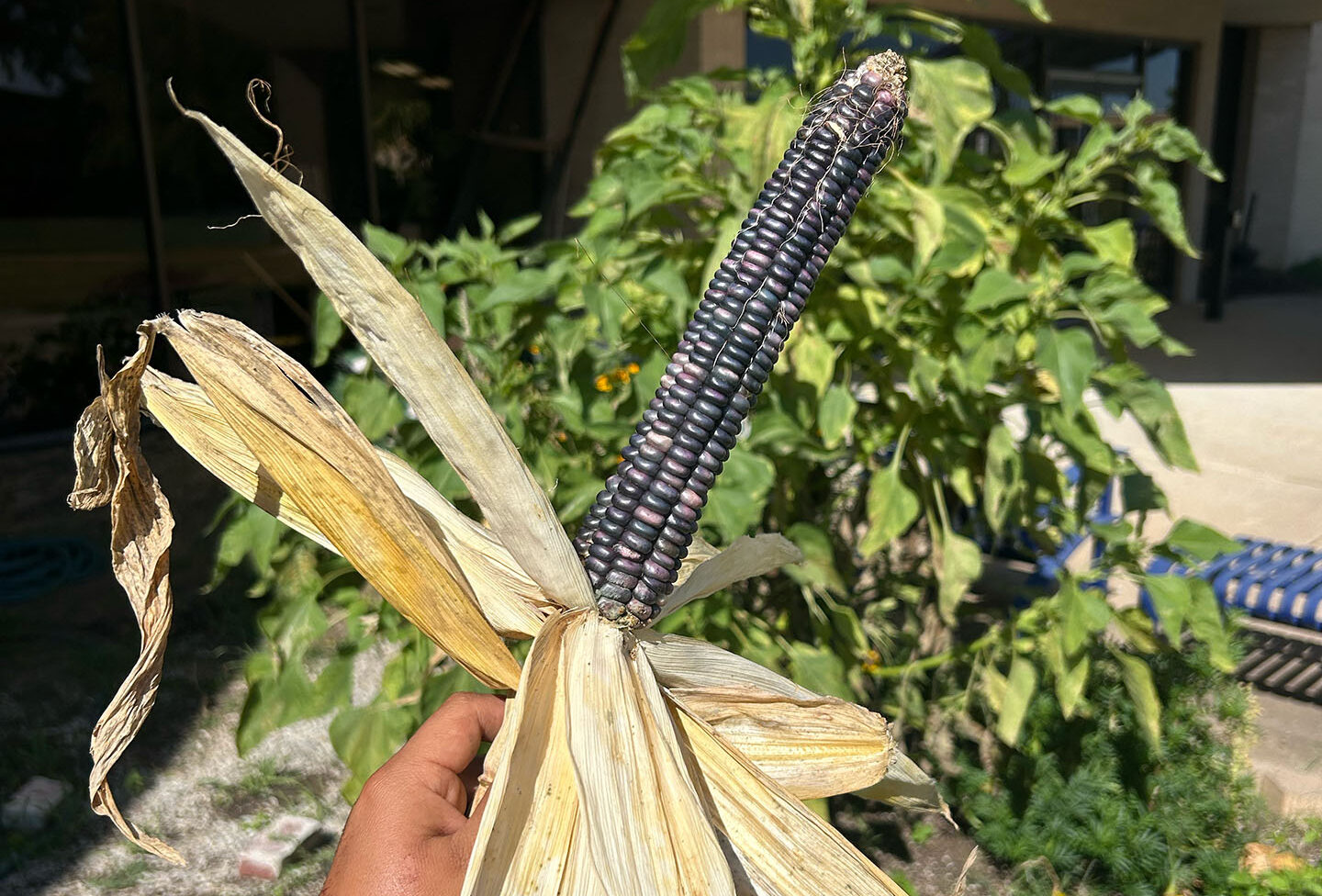
Everyone at the Haskell Greenhouse wants to help others learn, value, and view these spaces as places of teaching. I know they have taught me so much about responsibility and our relationship with the environment. Through these projects, we’re helping students reconnect with the land and understand the importance of food sovereignty for Indigenous communities. This work is ongoing, and we’re still learning. Every seed planted, and every workday shared brings us one step closer to a more sustainable and connected future.
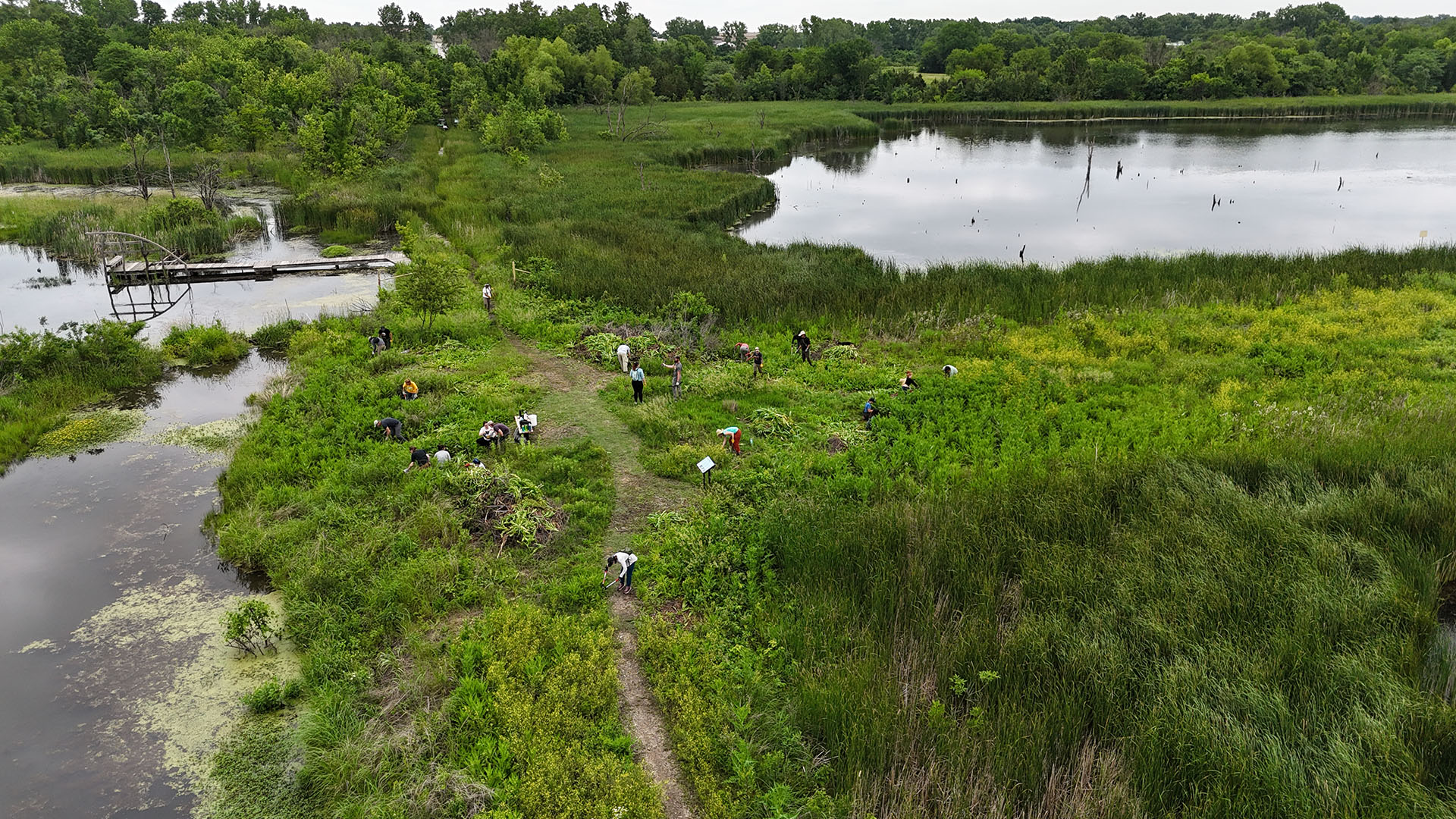
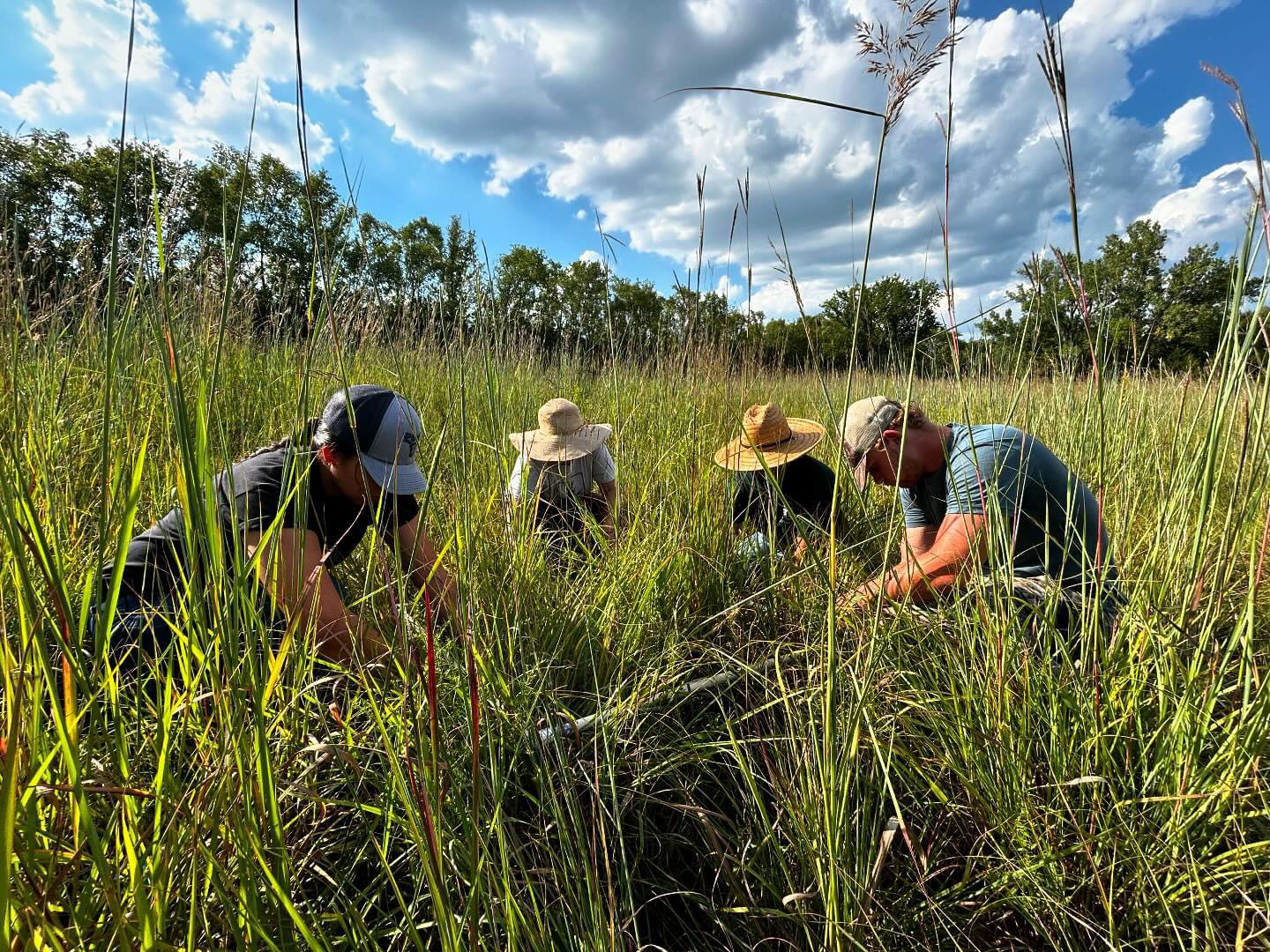
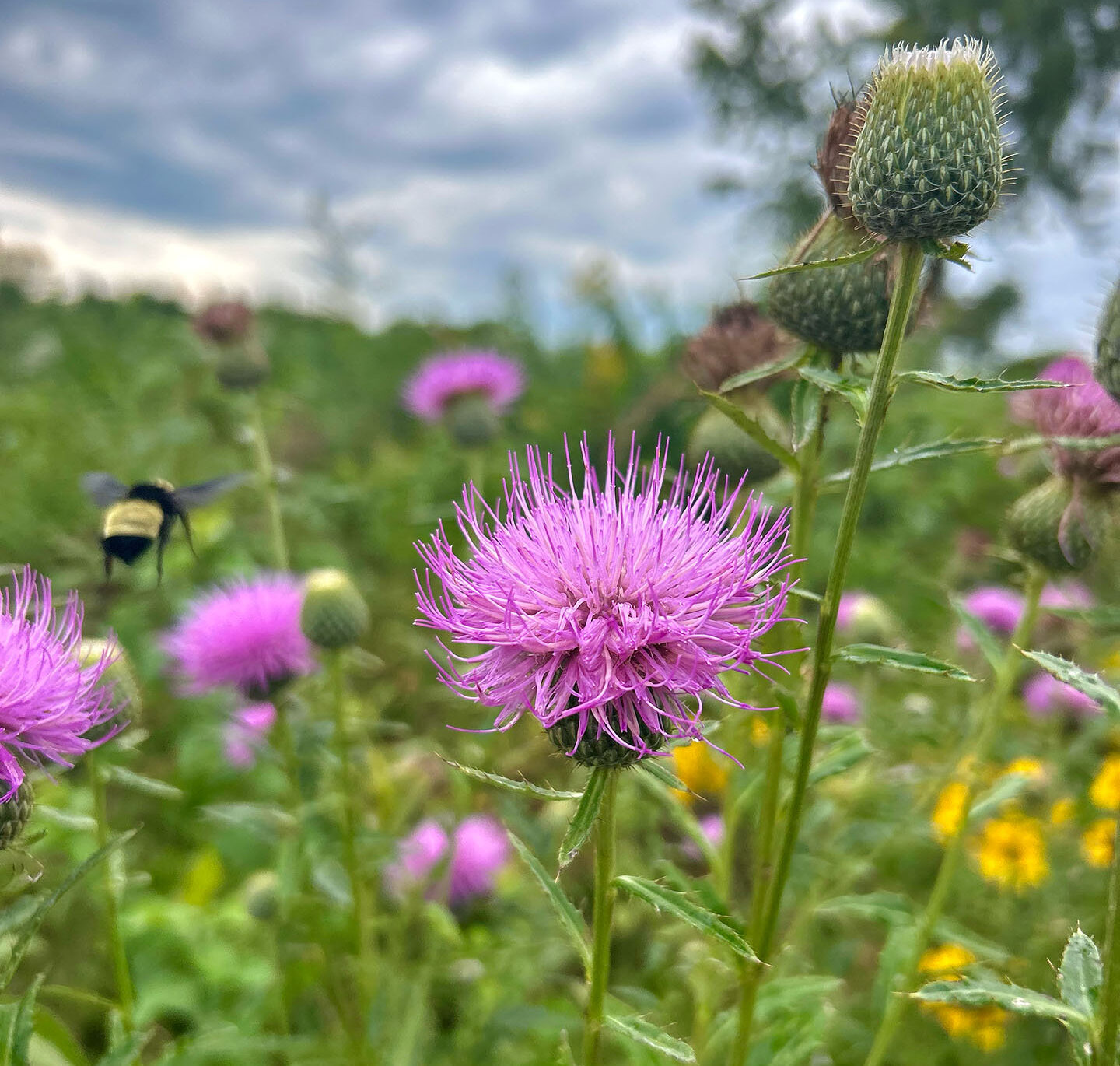
In Caring for Our Kin: Stories of Indigenous Environmental Stewardship, the College Fund shares the stories of Indigenous environmental leaders who are centering kinship and relational knowledge to build healthy ecological systems. These stories remind us that caring for the Earth means caring for one another—and that Indigenous knowledge systems continue to offer guidance, resilience, and hope for the future.
Learn more about our Environmental Stewardship Program.
Ekvnv Vcayecet. Mvto!
(Take care of the Earth/Land. Thank you)
More Blogs
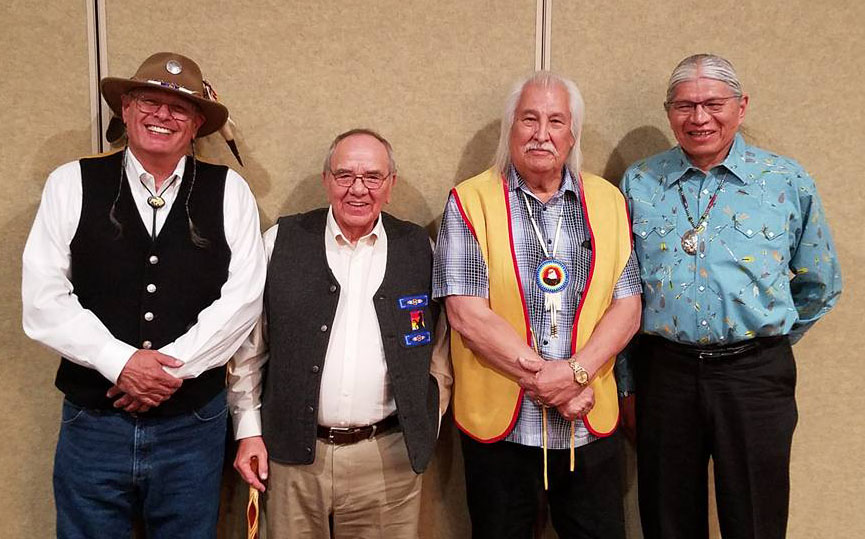
Native Higher Ed. Professionals and Students Earn Top Awards from the College Fund and Adolph Coors Foundation
The American Indian College Fund honored 34 American Indian tribal college students of the year, tribal college president Dr. Laurel Vermillion, and U.S. Department of Education employee John Gritts on March 19 at the 2017 Student of the Year and Coca Cola Award Banquet in Rapid City, South Dakota in conjunction with the American Indian Higher Education Consortium Spring Student Conference.
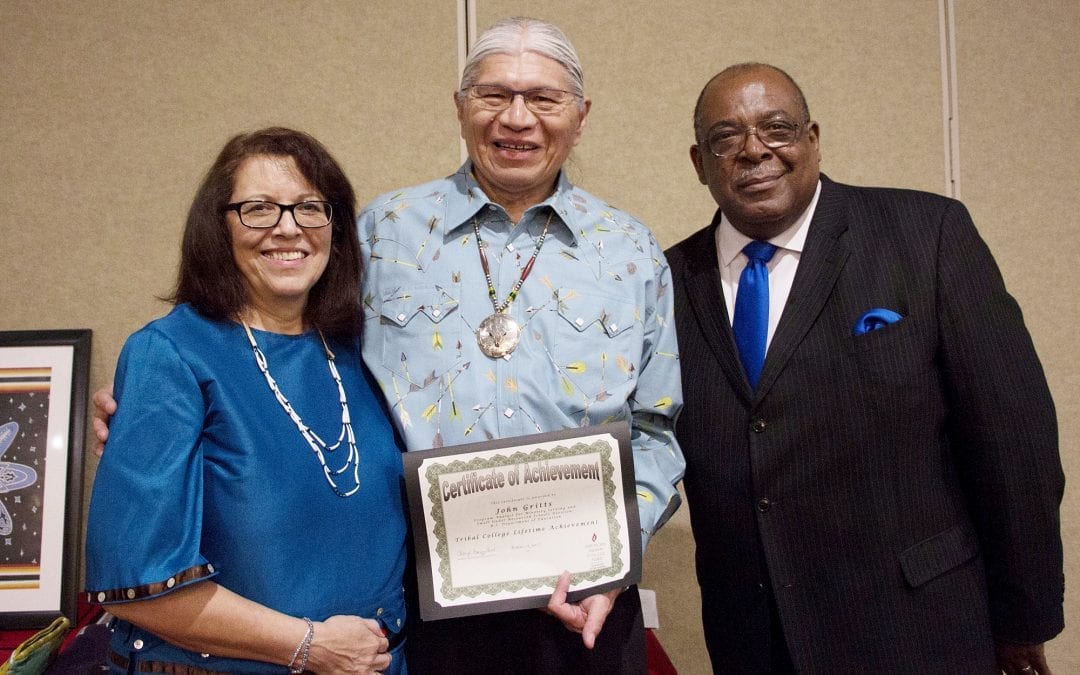
American Indian College Fund Honors Two Leaders in Native Higher Education
The College Fund named Dr. Laurel Vermillion, President of Sitting Bull College in Fort Yates, North Dakota and a member of the Standing Rock Sioux Nation, the 2017 American Indian College Fund TCU Honoree of the Year. This honor recognizes a distinguished individual who has made a positive and lasting impact on the tribal college movement.
Connections That Create Health, Wellness and Security
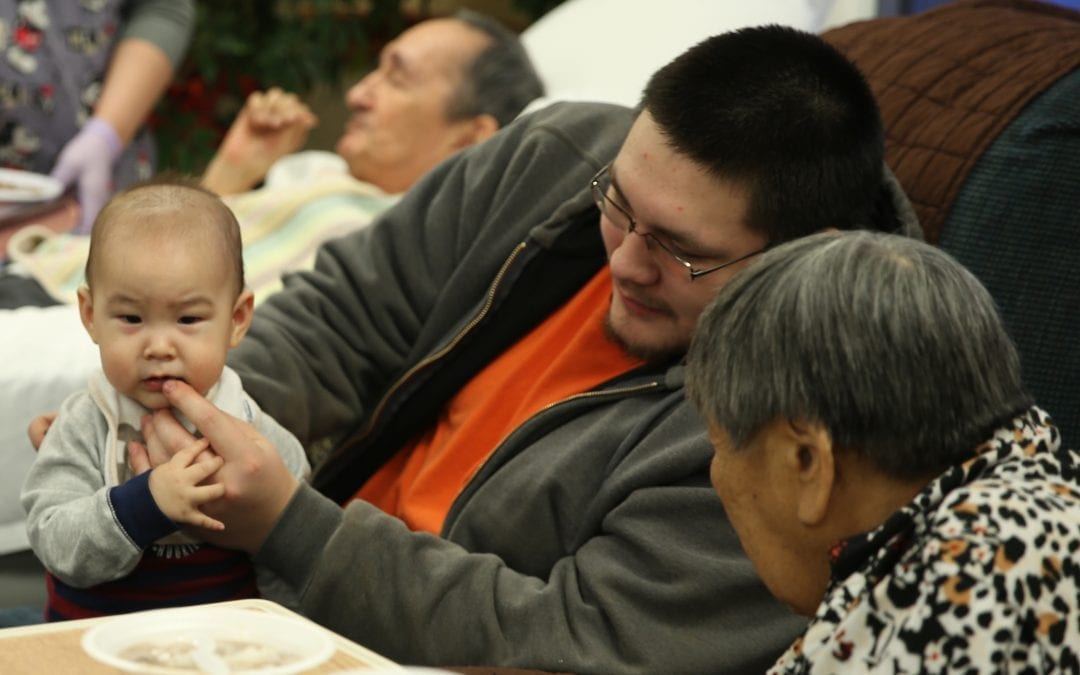
At the heart of Iḷisaġvik College’s Restorative Teachings project is the desire to nurture and support meaningful connections between early childhood students, their families, and the community as a whole. It is through these connections that knowledge of language and culture, love, respect, and compassion are passed from one generation to the next.
Achieving the Dream – Developing Data Capacity to Increase Success
The Achieving the Dream (ATD) program helps networking colleges to improve student success by providing a menu of services to its colleges, including technical assistance, leadership, data coaching, and more. In addition, ATD hosts an annual DREAM conference where more than 2,000 leaders from 200 community colleges across the country gather.
What a Treat to See Scholars Receive Awards
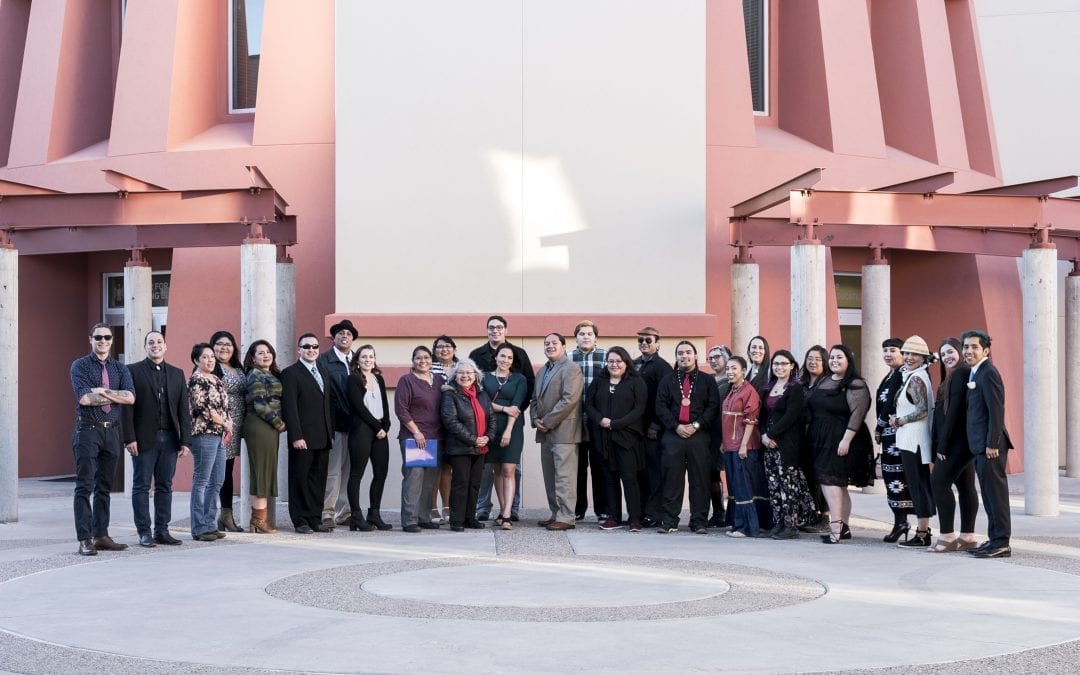
As a staff member with the College Fund, I had the honor to attend the spring Scholarship Awards Night at the Institute of American Indian Arts (IAIA) to witness 260 students moving one step closer towards their educational goals. The event awarded 534 College Fund scholarships to 260 students totaling $519,906.
Fellows Contribute to Sustainable Environment and Contribute to Communities
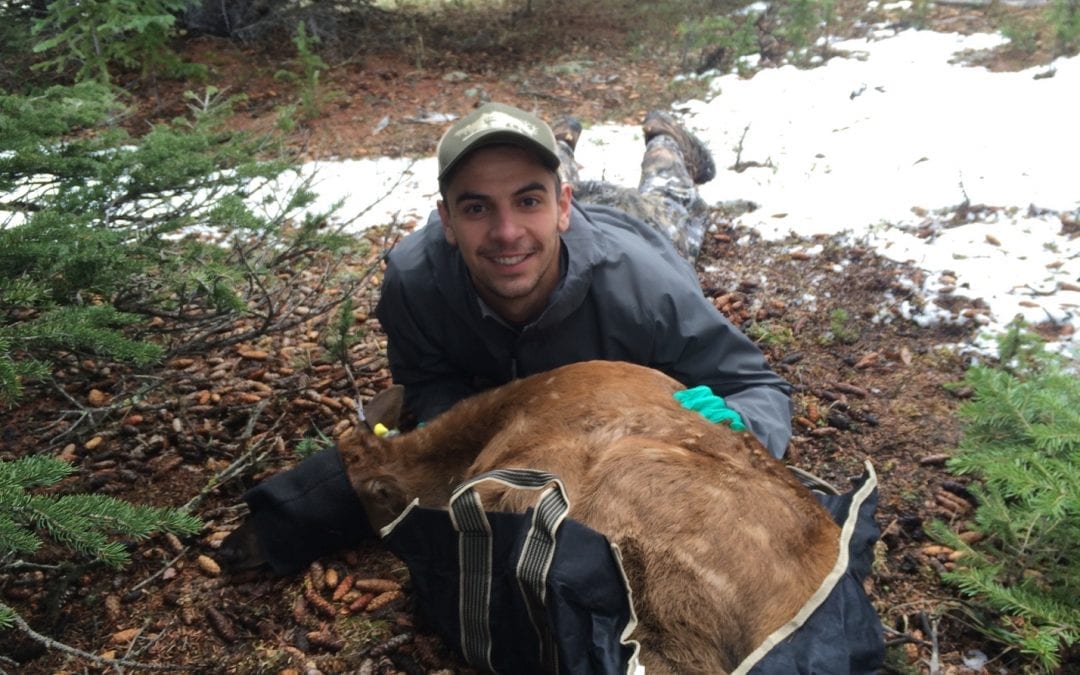
The fellowship’s goal is to promote environmental sustainability in tribal communities that leads to systemic change. The research component of the fellowship is designed to create research projects that are meaningful and relevant to the students’ tribal communities by improving community environments and the health of tribal people. By educating tribal communities about environmental issues and working together as a community, tribal communities can build and utilize better land and resource management systems.
BIMAADIZIWIN: “A Healthy Way of Life” Through Family Fun Night
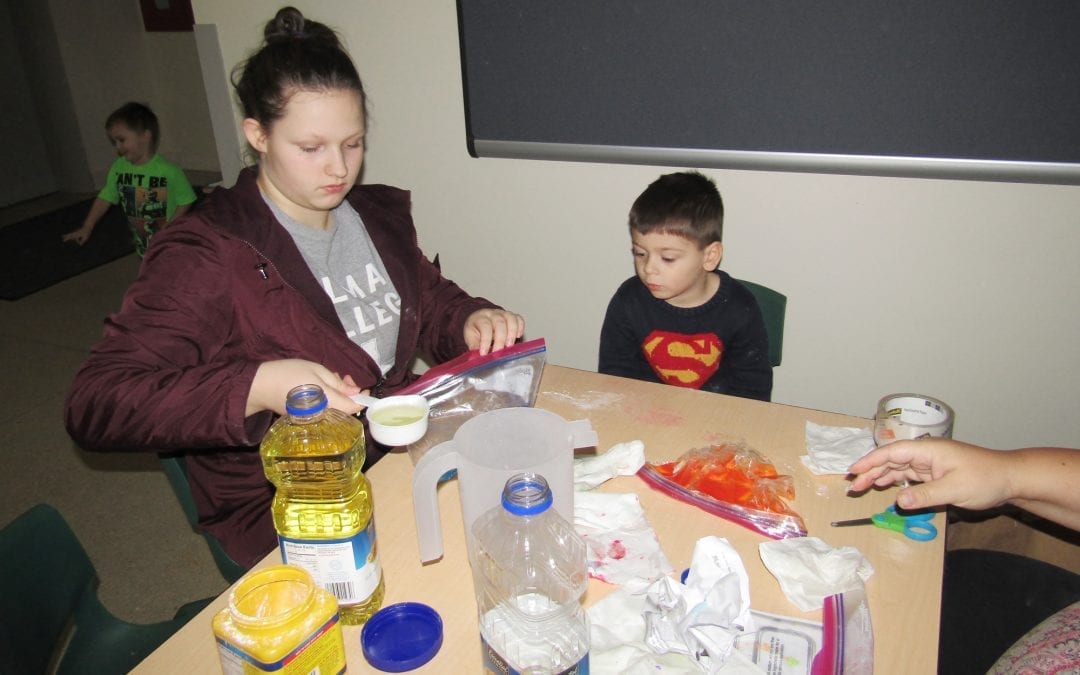
At Keweenaw Bay Ojibwa Community College (KBOCC) traditional Ojibwe teachings which portray the family as a part of the framework that honors the individual and the collective groups to which the individual belongs. Throughout the year, Migiziinsag (Little Eagles), an early childhood program for four-year-old children, engages by incorporating aspects of indigenous early learning, Anishinaabe language, cultural ceremonies, nutrition and physical activities. The “Family Fun Event Planning Framework” embraces four areas:
Guide for Educators First To Feature Tribal College Professionals’ Work
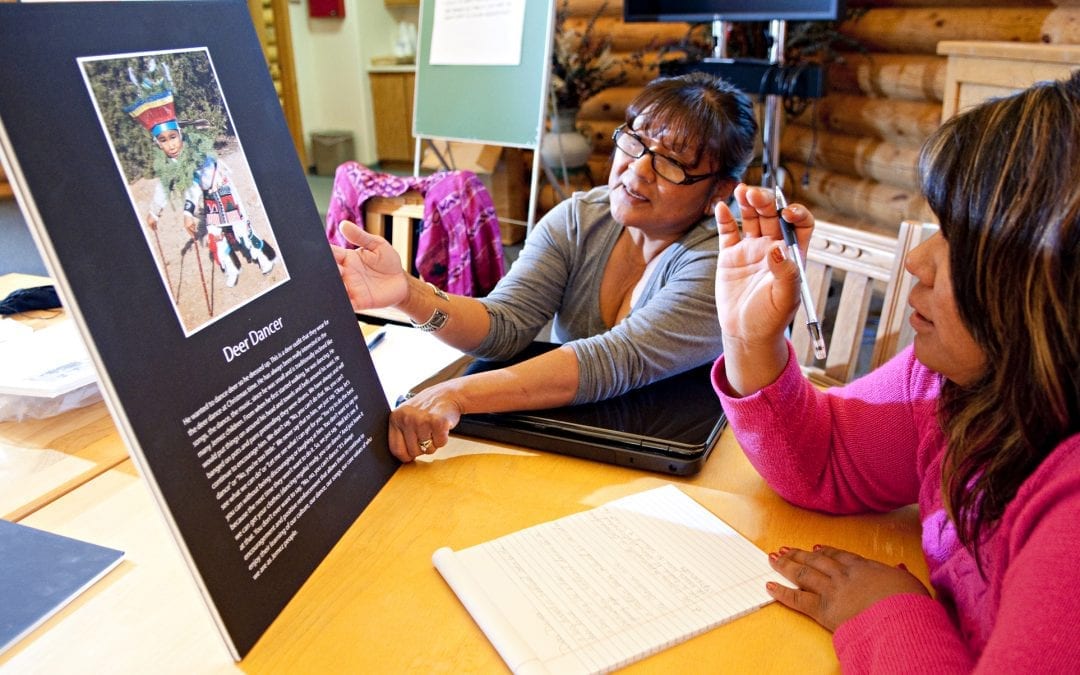
A new guide for educators titled Teacher Education Across Minority-Serving Institutions: Programs, Policies, and Social Justice, edited by Emery Petchauuer and Lynnette Mawhinney (Rutgers University Press, 2017) shares successful teaching practices and teacher education programs from minority-serving institutions (MSIs) across the country.
Guide for Educators First To Feature Tribal College Professionals’ Work
A higher education is a tool for a better life. But for education to also be a portal for social change in Native communities, a one-size-fits-all approach is not sufficient. A new guide for educators titled Teacher Education Across Minority-Serving Institutions: Programs, Policies, and Social Justice, edited by Emery Petchauuer and Lynnette Mawhinney (Rutgers University Press, 2017) shares successful teaching practices and teacher education programs from minority-serving institutions (MSIs) across the country.

Are Tribal Colleges A Product of School Choice or Segregation?
Are tribal colleges and universities (TCUs) the result of de facto segregation? Currently in higher education there is considerable discussion about the value and challenges faced by our Nation’s historically black college and universities (HBCUs). While this debate rightly belongs squarely in all discussions about access and affordability and value of higher education, it neglects the experiences of American Indian and Alaska Native students and the colleges and universities that have emerged to serve them in a similar fashion.