Cheryl Crazy Bull, President and CEO of the American Indian College Fund, accepted the award on behalf of the organization, which was chosen for its national work to provide higher education opportunities for American Indians.
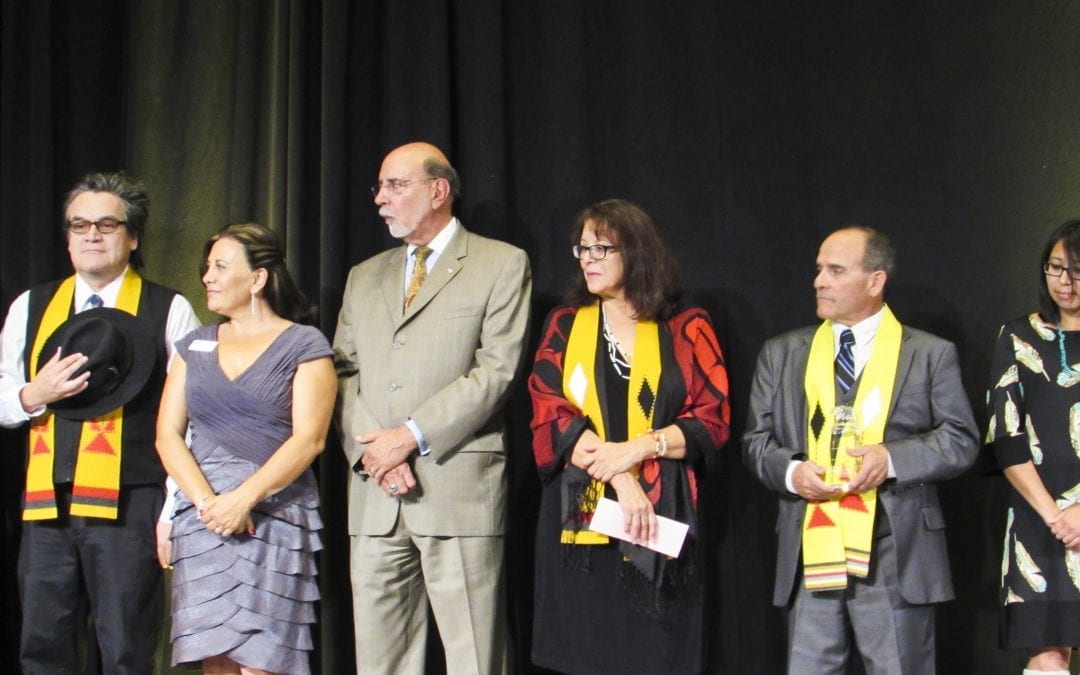

Cheryl Crazy Bull, President and CEO of the American Indian College Fund, accepted the award on behalf of the organization, which was chosen for its national work to provide higher education opportunities for American Indians.
Mills, an acclaimed-lifestyle brand headquartered in Portland, Oregon announces the release of an exclusive blanket to benefit the American Indian College Fund, the nation’s largest philanthropic effort supporting Native American higher education for more than 25 years. Naskan Saddle Blanket, a new release for 2016, represents the collaboration between Pendleton® and the College Fund to honor and reawaken a vital part of Native history.

Robin began her academic career at Diné College, where she graduated in 2014 with dual associate degrees in Diné studies and behavioral science in 2014. After completing her first research internship in Washington, D.C. she went home to visit her mother before starting classes for her bachelor’s degree at the Institute of American Indian Arts (IAIA).
Salt®, the best-in-class education-consumer literacy program provided by the nonprofit American Student Assistance®, is pleased to announce a partnership with the American Indian College Fund (the College Fund) to support tribal colleges and universities nationwide in offering money management advice, personalized student loan help, and straightforward budgeting tools free-of-charge to students and alumni.
Recently we were asked about the factors that make for a top college for Native Americans students. It is a great question and it really depends on individual student needs and goals; however, that does not make for a great blog. So I will answer this with a top ten list of things that Native American students should consider when choosing a college.
American Indian students have the lowest college graduation rate in the country, at just over 13%. In a new publication from the American Indian College Fund, several tribal colleges and universities share how to create systems and structures to promote Native student success.
The American Indian College Fund (the College Fund) joins The Penn Center for Minority Serving Institutions (CMSI) and its partners in announcing a new data-driven national campaign focused on spreading factual awareness of the return on investment (ROI) of Minority Serving Institutions (MSIs).

I have relied heavily on scholarships to pay for my schooling and thanks to the American Indian College Fund I was able to attend the University of Montana and acquire my Bachelor’s degree without student loans. I now know what it takes to pursue and acquire a post-secondary education and this has given me motivation to go for my Masters of Public Health from the University of Montana
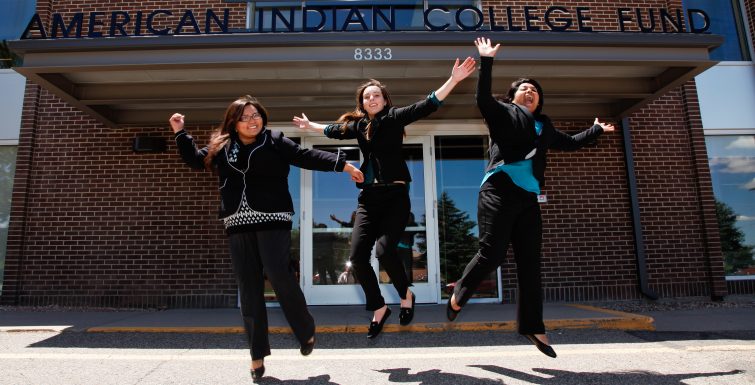
Internships, like scholarships, are an important piece of a student’s higher education process. Internships provide students with opportunities to improve their skills and confidence while allowing them to build relationships in their professional fields. Unfortunately, not all students have the opportunity to work as an intern.
Malcolm Macleod, President of the Johnson Scholarship Foundation, writes in the blog Giving Matters that the foundation stands with the American Indian College Fund to make scholarships a tool for social justice in achieving equity for Native peoples, mainly for education.