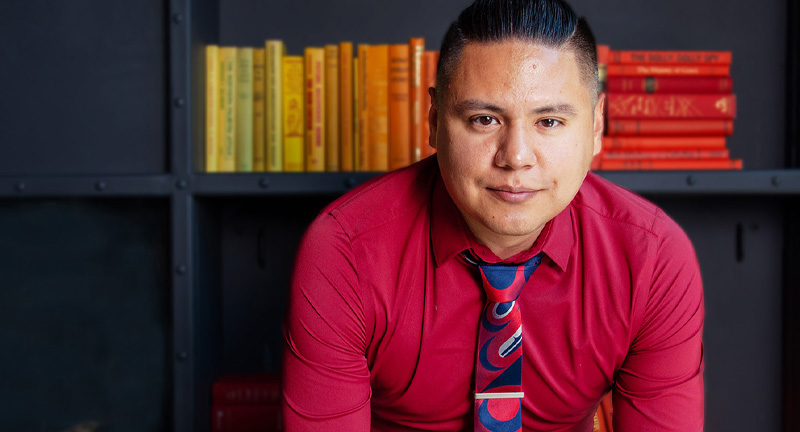
Hello all! My name is Amber. My Inupiat name is Kapuqqaq (pronounced “ga-bu-kuk”). I am a tribal member of the Native Village of Unalakleet, located on the Northwest coast of Alaska. The community itself consists of roughly 750 people year-round.
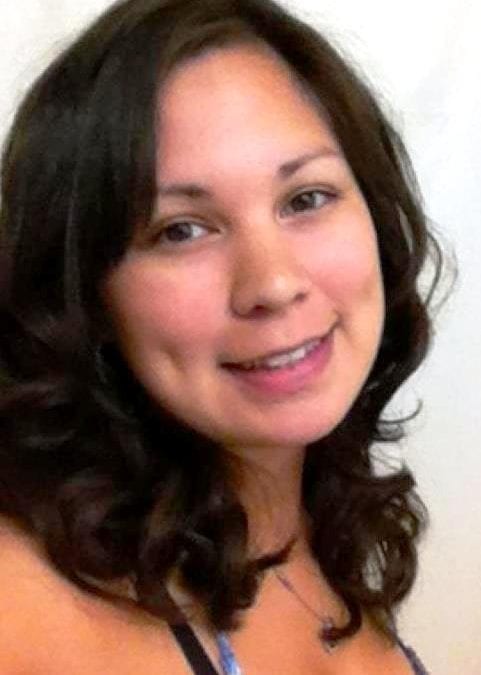

Hello all! My name is Amber. My Inupiat name is Kapuqqaq (pronounced “ga-bu-kuk”). I am a tribal member of the Native Village of Unalakleet, located on the Northwest coast of Alaska. The community itself consists of roughly 750 people year-round.
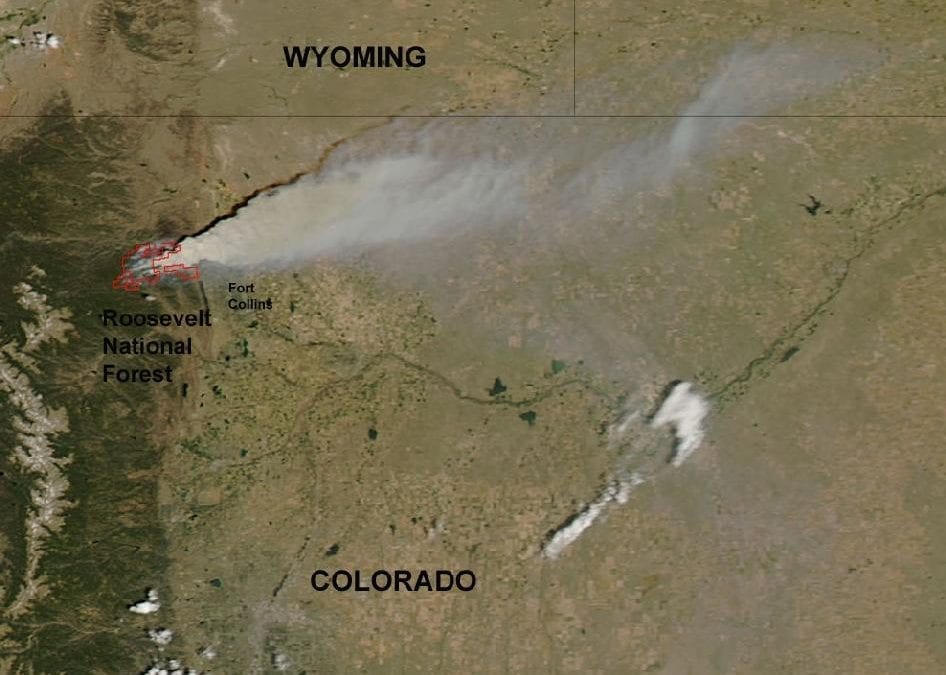
One thousand firefighters are in the back yard of the American Indian College Fund headquarters, battling Colorado’s third largest forest fire in history, dubbed the High Park Fire. And there’s a good chance that several firefighters are American Indians, thanks to Salish Kootenai College’s firefighting program in Pablo, Montana.
Fond du Lac Tribal and Community College (FDLTCC) graduate Reginnah Weah had a lot to celebrate last week. Reginnah achieved her childhood dream by graduating with a degree in nursing. And Reginnah, a refugee from Liberia, a West African nation that went through a devastating civil war, may have also been celebrating the fact that she will sleep better knowing that her country’s former president, Charles Taylor, was convicted and sentenced to 50 years in prison by the International Criminal Court in The Hague, Netherlands, for crimes against humanity.
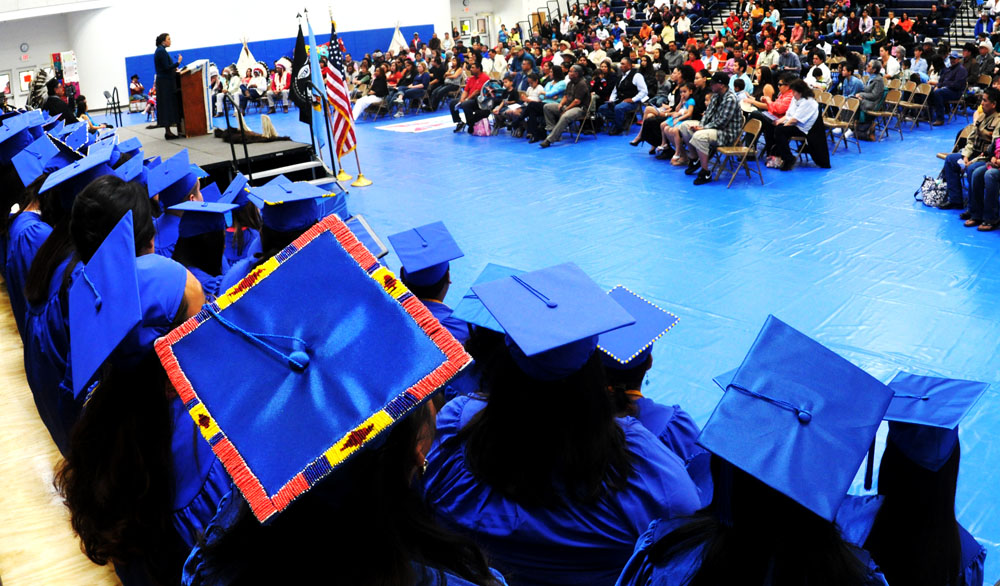
As many scholars celebrate their way across the stages at graduation many proceed with a sense of personal style and expression. I remember attending a graduation for the University of Notre Dame and there a row of graduates collectively spelled J.O.B.L.E.S.S across their graduate caps. Others, like a group of students from my own graduation at Texas Tech University, sent out messages honoring family or appreciation to those who helped them make this milestone accomplishment possible.
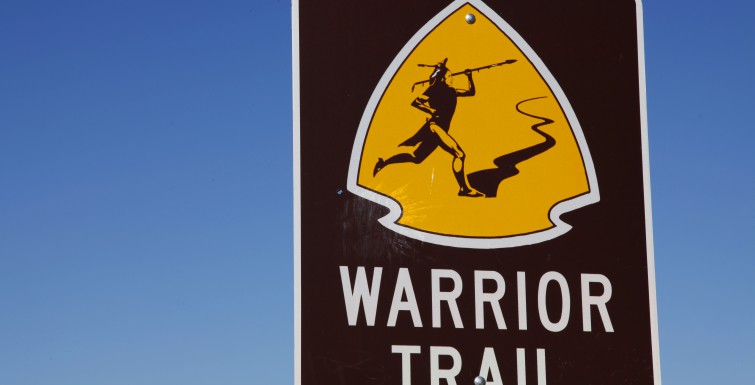
It is a great privilege when staff members of The American Indian College Fund are able to visit the tribal colleges and universities, as well as a chance to learn about our organization’s impact on Native communities first-hand. It is only my second visit to the state of Montana, and both times have been for The American Indian College Fund.
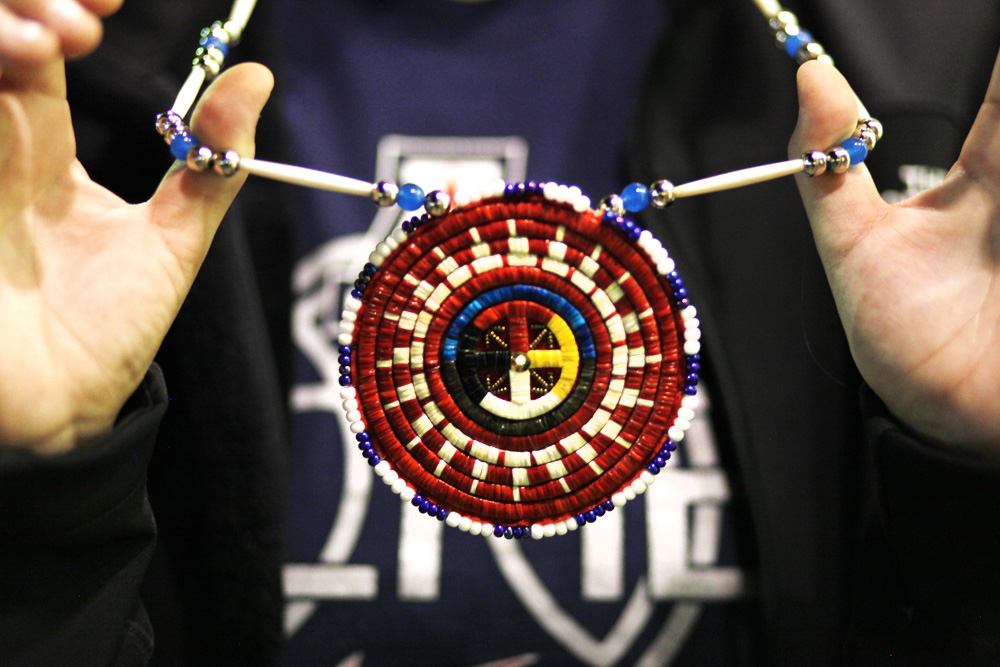
It is always great to get out and meet our students. At the 31st annual American Indian Higher Education Consortium (AIHEC) Student Conference in Rapid City, South Dakota, we had that chance. Native students gather to participate in competitions and celebrate the work they do at the tribal colleges as they pursue a college education and prepare to make a difference in their communities.
Did you know that 16 of our 33 accredited tribal college presidents are women? These warriors are on the front lines in Indian Country, helping to provide hope, guidance, and inspiration to our young people in their fight against poverty and they honor us every day with their sacred work.
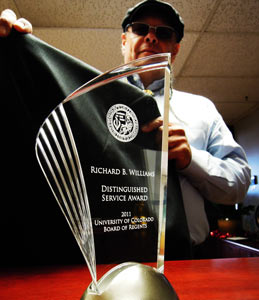
Richard B. Williams, President and CEO of the American Indian College Fund, was given the Distinguished Service Award from the University of Colorado Board of Regents in recognition of his dedicated service to American Indian students and their communities.
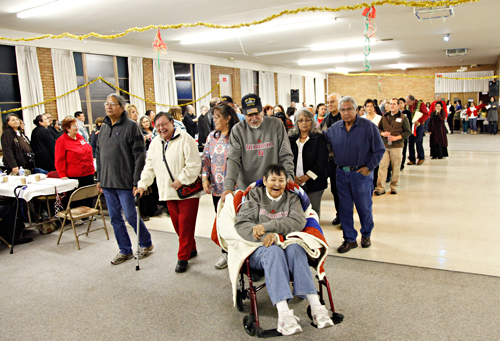
Not all holiday dinners are created equal. The Denver-based Native Elders Holiday Dinner sponsored by the American Indian College Fund has a distinctly Native flavor, from the meal itself (buffalo) to a Santa Claus that wears a war bonnet. The event, now in its 11th year, honored American Indian elders 55 and older in the Denver community with a free dinner and program at the Church of All Saints
Although November is Native American Heritage Month, for the American Indian College Fund, our tribal colleges, and our students, we celebrate Native heritage every day of the year. This is because our students and communities know what it means to be without Native culture, heritage, and language–because it was once U.S. government policy to assimilate American Indians, and eradicate these priceless facets of heritage. As a result, generations of American Indians were denied their birthright.